You Can See Everything
The problem is [there is only one] tool in the toolkit for Fielder and Oppenheim as they are seduced by their own game. And once you see through this formal myopia, you see everything.

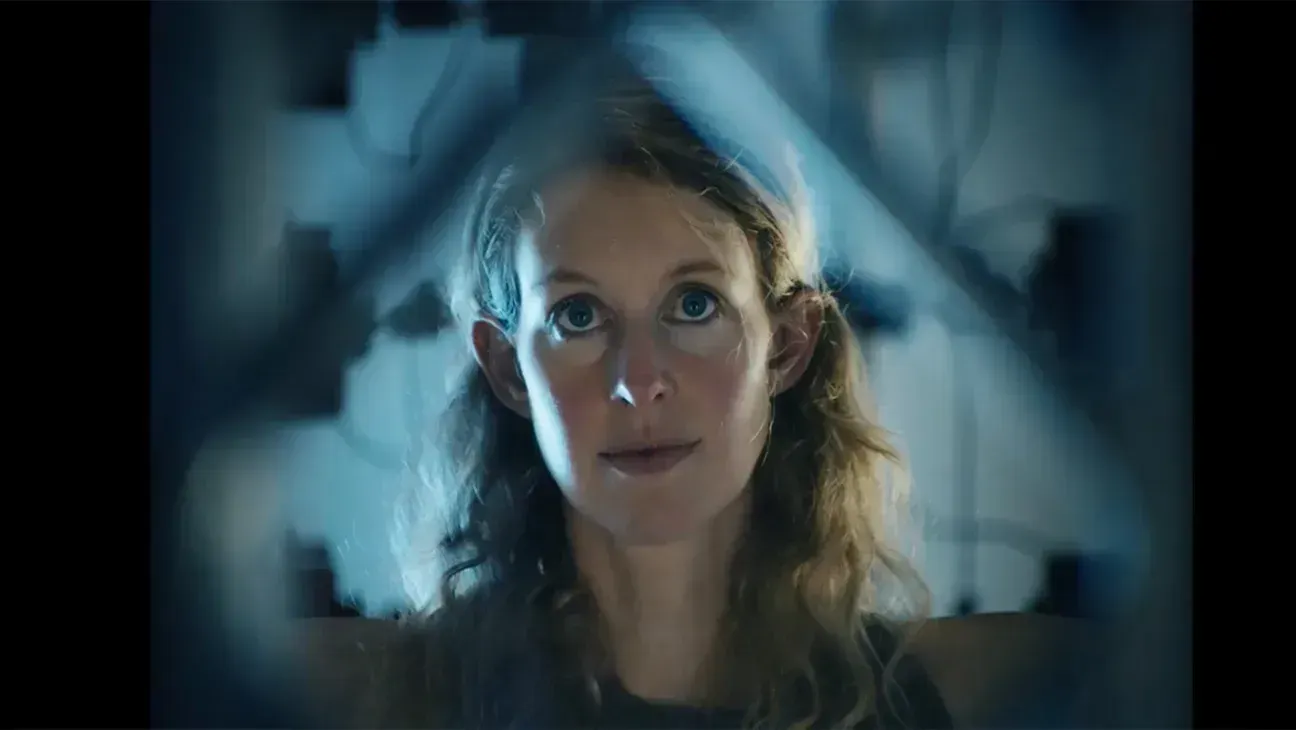
The hottest documentary of the moment is “You Can See Everything.” It’s already grossed $16 million at the box office and everyone—from critics near and far to the most casual of moviegoers—can’t stop talking about it. It appears more likely than not that “You Can See Everything,” Nathan Fielder and Lance Oppenheim’s claustrophobic and psychologically curious documentary about Theranos fraud-master Elizabeth Holmes, is destined to become the first documentary ever to compete as a finalist in the Best Picture category at the upcoming Academy Awards. It is a must-see as a discourse driver and maybe the first documentary since “Tiger King” to flirt with any degree of monoculture.
In 2015, Holmes was named the youngest and wealthiest American self-made female billionaire. Her company, Theranos, “revolutionized” blood testing with its black box machine that could run any medical test from just the tiniest prick of blood. It turns out that the medical revolution was strictly hypothetical. The technology that put her at the top of “Forbes” and “Fortune” lists was yet to come, and she was sentenced to 11 years in prison for defrauding investors.
Holmes and partner Billy Evans contacted A24 about a documentary, promising unadulterated transparency and access. With 34 days left before her prison sentence begins, Fielder, as interviewer, and Oppenheim, as cameraman, document her final free days from her and Evans’ rental beach home. Everything is, apparently, fair game: the couple’s attempt to set up a new business involving lasers, the creation of an AI-Holmes so “she” can still read books to their children from prison and even Evans’ penis as he showers.
Co-directors Fielder and Oppenheim are just as big of a pull as their criminal subject; the former might be even bigger. A cringe-satirist that blurs documentary and scripted-artifice best known for his HBO collaboration with John Wilson on “How To with John Wilson” and his own series “The Rehearsal” and “Nathan for You,” Fielder is as close to marketable-IP as documentary filmmaking gets. Oppenheim is fresh off his narrative directorial debut with “Primetime,” though he is perhaps best known as a documentarian in his own right. His style is more traditional, but his subjects lean toward the absurd. “Spermworld” dives into the under-regulated sperm-donation industry to give a sense of his subjective sensibilities. Their first collaboration snaps their proclivities together like Legos: Fielder’s deadpan satirism, general unseriousness and dramatic re-enactments with Oppenheim’s close-quarter camera and more traditional documentarian sensibilities.