Musk
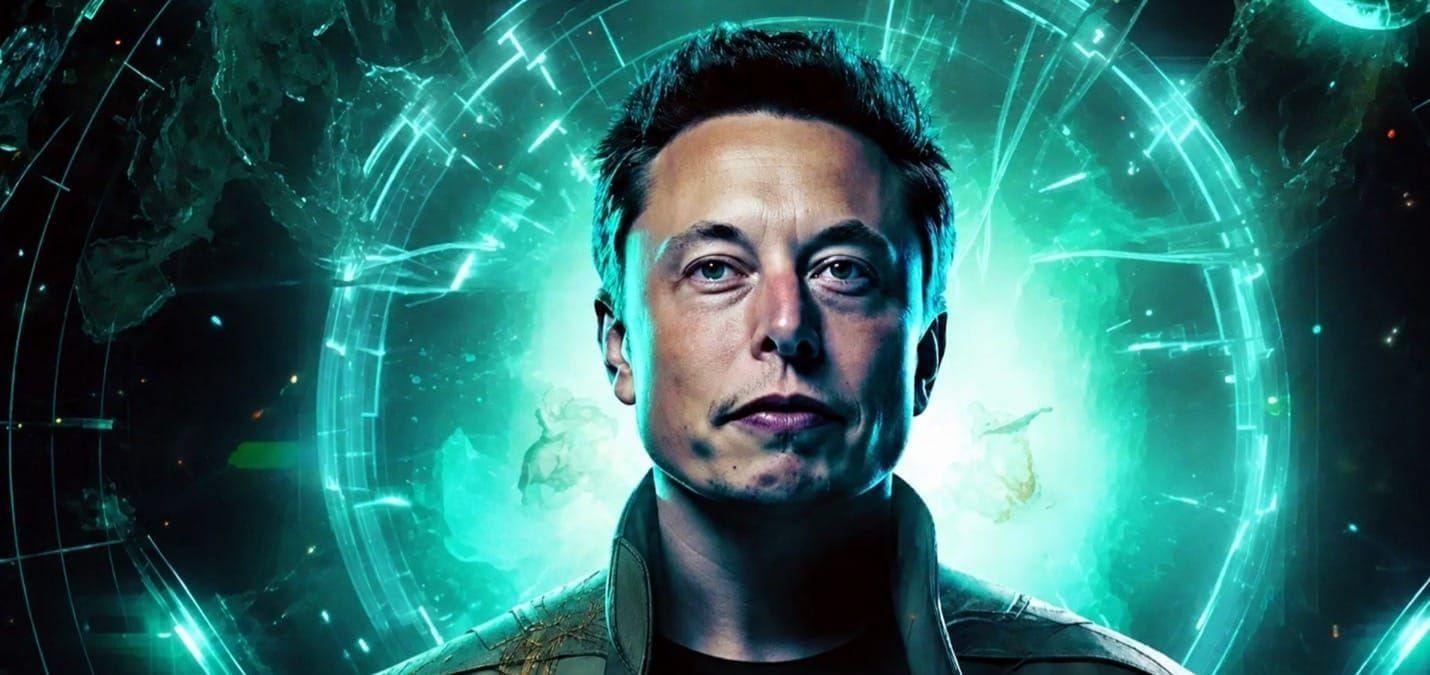
This is nose-picking AI: the embarrassing anti-humanness of the “art” is precisely the point. It is also a powerful choice on the part of Gibney to reduce the world’s most powerful man to indistinct AI slop.

Both Elon Musk himself and documentarian Alex Gibney swim in the deluges of pop culture in an effort to make sense of the world of the world’s richest man in “Musk,” the four-hour tour-de-force that postures the tech mogul as a real-life Galactus. The world’s only trillionaire, then just a billionaire, of course appeared in “Iron Man 2”; the doc uses the Tony Stark comparison to imagine Musk as something of a Dark Iron Man in a recurring animated sequence imitating a first-person shooter video game. Gibney shows footage from “The Simpsons” and “The Wolf of Wall Street” to draw lines between his subject and the forces of culture. “The Matrix,” “The Terminator” and “The Hitchhiker's Guide to the Galaxy” all cast their own long and dark shadows over Musk, the person and the movie, too.
Superseding all else, Gibney leverages extended clips from the 1937 classic “The Man Who Could Work Miracles,” a film where the gods grant a random man more power than the stars to see what he will do with them, to muse about the unreal-yet-attained power of Musk and his political aims, as well as the equally absurd farce always simmering behind the man. He is a villain worthy of only the movies. And yet, he is real.
I found myself thinking of another science fiction parallel while watching Gibney’s documentary: the supervillain known as Mom in the animated Cartoon Network show “Futurama.” Both are the richest people in their worlds, employ an army of henchmen, run an assortment of high-tech conglomerates that spread like an octopus’s tentacles, have distinct (unfashionable) fashions and are so arrogantly powerful they can only be described as camp. The space laser hypotheses—more on this later—come so close to the animated shenanigans of “Futurama” that they wouldn’t be out of place in an episode of the show.
Another reason why Gibney uses so much third-party media is likely because Musk himself refused to be interviewed for the film. He even calls Gibney a “douche” on Twitter/X after learning about the documentary, something Gibney brings up, breaking the fourth wall twice.
In replacement, inspired by Musk’s own obsession with simulation theory à la “The Matrix,” Gibney inserts a CGI-generated interview with the South African capitalist; the interview looks AI-generated but is “properly animated,” to assure it looks as uncanny as it does.
Continue reading at The Rapidian.