Political Documentary — A Guided Film Club

The term "documentary" sometimes invokes neutrality, as if a camera simply records a stable reality and shares it with an audience. Of course, this has rarely been the case with even the most observational nonfiction film. Documentaries represent the world. They make arguments about the state of things. They provide visions of the past, present, and future, and appeal to the audience to appreciate those visions. What are the particularly political visions which documentaries construct? How do they do so, and through what tools?
In this guided film club, we will dive into political documentary—early and modern, Left and Right Wing, and everything in between. PhD candidate Garrett Hartman Strpko brings his expertise in historical documentary and will join Rotten Tomatoes approved film critic Joshua Polanski (therewillbenogodsleft.com) to traverse the negotiation of fact and fiction, power and the subordination of power, genre conventions, and much more in political documentary. In the process, we will debate definitions of the political, better understand the political and filmic contexts that shape the various documentaries we will view, and look with a particularly close eye at some great (and not so great) corners of documentary cinema.
For those familiar, this film club will be a lot like Discursions in Time: Slow and Poetic Cinema(s) — A Guided Film Club. There will be a slightly stronger emphasis on the guided this time around with brief introductory presentations for each film by one or both of the two moderators before breaking into conversation on the selected titles.
Each meeting will have recommended (not required) short readings and required viewings. All films will be reasonably accessible to view from home at free or low costs. Each group meeting will be scheduled for 90 minutes over Zoom.
All scheduled viewings are subject to alteration with club interest and changes to availability.
Meeting 1: Documentary & Political Definitions (August 30 from 6 to 7:30 EST)
- Dark Money (2018) directed by Kimberly Reed
Meeting 2: Left Wing Agit-Prop (September 13 from 6 to 7:30 EST)
- The Hour of the Furnaces (1968) directed by Octavio Getino, Fernando E. Solanas
Meeting 3: Right Wing Propaganda (September 27 from 6 to 7:30 EST)
- Melania (2026) directed by Brett Ratner
Meeting 4: Baltic Documentary (October 11 from 6 to 7:30 EST)
- Is It Easy to Be Young? (1986) directed by Juris Podnieks
Meeting 5: Wartime (October 25 from 6 to 7:30 EST)
- Strange Victory (1948, directed by Leo Hurwitz)
Meeting 6: Palestinian Documentary (November 8 from 6 to 7:30 EST)
- Lyd (2023) directed by Sarah Ema Friedland, Rami Youniss
Cost: $35 or $15 with proof of (at least) a $10 donation to the Film Foundation
To register, send me (Joshua) a PayPal or Venmo payment with the message "Political Documentary — A Guided Film Club + [your email here]." If you are paying the discounted fee (with a donation to the Film Foundation), pay $15 and I will follow up about your donation at a later date, along with sending more information about our first meeting.
About Garrett Hartman Strpko
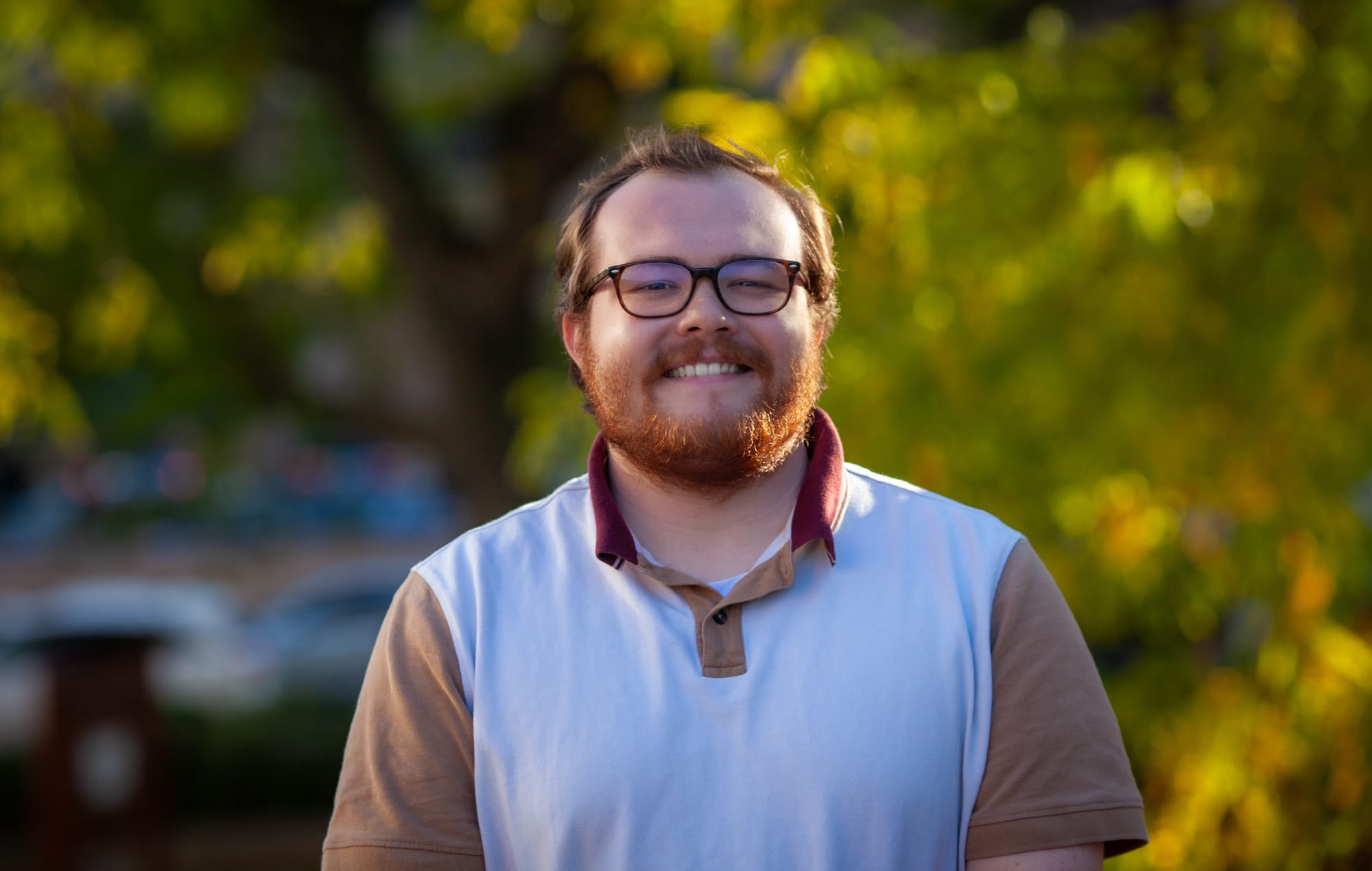
Garrett Hartman Strpko is a PhD candidate in Communication Arts (Film) at the University of Wisconsin-Madison, having received his MA in Film and Media Studies from Washington University in St. Louis. His primary areas of interest lie in film and media philosophy and theory, with additional interests in documentary and Classical Hollywood Cinema. His dissertation focuses on historical documentary produced for the Public Broadcasting Service by filmmakers Henry Hampton and Ken Burns. He has authored or co-authored articles on spectatorship and ethics, mood in film viewing, and war hero-turned-movie star Audie Murphy.
About Joshua Polanski
Joshua Polanski is a film and culture writer currently based in Grand Rapids, Michigan. His interests include the technical elements of filmmaking & exhibition, slow & digital cinemas, as well as Eastern European film, East Asian, & Middle Eastern film. He is an individually accredited Tomatometer approved critic and a member of the Michigan Movie Critics Guild. His blog on Baltic cinema is the only recurring and active blog on Lithuanian, Latvian, and Estonian cinema in English.
He has a graduate degree in the academic study of religion from Boston University where he studied political theology and religious history (mostly Islamic and Christian).