Song Sources 1866
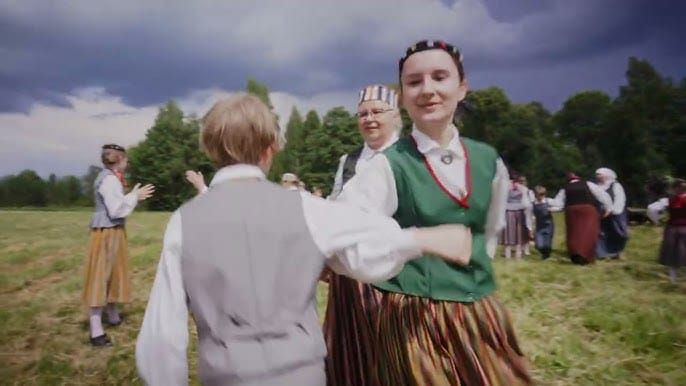
The lone film event at the festival was a screening of the new documentary Song Sources 1866 (Dziesmu Avoti 1866), a 33-minute short from first-time director Dace Micāne-Zālīte about the first Latvian youth choir festival in Lazdona and its legacy in the present.

I rarely get to see Baltic cinema on a big screen—and when I do, it’s never where I live. Grand Rapids, Michigan, isn’t exactly putting Latvian films in the nearest multiplex on a weekly basis. But this week is a bit different than most weeks. The 16th Latvian Song and Dance Festival in the United States is taking place in Grand Rapids, a keynote cultural event that only happens every four to five years and has never come to West Michigan before.
The lone film event at the festival was a screening of the new documentary Song Sources 1866 (Dziesmu Avoti 1866), a 33-minute short from first-time director Dace Micāne-Zālīte about the first Latvian youth choir festival in Lazdona and its legacy in the present. The short run-time shifts erratically between ceremonious concert footage, erudite musings on the New Latvian Movement and other intellectual currents leading into the first song festival in 1866, and propagandistic linkages to the present song festival culture in Latvia. There is also a half-hearted attempt to follow one young boy in the present, though he isn’t really interviewed and it adds no depth.
Song Sources 1866 is most interesting when it leans into the beauty of the art instead of being didactic. There is an interesting tidbit about an outdated Latvian word for beauty, “daiļš,” and its reclamation in the song festival tradition, which is an illuminating illustration of the conservatism around the event more broadly. For its champions, an old word that describes the process of “beautifying” is more suitable for describing this cultural event than a contemporary lexicon can provide.
For what it’s worth, what I thought was actually the most beautiful moment in the film was its most unpolished moment: a woman singing in the traditional national dress while holding a baby, her song fighting with the brushing sound of the wind. Moments like this—the flag blowing with prideful dignity above the Daugava river—rarely hold long enough to actually be beautiful. Even worse are instances where the haughty narrator turns strong imagery into cheesy metaphors or propagandistic messages, as with a particularly cheesy metaphor about a conductor’s floral crown actually being the songs of the children.
In a creative decision that should be criminal in all films, the song lyrics went untranslated. This wouldn’t have been a problem for most audience members, surely, but the rest of the film was translated, and only the songs, the most important element in a film about a song festival, remained obfuscated for non-Latvian speakers. Hopefully digital releases change course.