Fritz on Fridays: Lang as Odysseus in Jean-Luc Godard’s Contempt
Fritz Lang was cinema’s original Odysseus.

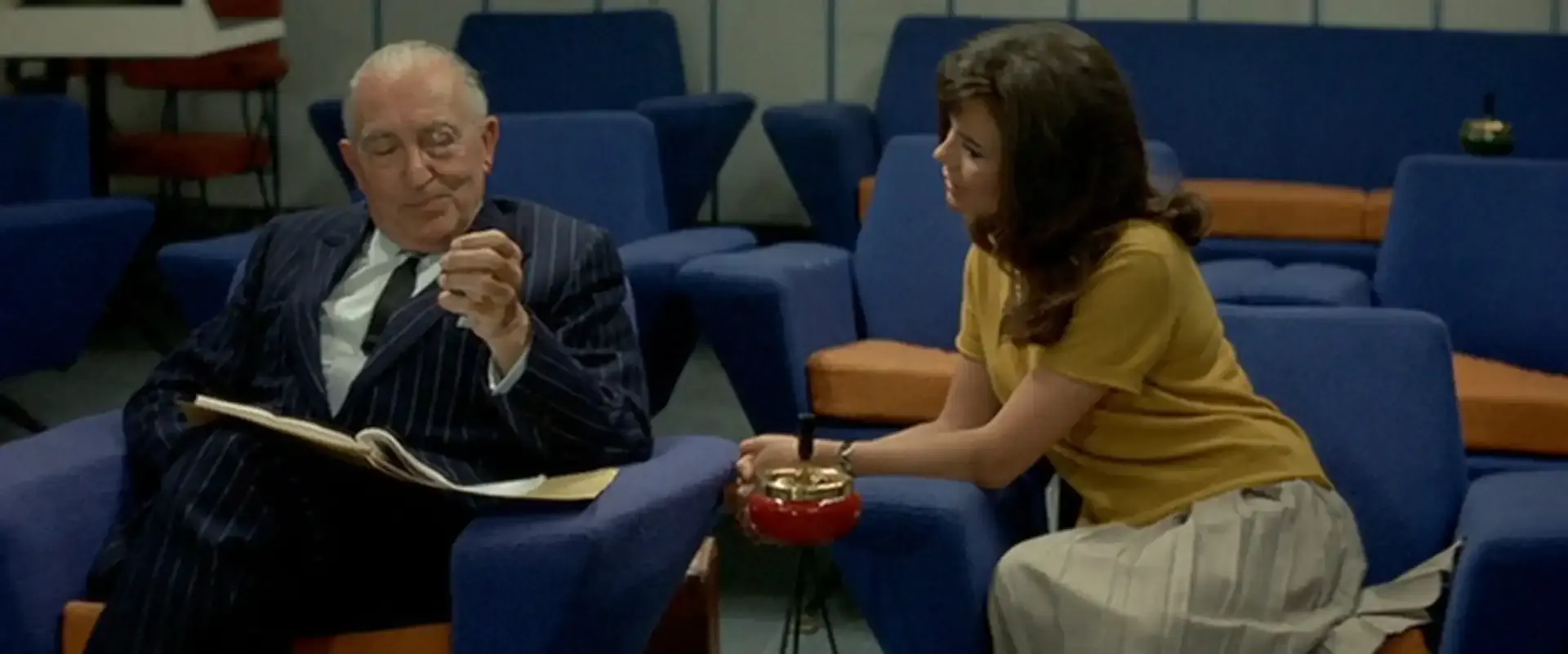
On the first Friday of every month, this column by critic Joshua Polanski will feature a short review or essay on a film directed by Fritz Lang (1890-1976), the great Austrian “Master of Darkness.” Occasionally (but not too occasionally), Fritz on Fridays will also feature interviews and conversations with relevant critics, scholars and filmmakers about Lang’s influence and filmography.
Fritz Lang was cinema’s original Odysseus.
“Tell me about a complicated man.” This is how the world’s most famous translator at the moment, Emily Wilson, opens her spectacular interpretation of Homer’s Odyssey. The word she translates as “complicated” is polytropos, combining poly or “many” with tropos or “turns.” Odysseus is “many-turned” or “many-ways.” A man of multiplicity. He is an immigrant, a liar, a soldier, an adulterer, a murderer — and, through Homer, an artist.
Lang was all of these things (or alleged) and more.
Jean-Luc Godard, the French Prometheus of cinema, wasn’t blind to this when he cast Lang to play himself as a director of an adaptation of the ancient Greek epic poem in Contempt (Le Mépris), which is itself something of a reimagining of Homer’s work. In Godard’s film, an ambitious and uncouth American producer, Jerry Prokosch (Jack Palance), hires French screenwriter Paul Javal (Michel Piccoli) to pen the script for Lang’s adaptation. Lang rarely wrote his own screenplays, so Godard’s depiction of his process as something of an opinionated hired hand fits the man of filmic legend.
Lang is a secondary character in the film, and his introduction pokes fun at his biography — arriving through the mouth of a frustrated Prokosch. “I’ve already lost the studio. Now I’m going to lose my shirt because of him,” the producer protests at the mention of the infamous director’s name, who infamously hated producers. While standing on Italian soil, the confident but culturally myopic Prokosch insists the adaptation needs a German director because a real-life German archaeologist excavated Troy (a more modest finding than the city of the myths). Lang wasn’t German, though. He worked in Germany’s film industry but was Austrian. Godard surely knew this, playing up an intersection of real-world and cinematic irony. In an adaptation of an Italian novel set in Italy (Rome and Capri), Godard insists an actual Austrian is German and, for unnamed reasons, insists that a German director more emphatically ticks a box of cultural authenticity than a hypothetical Greek director.
Continue reading at the Midwest Film Journal.