Sheep in the Box
The future already looks bleak at times. It may get bleaker yet if our most humanistic artists continue to capitulate to their humanism.

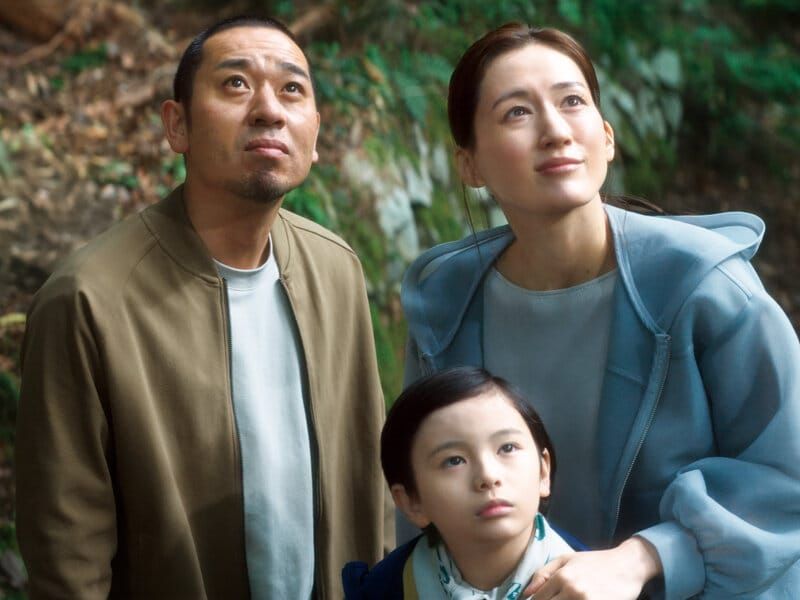
Set in the “not-so-distant future,” Japanese art-house master Hirokazu Koreeda’s latest film tackles the hottest topic of the moment in Artificial Intelligence (AI), as a grieving married couple welcomes a synthetic replacement for their dead child into their home. Koreeda’s films have always shown the best in people, even the undeserving, and that has justly given him the reputation as one of contemporary cinema’s greatest humanists. His human-trafficking thriller “Broker” even excavates the only possible narrative where technical human traffickers—who nab would-be orphans from horrifying church “baby boxes” and rehouse the children in loving homes—end up being the good guys. The Palme d'Or-winning “Shoplifters” again shows his anti-Manichean inclinations as a filmmaker capable of finding the good in any human, a process ostensibly inseparable from the fact of their humanity.
On paper, Koreeda is the perfect filmmaker for the age of AI and its threat to human intelligence. That’s only on paper, though.
“Sheep in the Box,” his latest sci-fi film that again competed for the Palme d'Or at the Cannes Film Festival, is rich in both emotion and big ideas without ever being committed to either. Shattered by the death of their child, Kakeru (Rimu Kuwaki), a talented and hardworking architect named Otone (Haruka Ayase) and her husband Kensuke (Daigo Yamamoto), a carpenter with an almost spiritual connection to trees, accept a complimentary humanoid robot from a tech company. It’s a lot like a Roomba: it has a charging dock, can only travel so far and is a human invention of wires and metal. The main difference between the robot and a Roomba is that it looks and talks exactly like their deceased son.
Otone eagerly accepts the robot into their home; it’s her idea. Kensuke rolls with it mostly because it’s free. Anyhow, his alcoholic grieving strategy is more normal but no less healthy. Their different approaches to loss and technology invite more big questions than Koreeda cares to answer even discursively. Can technology help us grieve? What does living with AI really look like? Should we be open to the complications of artificial “life” rather than the black-and-white Manicheanism common to the internet? Are we ultimately reducible to our memories? Is the endpoint of grief a beautiful remembrance or an artistic act of recreation?
Continue reading at The Rapidian.