Raise the Red Lantern
A gift to cinema.

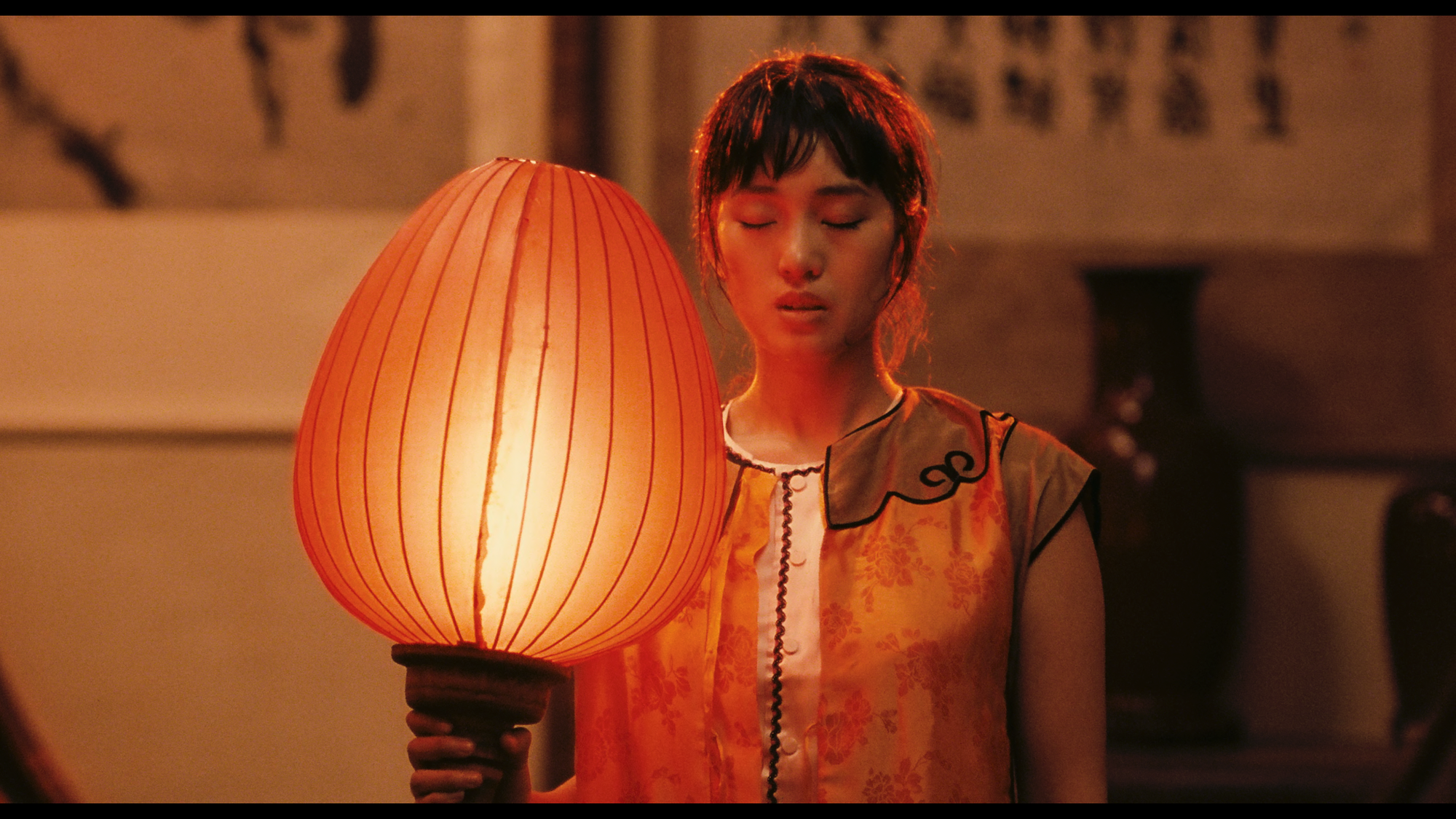
Whenever I watch a Zhang Yimou movie, I feel wasteful for using my time watching other movies. The giant of the Chinese Fifth Generation of filmmakers is a singular talent. He makes movies like no one else, and each rewatch feels like stumbling on treasure. The new 4k restoration of Raise the Red Lantern, one of his most acclaimed and moving creations, is nothing short of a gift to cinema.
Etched in both innocence and longing, the incredible Gong Li plays a young woman named Songlian, the fourth wife in a powerful lord’s concubine in 1920s China. Every night, the master chooses one of the four wives to spend the night with by lighting the red lanterns outside of their rooms. He and the servants treat the chosen wife like royalty for a night (the other wives not so much) until the game begins anew tomorrow. Songlian, or Fourth Mistress as she is called by the others, lives in constant competition for attention and a game of demeaning the other women. Her patriarchal situation rues the nice girl's girl who first arrives to the concubine.
Similar to 2011’s House of Tolerance by Bertrand Bonello, a film surely inspired by Raise the Red Lantern, we never fully see the face of the rich lord played by Ma Jingwu. It is as if the camera is so repulsed by his lurking, retributive, and possessive presence that it chooses to make him more creaturely by refusing to show his face; Gong Li’s face, by contrast, is loved by Lun Yang and Zhao Fei’s camera. She plays the role with an initial softness that the camera reciprocates before hardening to survive in the tough world. Her sad eyes always look fixed on an invisible object before her, lost in her own world. Domestic incarceration ages Songlian, and Gong wears that weight in her demeanor. One of the great director-actor collaborations in film history, this is the fourth of nine Gong-Zhang collaborations and might be the most unforgettable. She was meant to perform in front of his camera.
Like Gong, the score from composer Zhao Jiping, another frequent Zhang collaborator (To Live, Red Sorghum) and staple of the Fifth Generation (Yellow Earth, for which Zhang was the cinematographer), is also one of the best. A percussion cacophony and an ensemble of female singing voices thematically recreate the oppositional binary of masculine patriarchy (in the percussion) and dog-eat-dog female competition (the female voices fighting not to be drowned by the other feminine voices). It is an almost perfect score.
As perfect as the music may be, it is impossible to write about a Zhang Yimou film without devoting attention to the cinematography. He is one of the great modern image makers. One must point to other mediums to make adequate comparisons: he is what Abraham-Louis Breguet is to luxury watchmaking or Ferruccio Lamborghini to bourgeois automobiles: synonymous with quality. Zhang Yimou is one of the finest filmmakers to ever live and his eye for composition, the most basic element of filmmaking, is what he does better than the rest.
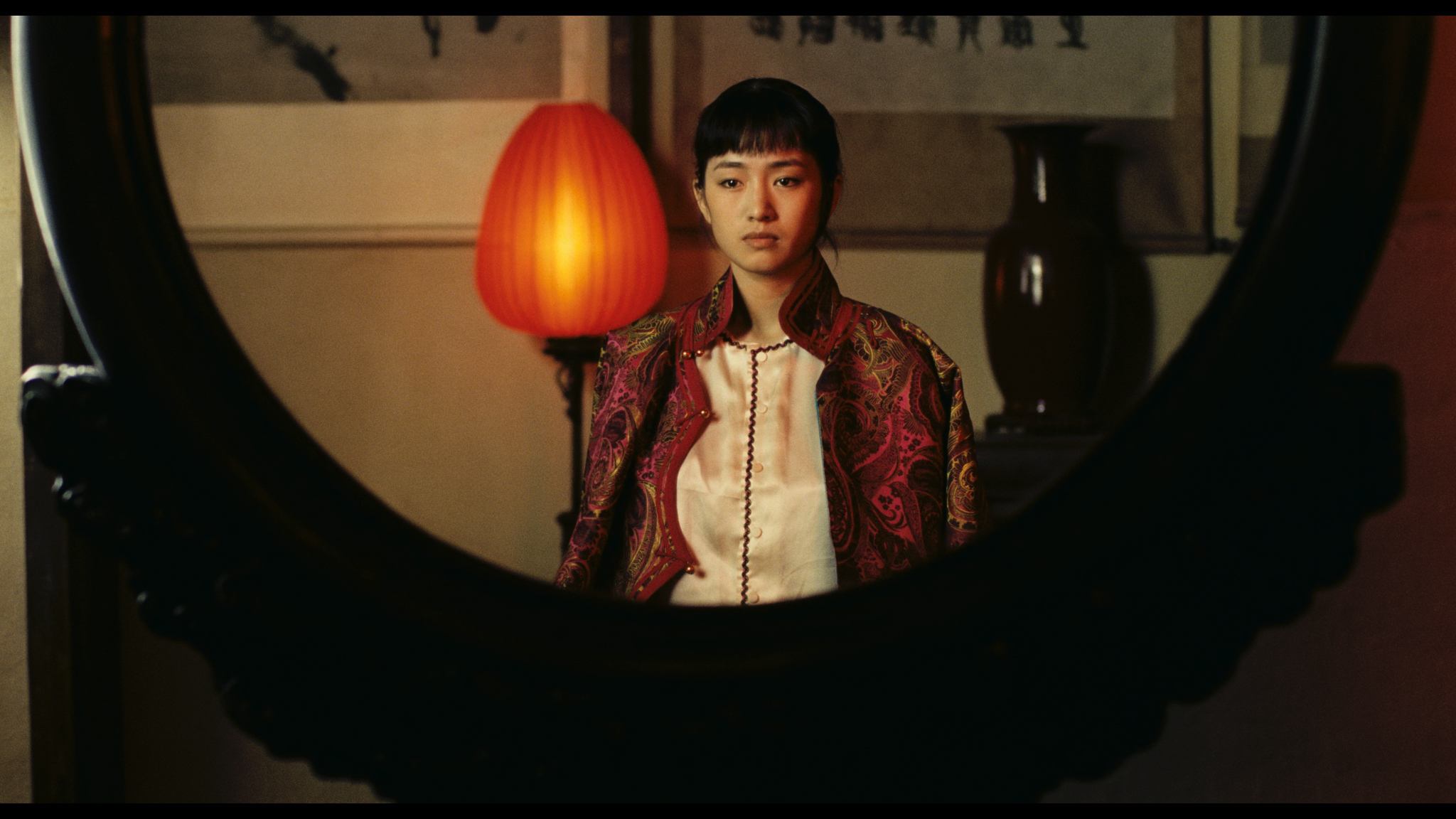
This is a prison film. Songlian and the other three wives—and even more so, the servants—have no freedom. They must follow the rules of the house, live according to their husband’s rigid itinerary and expectations, and use their bodies to provide him pleasure. When rules are broken, punishments are meted out. Third Mistress (He Saifei) is even ruthlessly executed for infidelity. The camera encloses the world to the massive and decadent compound and frequently frames the women through windows, doorways, and other frames-within-frames that minimize their presence and contextualize them within their domestic prison. No wonder they treat each other like fellow prisoners.
The iconic reds soak into the film stock as if consuming it, and the angelic lighting of the concubine locates the women in a liminal space between life and death. The improved resolution improves the production design and adds texture to the period-piece costumes. Those who know the film quite well won’t be distracted by the extremes of any changes either; this is the same film it has always been, but in sharper resolution that better reflects directorial intent. Zhang’s masterpiece has never looked this irresistible.
The Tiananmen Square Massacre of 1989 was not even three years before Raise the Red Lantern’s 1991 release, and the film’s depictions of tight authoritarian control and public execution frightened mainland censors, who banned the film. The ban was short-lived. In July of 1992, authorities lifted the formal ban and confined the film to the small screen like one of the husband’s wives. It is widely available all over the world today—and the accomplished new restoration will only further help evangelize the incredible classic.
The restoration was made possible by the Udine Far East Film Festival in Italy in celebration of the festival’s 26th occasion. Zhang supervised the restoration using the original image and sound negatives.