Possible Love
The world will be a better place because of Lee’s loving gaze.

Of all of the theories about what makes humans unique, the one I have gravitated to the most was relayed to me in graduate school: that we cook. We are the only creatures on planet Earth that clean their food, combine ingredients, and apply heat before consuming. It is a simple and surprisingly true observation. It also points to something ontologically deeper. When we cook, we gather around the kitchen table. We make community from our meals. We are human because we make human community. This discursion into philosophical anthropology is the essence of the messy and complicated characters that populate the filmography of South Korean novelist turned filmmaker Lee Chang-dong.
From Peppermint Candy to Burning, his films form hypotheses of the Good Life and the characters exercise these big ideas in messy, emotional realness. If, as Depression-era American photographer Dorothea Lange taught, “the camera is an instrument that teaches people how to see without a camera,” then Lee’s camera teaches us to love. Possible Love, his Netflix original about dueling couples on the opposite end of the economic seesaw, broils love to its moony marrow. It’s also the best Netflix original.
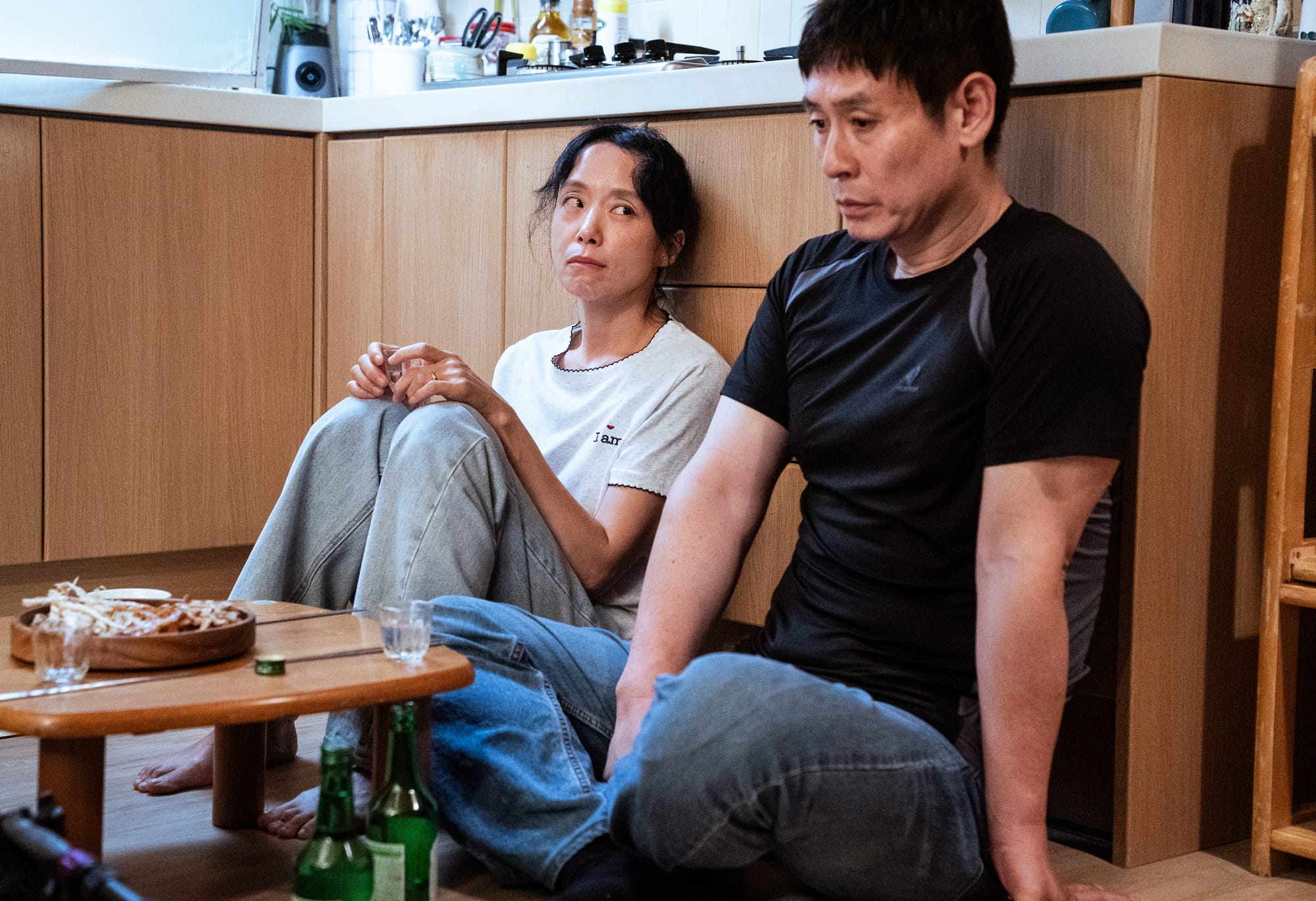
“Why peer at me like that?” a wife asks her husband under the moonlit night sky over drinks. “Because suddenly the soju is sweet,” he answers. To return briefly to the cooking discourse, this powerfully romantic finale to the film centers around taste. Like Christ in the Eucharist, her presence transubstantiates the soju for her smitten lover. It turns into something new, something sweeter.
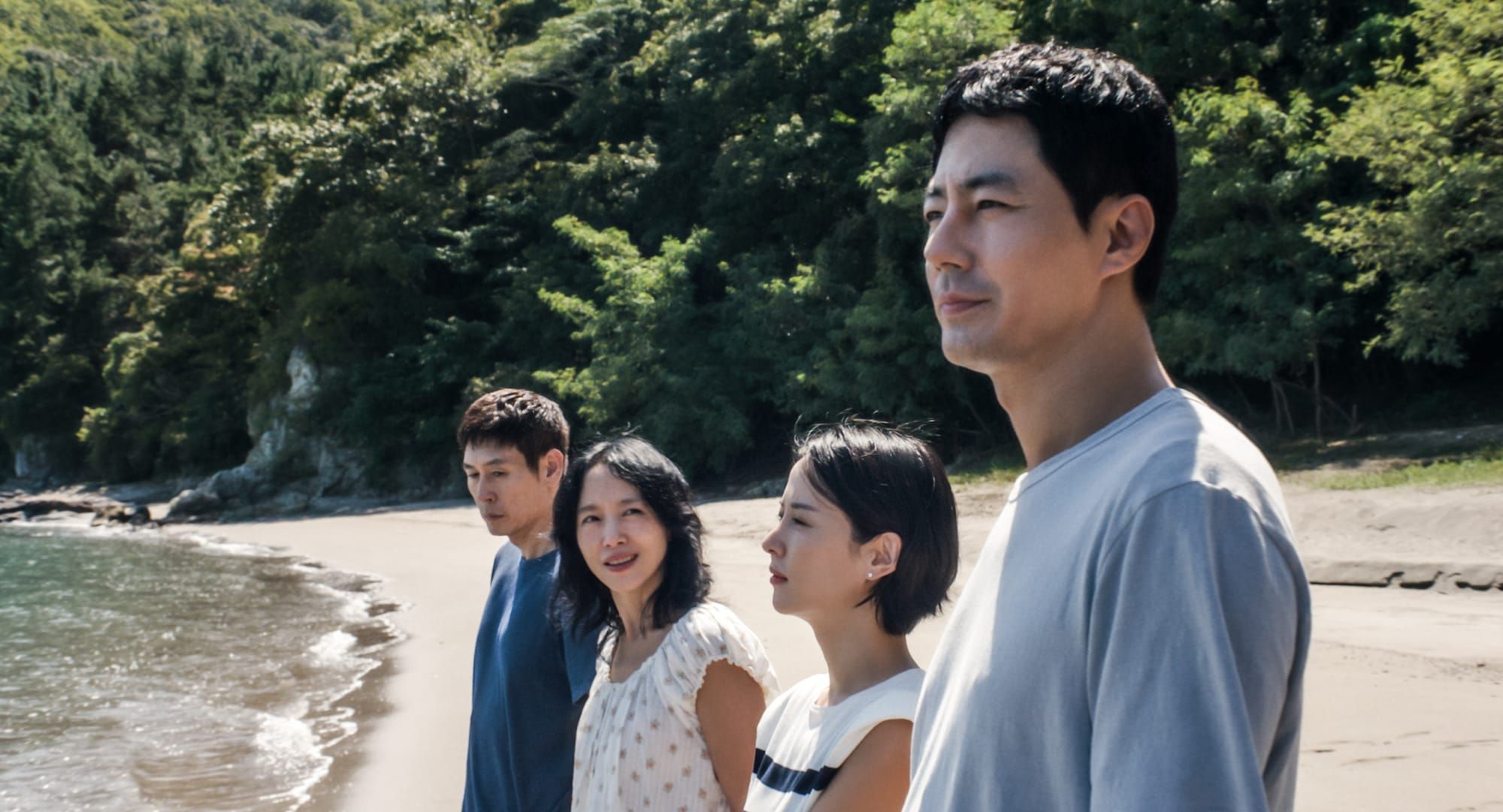
Taste as a whole is important throughout Possible Love. The above married couple, husband Choi Ho-seok (Sul Kyung-gu) and wife Ahn Mi-ok (Jeon Do-yeon), are depicted eating or drinking quite often. A key scene takes place around their son, Cheol, and his birthday cake: a meal that draws attention to itself as a meal. Choi’s layoff from SP Heavy Industries and subsequent striking activities capture the attention of documentary filmmaker Lee Ye-ji (Cho Yeo-jeong). Ye-ji spends a lot of time with Ho-seok and Mi-ok—more time, and more time spent more intimately, than most documentary filmmakers would find agreeable—together with her own husband, fancy-smancy businessman Sang-woo (Zo In-sung). The couples share meals and drinks. And these meals illuminate the social and economic gap between them.
Refraining from spoilers as best I can, the film’s most shocking revelation happens over a meal with the two families. (Ye-ji and Sang-woo don’t have a child but a dog named Blue, symbolic of socio-economic trends). Sang-woo, twiddling his smartphone at the meal table like a teenager, receives news relevant to everyone at the table. The phone, through and the information it conveys, disrupts the connection between the two families.
Taste isn’t the only important sense in Possible Love. Sang-woo holds onto his grandfather’s old Japanese-era police whistle as a keepsake at their countryside vacation home. (The continuity from cop to capitalist in relation to power is important to note.) When Ye-ji invites her new friends (and documentary subjects) for an extended getaway, Cheol plays with the whistle. The high-pitched blowing of the whistle too returns in an instrumental scene that typifies the divide between the two families.
The divide is clear even from their clothes. In the first interview between Ye-ji and Mi-ok about navigating life with her husband post-SP Heavy Industries layoff, the two women show up in attire worlds apart. Mi-ok, the working-class factory worker of her own, is materialistic and she knows it (but can’t afford it). She shows up in a graphic T-shirt about a typeface in English and baggy washed-blue jeans; Ye-ji, by contrast, wears a sharp white collared shirt and well-fitted dark blue jeans that almost look like dress pants. Even when Ye-ji wears a graphic T-shirt later, it is in the prototypically classier French: “Amour,” it says lamely. They live in different worlds.
Touch plays a more sensual role; as one might expect in a film titled Possible Love, there is a little physical intimacy. Hands brush away sand off knees—knees they probably shouldn’t be touching—and the gentle touch hints at more sultry places. There is only one actual sex scene, between the primary and working-class couple that Lee clearly favors, and it’s better described as lovemaking than pornographic or lustful intercourse. In a more violent (and non-sexual) form, a specific act of touch is also very important to the way Ho-seok understands himself and his place in the world. Someone’s touch broke him; someone else’s touch restores him.
Film is a visual medium though, and there is no more important sense to Possible Love than sight. Ye-ji is an independent filmmaker answering the vocation to make films about working-class laborers she first felt called to while on vacation in Qatar. Her camera purports to be an instrument of empowerment, but she sees what and when she wants to. She, to a degree, exploits the violence affecting Ho-seok for her documentary and makes his interview about the violence her white whale. At the same time, Ho-seok only begins his healing before her camera. He cannot find the words in group therapy that the camera can pull from him and his watery eyes. Her interview is more like an exorcism than therapy, and that might as well double as how Lee conceptualizes the role of art in society.
But it isn’t Ye-ji’s camera as much as it is the transcendental camera of cinematographer Kim Ji-yong (Decision to Leave and Silenced) that rises to Lange’s standards. Handheld and waist-level as it wades through beautiful pastoral settings, there is a little Terrence Malick in the photography. Kim and Lee close the film by silently holding like a hug to the glowing white face of the full moon, a symbol of Ho-seok and Mi-ok’s love story. Looking at the moon now, though, feels different: their love, their story, has changed it for us too. Like Muhammad’s splitting of the moon in the Qur’an, they changed the appearance of the moon itself. Or so it seems emotionally.
For Lee Chang-dong, as embodied by the senses, to be human is to feel deeply. Lot’s wife in Genesis couldn’t resist turning around to look at Sodom and Gomorrah’s destruction and she was turned to salt for it. Lee’s characters are all Lot’s wife: they turn around and see. They know the consequences, and yet, they choose to feel still. They choose love. As fellow In Review Online writer and friend Ethan J. Rosenberg writes on the film, “Rare is the film that earnestly inspires you to hold your loved ones closer.” If Lange is right about the camera—that it changes how we see the world without it—then the world will be a better place because of Lee’s loving gaze.
“Why peer at me like that?”
“Because suddenly the soju is sweet.”