Learning To Love: Herman Yau, Ansonbean, and Anson Kong on We’re Nothing at All
"Sometimes you just feel so sad that you want to leave the world and bring some people with you."

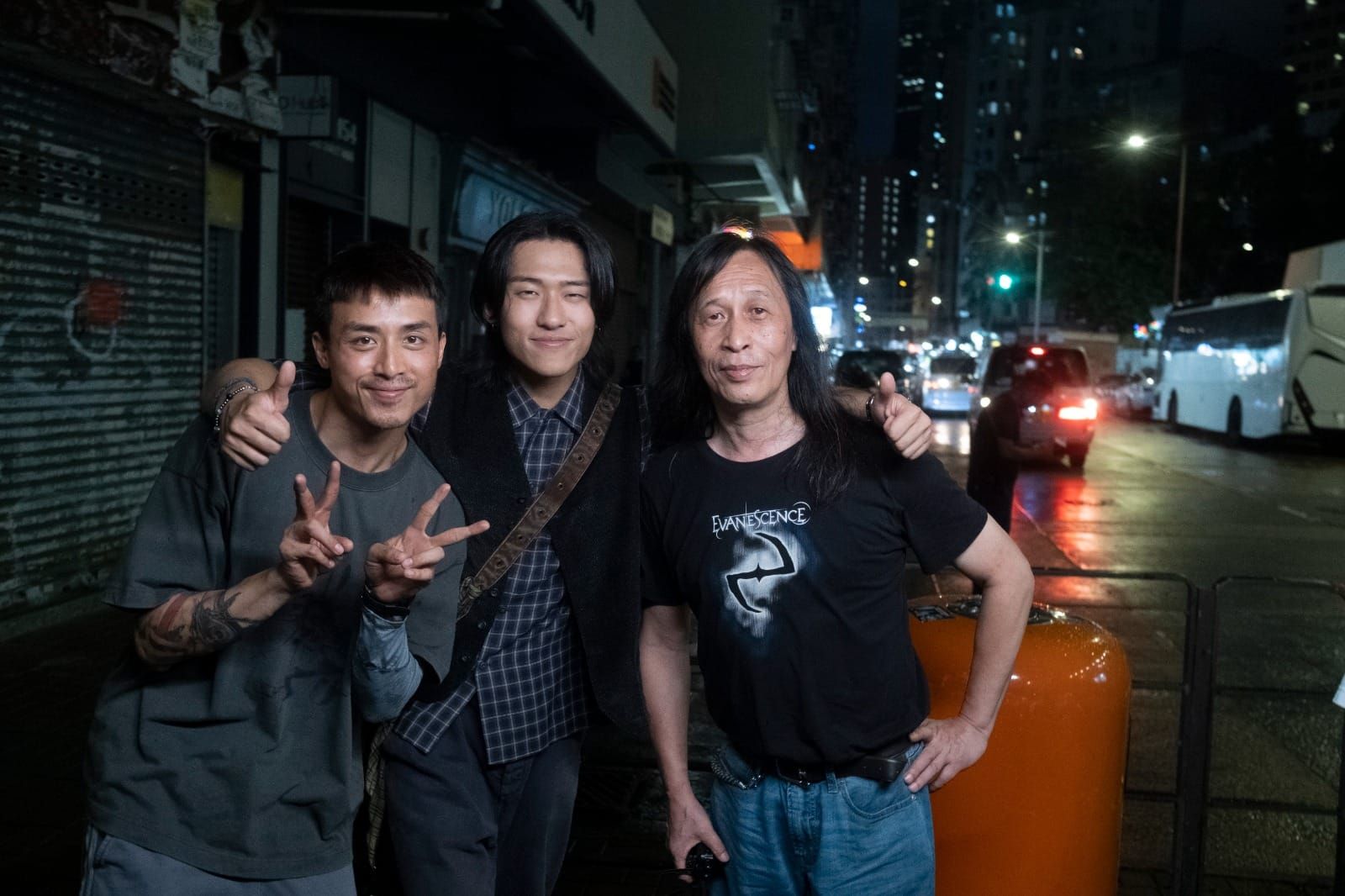
Regardless of what a filmmaker says, not every film is a passion project. Sometimes, a particular film means more to its creator(s) for one reason or another. That said, nobody will ever question whether or not We’re Nothing at All is a passion project. It is a miracle it even exists.
Entirely self-funded by director Herman Yau, the Hong Kong filmmaker best known for his Category III (their 18+ rating system) exploitation films like Ebola Syndrome and Taxi Hunter, makes a bold artistic risk and an even bolder financial one with We’re Nothing at All. Cantopop idols Ansonbean (as Ike) and Anson Kong (as Fai) play gay lovers in a film loaded with suicidal ideation, terrorism, dismembered bodies, and abuse. Even the third lead, Investigator Lung (Patrick Tam Yiu-Man), the antithesis of Ike and Fai’s drastic measures, is a proudly pansexual man. Yau layers homosexuality and homophobic themes with other important social issues like unemployment, working conditions, wet market commentary, and sex work. The themes also double as a laundry list of topics the mainland censors would prefer to avoid. This prevents the film from getting past mainland censors and largely limits its reach to Hong Kong.
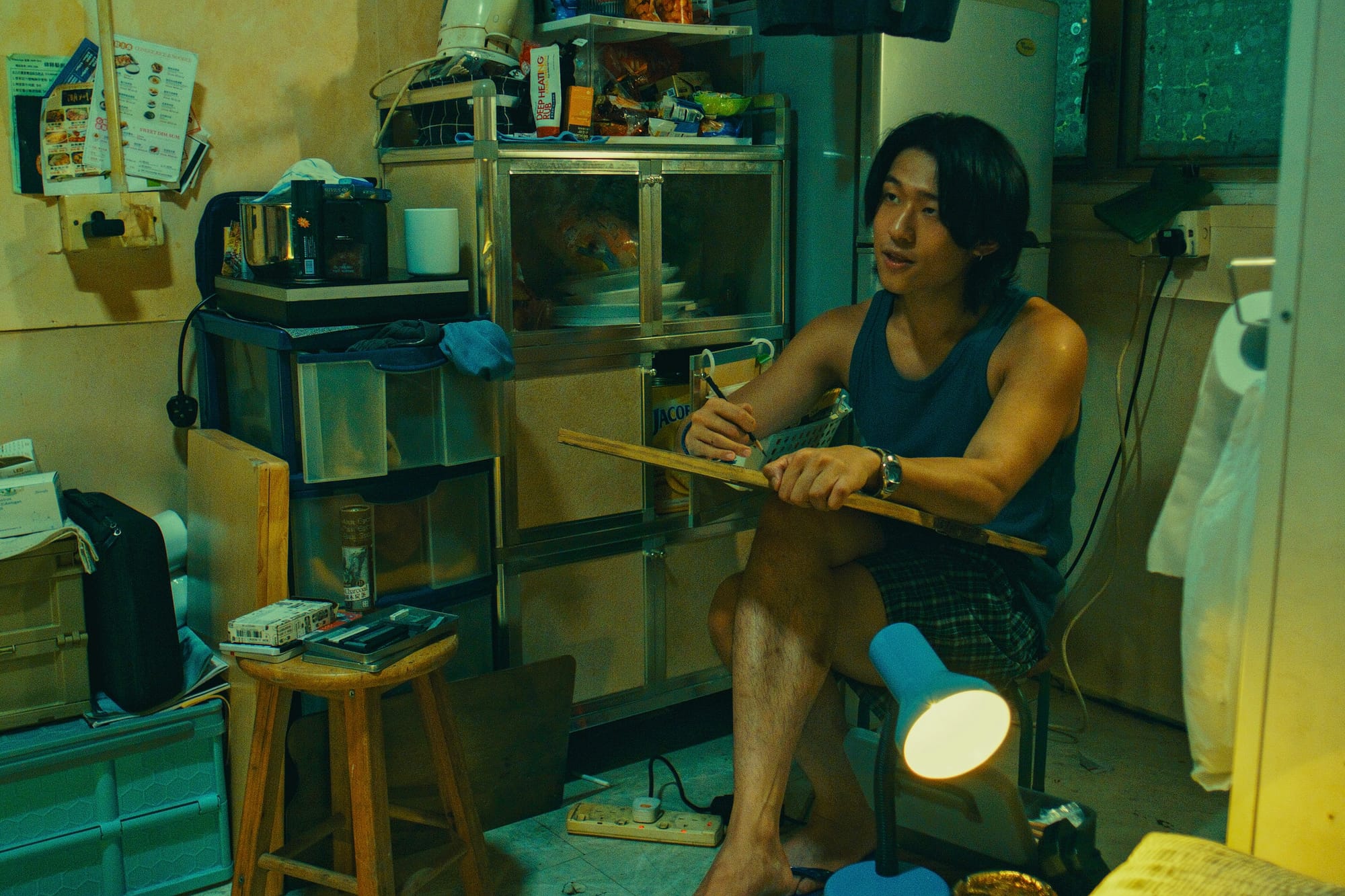
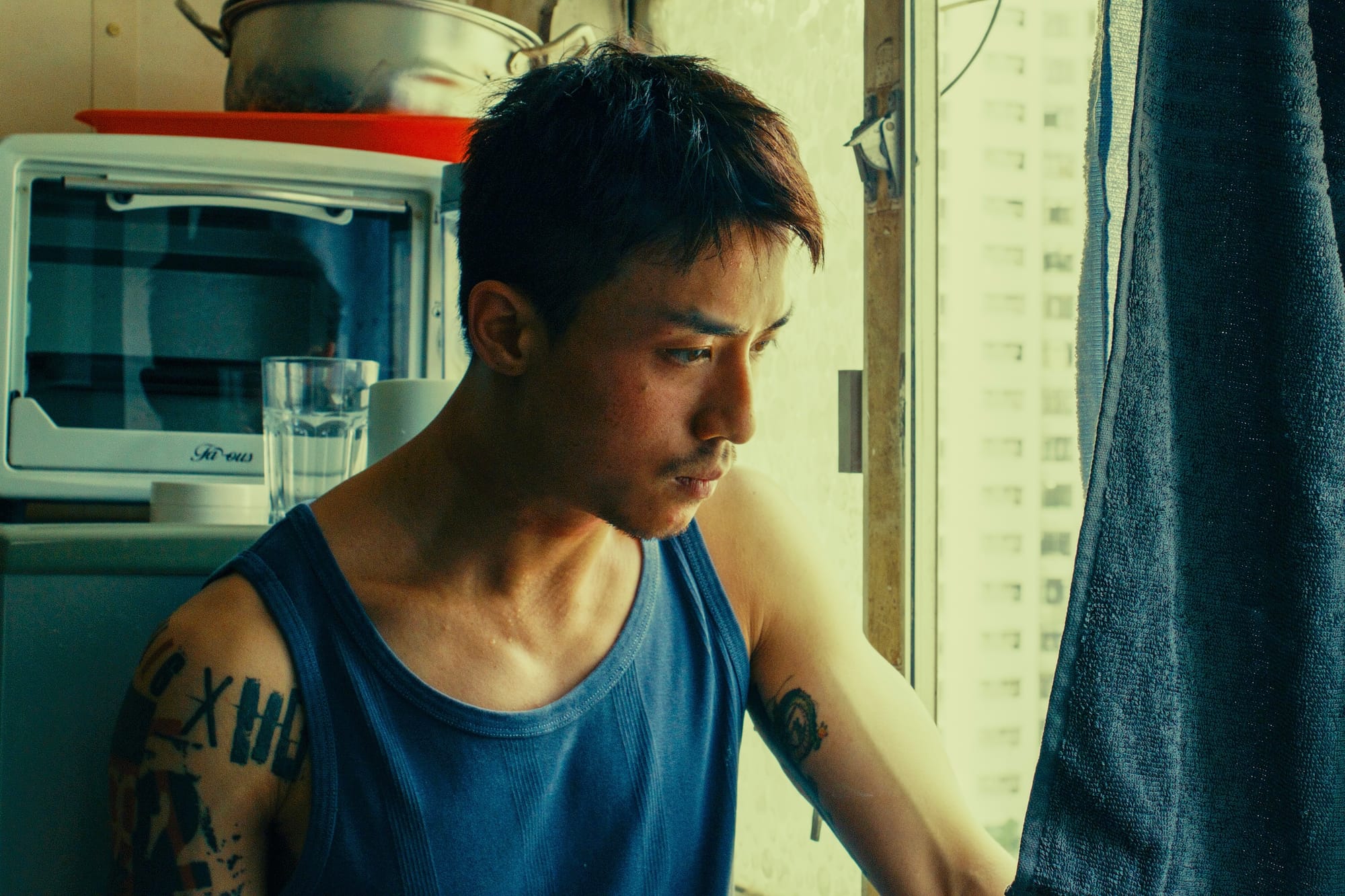
Street artist Ike (Ansonbean) draws Hong Kong’s past and sells his drawings to tourists before he pisses off the authorities because he lacks the proper permits. He draws Fai (Anson Kong, from the band Mirror), a construction worker down on his luck after a failed strike, and the two men quickly become lovers. The terrorist attack at the beginning of the film is a bus bombing that kills at least 12 people; Yau never hides that the two gay men are responsible for the act—a choice setting the film up as a portrait of romance drawn to inevitable tragedy.
What makes these men choose violence? What radicalizes them? How dark is the world they live in? Does the destruction come from the rubble of their love? Or is it the other way around: can trace remnants of love be found in the destruction?
I had the pleasure of interviewing director Herman Yau and leads Ansonbean and Anson Kong over Zoom. Our conversation moved freely from LGBTQ themes and homophobia; the recurrence of vehicles of transportation in the terrorist films of Yau; balancing the dark themes with idol life; and even the people who taught Yau, Ansonbean, and Anson Kong how to love.
The interview has been condensed and edited for clarity. Read my full review of the film here.
Joshua Polanski: Congrats on the great film. I'll start with a question for Herman, and then we'll bounce around.
This film, I understand, is entirely self-funded. I imagine that's a commitment you can't make every time you make a film. So, why this film and why now?
Herman Yau: Why now? Actually, because in the past six or seven years, I mainly made action films, and then those action films are considered to be co-productions with some Chinese companies. The investors aim at the Chinese mainland market. In order to release a movie in China, we have to go through the censorship system in mainland China. The censorship criteria of mainland China and Hong Kong are quite different. In recent years, some people argue, “What's the definition of a Hong Kong movie?” Some audiences are Hong Kong [movie] lovers, and they have kind of complained that filmmakers are making movies catered for the Chinese audience. And then under all this consideration, in 2024, I had a strong drive in my heart that I want to make a Hong Kong movie that no one would doubt or will argue whether it is a Hong Kong film or not.
When I chose the subject to make a film, I deliberately chose homosexuality because that's not allowed in China. Of course, [it] is quite stupid that I gave up a large market in the first place. You can consider this a game for me and something that I wanted to do after the past six or seven years. At that time, I began to develop the script and then work on it. In 2025, I made it happen and actual filming began.
JP: This next question is for both of the actors. This is a very dark film. It's a Category III film with suicide attempts, terrorism, and abuse. It's not the kind of film that you expect to see successful C-pop idols like yourself to star in. So I'm curious what pulled you into this film given the subject matter?
Anson Kong: First of all, because of director Herman Yao [and] because he's a really good storyteller in the movie. [As an] idol, I don't want the audience to see me on the stage [and see me] face and just the light on the stage. I know the movie and the role is kind of darker. I didn't think about success in this movie. I just wanted to try to take this challenge and take this difficult role [so] my audience can see other faces, other sides of me.
Ansonbean: I feel like as an actor, it's important to have a wider range. So being able to play Ike is really a very good opportunity. It's challenging, but it's definitely worth it.
While I first read the script, I felt like it could really empower people. Although it's dark, and it has a lot of suicide attempts, terrorism, bombing, and everything, I feel like director Herman is really brave to also include the feeling that sometimes you just feel so sad that you want to leave the world and bring some people with you. We might not act on it, but it is really a real feeling we feel sometimes. This story makes people feel less alone when they feel like that. I feel like as long as someone out there feels less alone and feels that love or [if] it could make the world a better place, I don't care about the fans worrying about my image or anything anymore. The most important thing is to inspire more people and actually touch their hearts.
I'm really proud and honored to be a part of this.
JP: That's beautiful. Thank you.
JP: This next one's for anybody who wants to answer: What sort of research was involved in the stories, particularly around homophobia and abuse? Did you talk to people who had similar experiences to your characters or while writing the script?
HY: Actually, most of the parts or the details in this movie really happened [to] my friends. [The research was] quite a direct experience for me, in the sense that they told the stories to me directly, a lot from mouth to mouth. Then I heard from others. Of course, I would not and cannot disclose their names.
[With] all these matters that I have put together, this movie is very risky in the sense of getting the money back or passing censorship even in Hong Kong. It’s very risky. I take it as the only chance in my career, [so] then I try to inject all the things that I want to express. I want the whole citizenry, in particular in Hong Kong, to see and to face what’s really happening in our society, that Hong Kong is a metropolis. It seems that it’s very liberal on the surface, but underneath it’s still very conservative. People talk one thing and do another thing. In short, I want to expose the hypocritical side of a so-called liberal society.
On the other hand, I'm not trying to acknowledge or endorse any action that people would consider to be a kind of terrorist attack. I just want to let people think it over. Many disasters or tragedies that happen nowadays, even in history, can be avoided if we can take more care [of] others and we try our best to minimize some evil beast in our daily life.
JP: Thank you. Anson Kong or Ansonbean, anything you’d like to add?
AB: We never know what another person is going through. And through this movie, it really shows that sometimes, on the surface, that person might seem okay, but deep down maybe he has family issues, maybe he's going through his boss yelling at him at work, and all these little things. For example, in the earlier bus scene, that little girl's kicking Ike’s chair and all these things actually build up to their tipping point, causing this tragedy to happen. I feel a really important thing is to really try to be nice to people around us, even strangers, because we never know what they're going through.
This world really needs more love and care, and I hope this movie could spread that.
AK: I agree with that. Show more love and less hate to other people, to your family, and to your friends. Especially on the internet. It is so toxic on the internet right now, so show more love on the internet. Show more love to somebody you don't know. I think it would make [the world] better and better.
JP: Another question for you, Herman. Many of your films over the last 10-15 years, specifically the action and your more terrorist related films, often target means of transportation. The taxi drivers in Taxi Hunter, the tunnel in Shockwave, the airport in Shockwave 2, and of course the bus in this film. Why do you think it is that you gravitate towards these modes of public transportation in your depictions of violence?
HY: Well, I think it's a place or an instrument that makes different citizens in society come together. Every minute inside a tunnel, in a bus, on the plane—in all these vehicles, they gather all walks of life together. It [is] a very good medium for me to portray different people and different faces that we often see in the place that we are living in.
JP: This question is for both of the actors again. Your characters are judged by their families. They’re bullied by the homophobic world at large. They live in this world of judgment, but they never judge each other. When one character kills his father, the other poses solutions rather than judgment. How do both of you see the relationship between love and judgment?
AK: I think this is why Fai and Ike work. For Fai, he never feels love in his life. He can’t find love from his parents. He doesn't even have friends. Finally, he meets Ike; finally, he finds some love and caring from Ike. For Fai, this is so powerful because Ike can show some love and some solutions that Fai never thought about before. That's why even when Fai kills his father, Ike still shows some support and even will make [a] solution [that] they go out together.
AB: There are so many different people. We all have different values, and we care about different things. I feel like somehow we will still judge people in our heads, but the difference between loving and simply judging is if you act on it, if you judge someone, [or] you find that person having different values from you, you can be hateful about it. You can yell at them. You can say it's wrong or just make them have a worse day just by being mean. You can also just judge. And it’s okay: maybe we just don't vibe, then maybe we'll distance ourselves.
The thing about love is you meet someone who shares similar values, or you accept their flaws because no one's perfect. I feel like the difference between love and judgment is that you actually embrace the whole person—what they care about, their personality, their morals, values—everything.
So, I feel like even though Ike knew that Fai killed his father and everything, value-wise, he cared about this person more than everything else. He cares about the connection more than what the person does, and that's what caused him to be able to embrace everything he did, even though he killed someone.
JP: While you're talking, Ansonbean, Ike is an artist, and he's often drawing the city's past and tourists as well. Was it easier for you to connect with the character because of your own art and as a musician?
AB: Definitely. I feel like all forms of art are still art. It’s either feelings or it’s a message. Usually you just want to express something or you actually just want to [communicate] something. Ike's art, through his paintings, [are] similar to how I write my songs, how I write my rap and music. There is a scene where his painting of Fai playing basketball is taken by the cops. I tried to put that feeling into [the scene]: It's like, “Oh, what if all my songs are taken away and that would really hurt me?” I feel like artists connect through that and that helped a lot for me to play Ike.
JP: Anson Kong, Fai is a complex character who is also concerned with things like worker rights beyond just the more immediate and larger homophobic themes in the film. How do you think these complex issues are related as they concern your character?
AK: Of course, in] real life, I have a happy life. I got my love from my parents, and I have good friends. When I talked to the director [about] how Fai's life before and why he goes through this experience, and what his status is, I did some kind of homework for this role. I just walked down the street and observed the people and how they live in this city right now. Because when I debuted, I [did] not go out too much. If me and Ansonbean go out, maybe just to hang out, some fans will follow us. Sometimes we don’t have private lives after we debut. So just for this role, I did this homework for Fai.
JP: Herman, the past plays an important role in the film. Of course, the story is not told strictly chronologically. The investigator's story, in particular, with his pansexuality, is from his past. Ike is drawing on Hong Kong's past. Do you think there's something to learn about Hong Kong's present from the past?
HY: I didn't think about this too much, but when you're talking about this, I think there is a comparison. For the police, [Investigator] Lung is a high-ranking official in the police force. He is also a forensic expert and is [well] educated. He is really middle class in Hong Kong.
Then, in particular for Fai, he is an underdog and he is an underclass in the society. I think my attention would be the class difference more than about Hong Kong in the past or contemporary Hong Kong. Of course, when you mention it, I think there is something like that. But it is not my concern in the first place.
JP: The phrase “in an avalanche, no snowflake is innocent” is very important to the film. It is in the marketing and everything too. I'm wondering if you can tell me a little bit about where this phrase comes from and does it resonate with any of you as well?
HY: This phrase comes from a Polish poet, Stanisław [Jerzy Lec], but it's not exactly the same. It's just a paraphrase.
Now, in Chinese, the exact wording actually comes from the People’s Daily. This is a government mouthpiece newspaper in mainland China. This was a headline in 2016. In Chinese, the exact wording comes from the People’s Daily. One can consider this to be a private face of what Stanisław said some years ago.
For the meaning of this phrase, there is also an argument. We were talking about the snowflake during some post-screening Q & A. Someone in the audience raised a question: “Is the sister of Ike also innocent? Is she innocent?” It can be yes, and it can be no. When we have just tried to give a brief answer, I think it would be no.
If we look into the details... There is an old saying: “When you keep silent when some injustice happens in front of you, in this sense, you are a snowflake.” So it can be yes, and it can be no. There is no absolute answer. But if people want to think it over or argue about it, I think during the process we learn something, or we can recognize something that we ignored in the past.
JP: Oh, that's interesting with the sister because she does save him a little bit from some of the abuse, but she also keeps living in the same house. She doesn't make the decision to move away and to cut off the abusers in the same way. That is an interesting observation.
For each of you, what was the hardest scene to film? You can answer it physically in terms of acting, maybe it is emotionally. It could be budget, it could be practical, but what was the hardest scene for each of you to film?
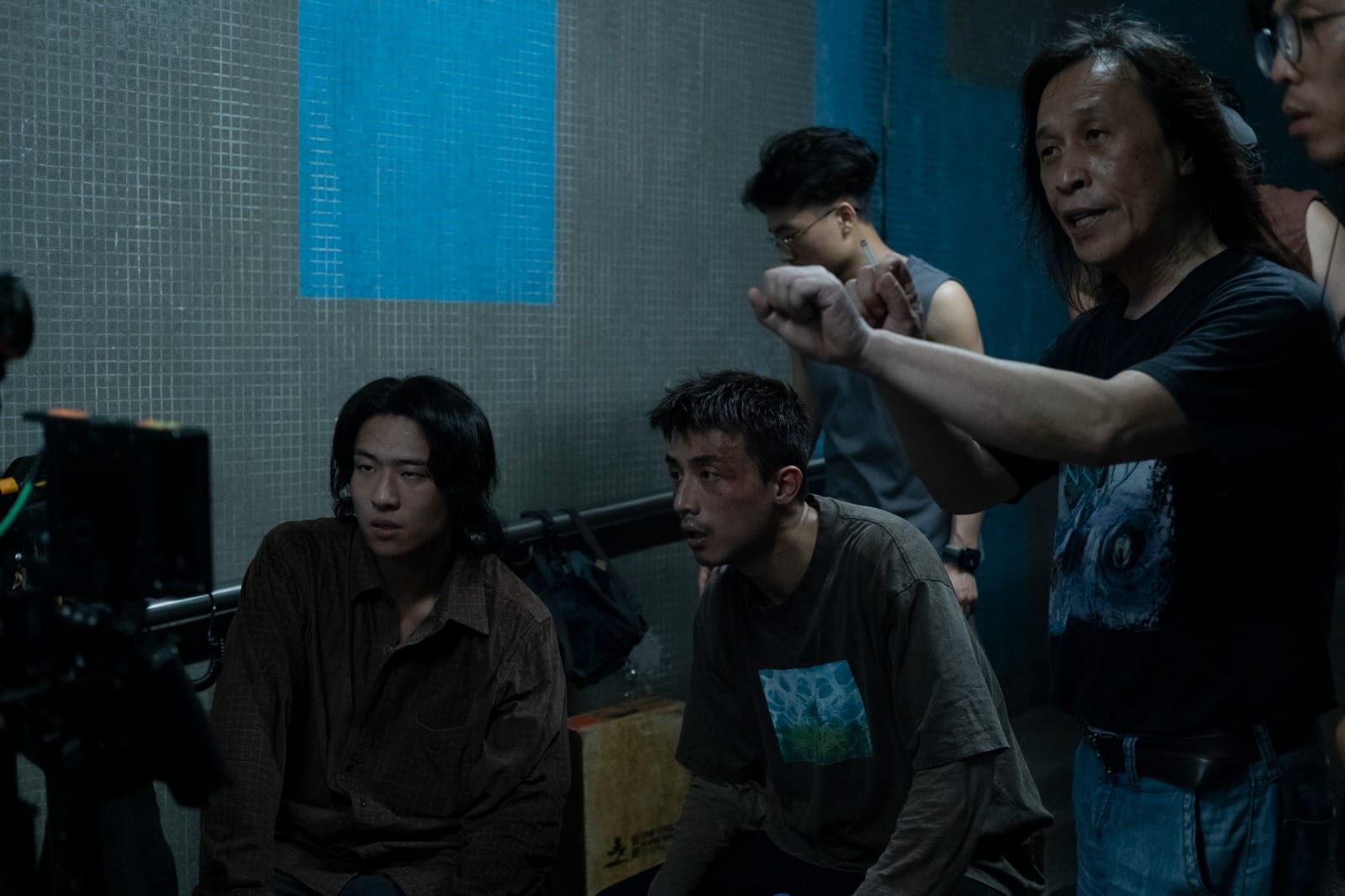
HY: The hardest thing [was], not any particular scene, but the movie as a whole. I worry that the outcome of the movie will be offensive to anyone. That is my biggest concern, especially for the LGBTQ+ [community]. There has been a lot of debate and argument in recent years; the so-called Gen Z generation, they uphold individuality at a very high level recently. I think it would happen, but I tried my best to minimize anything that would be offensive to anyone.
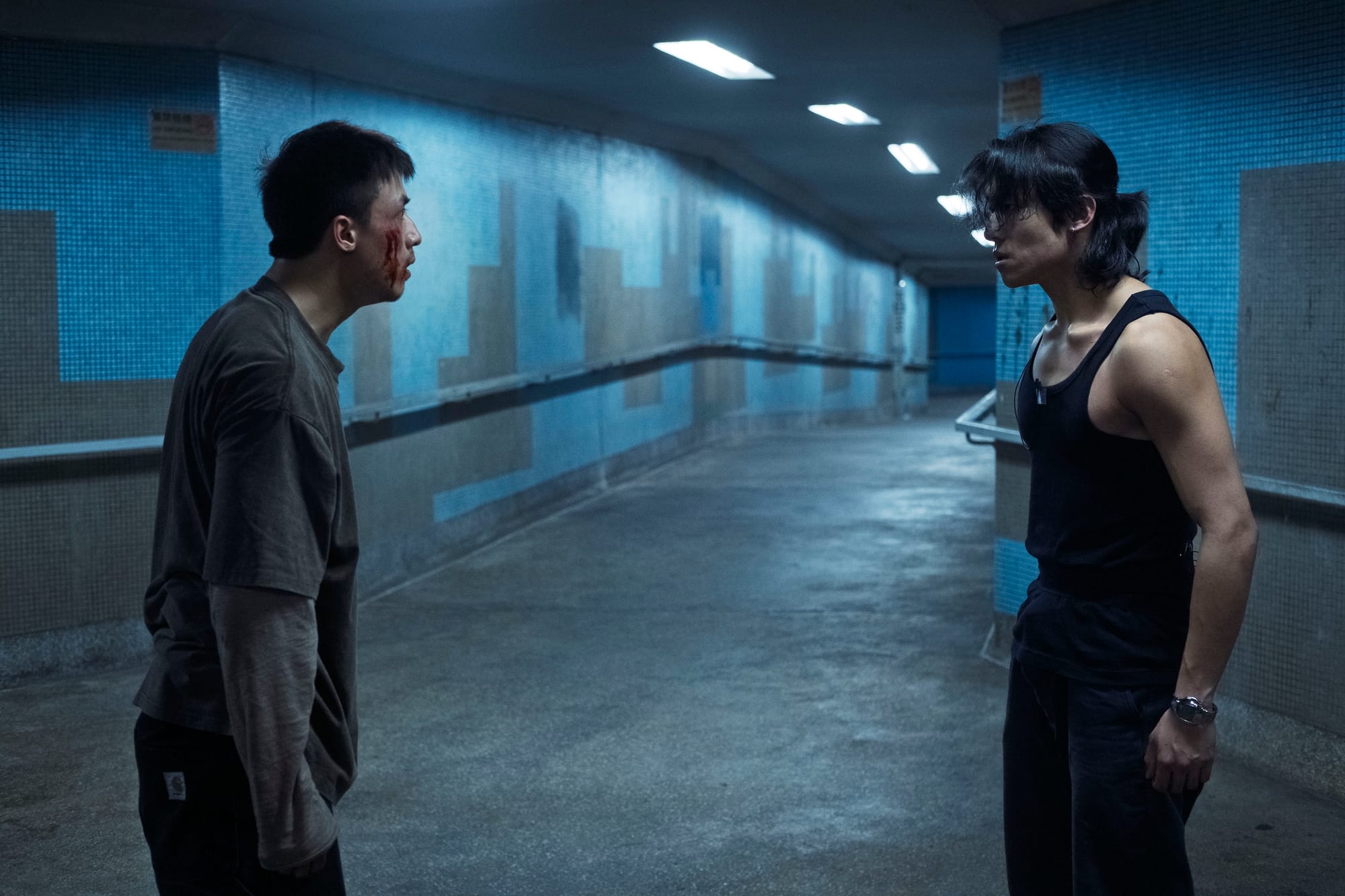
AB: The hardest scene is the one that is filmed in the underground tunnel.
Because it’s pretty stuffy down there. There’s not much oxygen. We also filmed the bar fight scene; then we chased, we ran down there, and then there's also a deleted scene where we were slicing, cutting random people because we were angry as an imaginary scene. After filming those two scenes, the slapping scene was really tough for us. We even actually slapped each other to feel the pain and the anger and feel how hurt you get when you're being slapped by your loved one. That scene emotionally and physically is the toughest, but it was very memorable, and I hope it's worth it… I feel like it’s really worth it because the audience at that scene in the cinema, I could hear them tearing up, crying, and a lot of them say that scene is memorable. I feel like although that scene was tough, it was really worth it. I'm happy [with it].
AK: For me, one of the hardest scenes is after the love scene. I have long lines to talk about my childhood trauma. My character, he is a less talkative person. In that scene, you need to explain your childhood trauma and your emotions very clearly to the audience. That scene for me is one of the hard parts.
JP: Those are two of the emotional high points in the film, I would say. The work paid off.
One last question to close out on. One of my favorite pieces of graffiti is in Toronto, and it is just on a door in Toronto. It's this phrase, “Who taught you to love?”
I thought about that phrase while watching your movie, particularly because of the way these characters are isolated from the people who would normally teach us how to love. They’re mirrored through Inspector Lung, who does have this support system that your characters don't.
When I ask you that question, “Who taught you to love?”, who comes to your mind first?
AK: Oh, it must be my parents. Yeah, and also my pet, because I had my cats when I was very, very young. I think these are all very important people and things that taught me love, how to love.
AB: Personally, I feel like people who are in need teach me how to love.
Because at first, maybe I'll only think of love as romantic love, but after seeing someone in need mentally or maybe financially, if you see some homeless people and they really need food, the moment you care or the moment you want to make them feel better because you have the ability to, you have the power to. Like that Spider-Man [quote], “With great power comes great responsibility,” it really changes me.
When you learn that you can actually inspire people and you can actually help them make them live better, that is love. I feel like through this project, this movie is also full of love. It is full of love from director Herman to make people feel less alone. I'm learning that there are actually more and more ways to love and make the world be more loving.
HY: It's the first time in my life that I've heard this question. Thank you for your question. I think in my childhood, I learned love from my parents, and then I learned how to love from some past philosophers.
JP: What philosophers in particular?
HY: [Philosophers from] the long history of human beings from Socrates and even to Foucault or even to Edward Said.
JP: Oh, wow. Awesome. Thank you all for this interview and for your time.
AK: Thank you for your time.
AB: Thank you, Josh.
HY: Thank you for your last question.
This interview was transcribed and edited with the help of Haleigh Cramer.