Knife: The Attempted Murder of Salman Rushdie
Salman Rushdie will never be silenced.

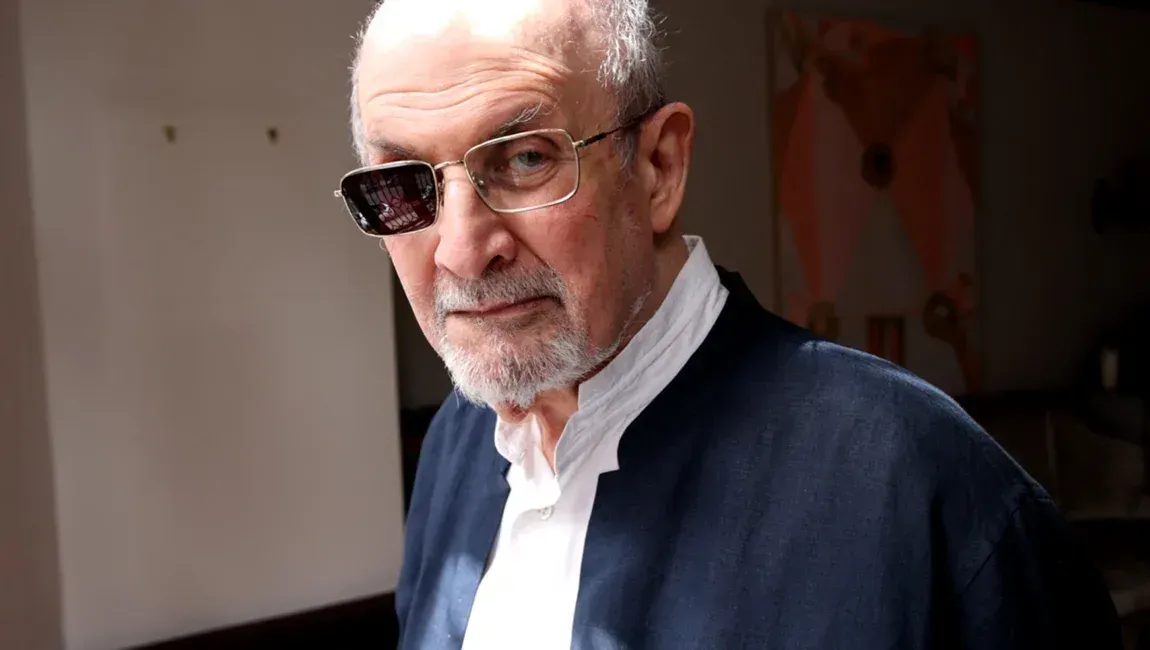
The novelist Salman Rushdie never wanted to become the world’s symbol for free speech against oppressive regimes. He just wanted to be a writer, and he happened to have a gift for stringing verbose sentences together with a truthful marvel. His life changed forever after publishing The Satanic Verses in 1988. The “satanic verses” refer to a contested moment in Islamic history when the Prophet Muhammad retracted verses he had memorized, believed to be revealed though the Archangel Gabriel, after discovering the revealer wasn’t Allah through Gabriel but instead Satan. Rushdie’s book isn’t even about this or Islam more broadly, but that didn’t stop Ayatollah Khomeini, the Supreme Leader of Iran, from issuing a fatwa (a legal opinion) calling for his assassination. Multiple of the book’s translators were attacked. The Japanese translator, Hitoshi Igarashi, was killed; so too were 37 people in Türkiye in an attack targetting his Turkish translator. In 2022, Rushdie himself was stabbed 15 times while speaking at the Chautauqua Institution in southwestern New York. He lost his left eye.
Documentarian Alex Gibney’s Knife: The Attempted Murder of Salman Rushdie is an adaptation, loosely speaking, of Rushdie’s own account of the event from his memoir Knife: Meditations After an Attempted Murder. It tells the story of that violent day in August 2022, as well as his lengthy recovery process. Gibney also pushes the narrative further into the past, back to Rushdie’s childhood and early creative years, with a focus on the way the publication of The Satanic Verses ruptured his life and sent him into years of hiding before resurfacing into the public eye in New York City.
The footage mixes archival footage, original interviews from Gibney and his cinematographer Benjamin Bloodwell, and hospital bed home footage captured by Rushdie’s wife, Rachel Eliza Griffiths (a poet, novelist, and photographer in her own right). From the recovery bed, the great novelist still possesses a larger vocabulary than most — though, during that periods, he seems hyperfocused on feeling and giving love. Griffiths’ is the object of much of this sappy deluge of affection, and when she dances with him in his hospital bed, his face glows with the joy of a child receiving a gift. Wes Anderson and Juman Malouf call him only a few days into recovery, and Rushdie immediately jumps to the topic of love. Like his own characters, whether that be the titular murderer in his novel Shalimar the Clown or the mythological lovers of Orpheus and Eurydice in The Ground Beneath Her Feet, Rushdie is presented by Gibney not as the novelist or the PEN America mascot for free speech, but the compassionate lover and dear friend that he is outside the public eye.
Continue reading at In Review Online.