Inmates running an asylum: on Kaljo Kiisk’s cult Estonian satire Madness
A fitting North Star for Estonian cinema

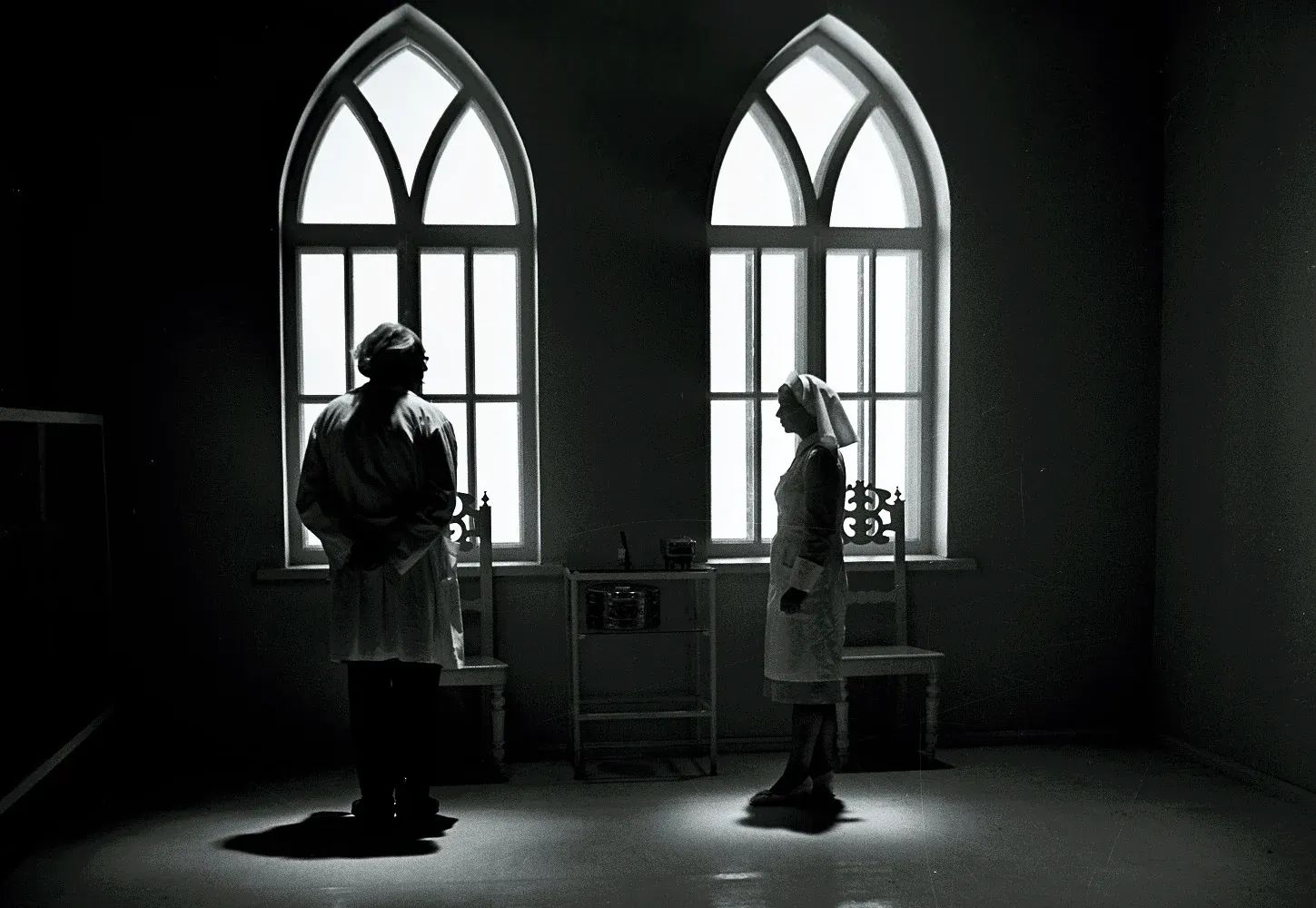
Judenfrei reads a sign outside of a rural village in the opening of Estonian director Kaljo Kiisk’s classic 1969 film Madness. It’s the first word either spoken or seen and promptly establishes a sombre mood appropriate to the Second World War setting. The Gestapo marches triumphantly onto the property of a remote asylum. A morally clairvoyant narrator sets the scene: “The invaders had already succeeded in executing all Jews, Marxists, gypsies, guerrillas. Now it was the turn of those mentally ill.” The solemnity of the Nazi march is broken by a dark gag: an establishing shot of the exterior of the asylum and its meandering, listless, and threatless patients. Madness creates a world where genocide and occupation are material facts. It’s also a world where the weird and the satirical reign supreme, making it a fitting North Star for Estonian cinema, which, for the last half-century plus, has been characterised by genre films that wrestle with the country’s political past.
Following shortly after the New Wave movements in Western Europe, 1969 was a pivotal year for Estonian cinema. Madness, alongside Arvo Kruusement’s Spring from the same year, would become a pillar of Eesti cinema. Its subversive, modernist themes and playfulness with form made a significant contribution to what could be called the Baltic New Wave. It also ranked as the second greatest Estonian film of all time in the 2002 poll of Estonian film critics and journalists, behind only Spring. It is difficult to overstate the film’s import. “Madness stands as one of the most distinctive works in Estonian cinema throughout its 114-year history – an allegorical, visually striking film by the highly productive Kaljo Kiisk that challenged ideological boundaries and expanded the artistic language of film under Soviet rule,” says Edith Sepp, Head of the Estonian Film Institute. “It is simply a masterpiece.”
The Nazis have entered the asylum to eradicate its residents. Just before this final act of psychiatric genocide – part of the Aktion T4 campaigns – Gestapo Officer Windisch, played by the legendary Estonian actor Jüri Järvet, receives a secret report of a British spy hiding among the asylum’s patients. Windisch has limited time to rat out the spy. Only revealing his true intentions to the chief doctor (Voldemar Panso), he first pretends to be just a new doctor, and later a patient himself, in his predatory cat-and-mouse game to find the reported Ally agent.
Cut off from mainstream life, the patients resemble prisoners or exiled dissidents. Mare Garšnek plays the memorably unflappable Sophie, wearing anachronistic make-up straight from the wardrobe of Anna Karina and with a kindred nonchalant charm too. Sophie has been declared crazy for “harassing” state institutions with letters. Yuri Krohn (Viktor Plyut) earns a spot in the asylum because he is an Aryan who prefers to live in a Ghetto, the most malign form of mania as far as the SS is concerned. Elsewhere, a former propaganda writer has been driven mad by the system he defended in his writings. The most obtuse of the political abstractions represented by the inmates comes in the form of Patient 01 (Vaclovas Blėdis), who unironically believes he is the Führer. All of Windisch’s primary suspects are “mad” in ways that point to the totalitarian state’s control of the truth: by definition, deviators must be categorically insane.
Continue reading at the Klassiki Journal.