Fritz on Fridays: Ministry of Fear
Fascists being everywhere in (formerly) Allied territory and secret international rings of fucked-up criminal elites no longer feel that farfetched. The clandestine seance of the fascist Mothers of Free Nations members could have taken place on Little St. James or North Fox Island.

On the first Friday of every month, this column by critic Joshua Polanski will feature a short review or essay on a film directed by Fritz Lang (1890-1976), the great Austrian “Master of Darkness.” Occasionally (but not too occasionally), Fritz on Fridays will also feature interviews and conversations with relevant critics, scholars and filmmakers about Lang’s influence and filmography.
The greatly unappreciated 20th-century English writer Graham Greene (in)famously distinguished between his “novels” and his “entertainments.” Greene’s novels were the books of his that you might know, the capital-C Catholic books with big themes and moral drama: The Power and the Glory and The Heart of the Matter, among others. The entertainments, pulling from his own life experiences in espionage, tended toward commercial genres like spy thrillers and whatever you might call the novel version of film noir. There was something obviously self-deprecating about this, an admission of one’s superiority over the other. In The Paris Review, Greene clarified: “The entertainments are distinct from the novels because as the name implies they do not carry a message (horrible word).”
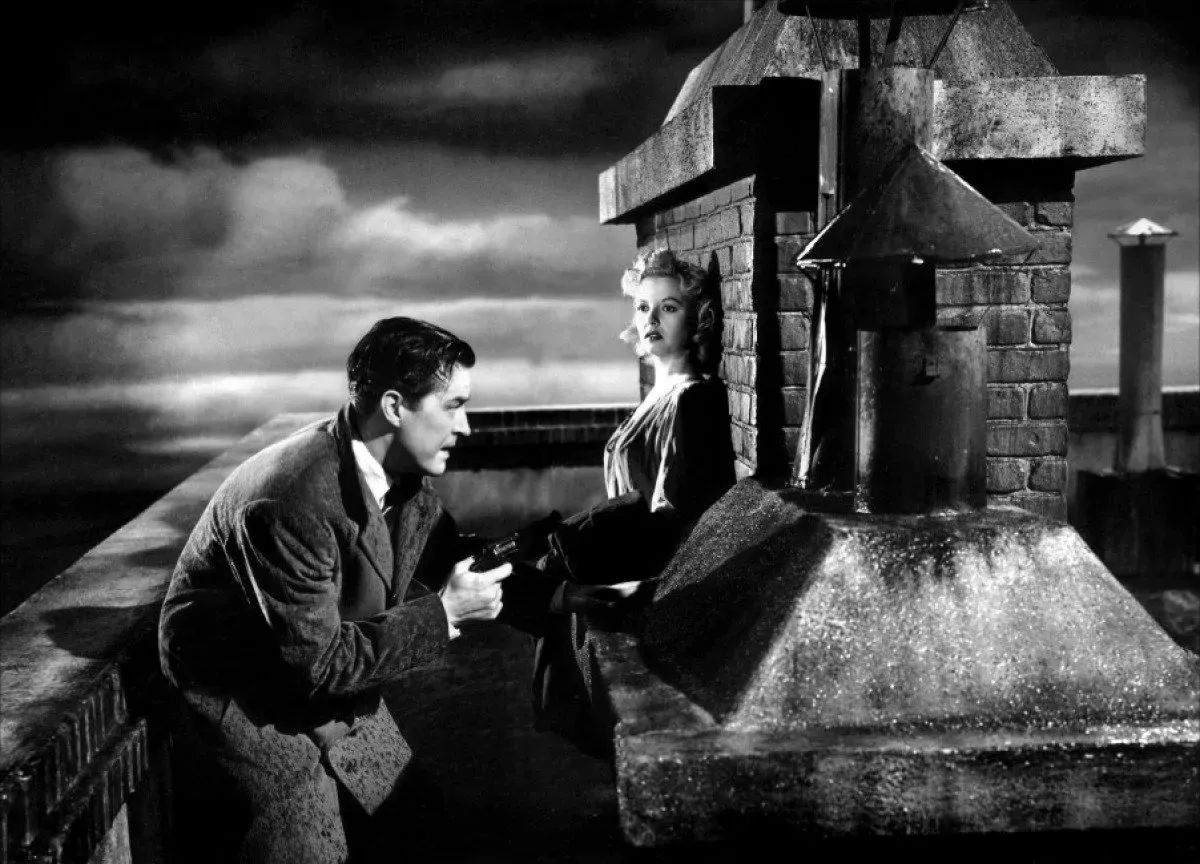
As if destined by the gods of cinema, Fritz Lang adapted one of those “entertainments” in 1944. Ministry of Fear, based on Greene’s book from the previous year, has many familiar features to the art of both men: spies, philandering, wife-murdering and guilt. It’s almost a wonder Lang only adapted one of Greene’s books given their shared interests.
Greene lifts the title from a Woodsworth poem, and in both versions of the spy tale, the “ministry” carries two meanings. In the first, the government (or ministry) is no longer safe; in the second, “ministers” of hate evangelize the world with their gospel of fear.
The curious Englishman Stephen Neale (Ray Milland) leaves a mental asylum in the middle of the war. He spent two years in the hospital’s captivity, shielded from the outside. On his return to London, he stumbles into a local carnival where proceeds go to the Mothers of Free Nations charity — a non-profit that Neale soon has reason to believe is a front for Nazi espionage.
In the film, the Mothers of Free Nations is a fictional organization founded by two Austrian siblings in exile, named Carla (Marjorie Reynolds) and Willi Hilfe (Carl Esmond). We don’t learn much about what they actually do, but the two founders respond with ignorance and dissatisfaction to Stephen’s claim that their organization has been hijacked by a ring of fascists helping the German cause of the war. To my knowledge, this might be the only time in Lang’s filmography where a character is explicitly Austrian — and I’d be even more certain about the siblings being the only Austrian emigres in his films. Even though much of this comes from his source material, it is still quite fascinating for the Austrian director to surround his Austrian characters in deep Nazi paranoia at the height of the World War in one of his earliest films in his new country, the same country at war with Austria. It provokes similar questions to a Leftist filmmaker making a communist antagonist at the height of McCarthy’s witchhunt: Are you intentionally stoking fear? How does this help your own cause? Who benefits most from the depiction?
Continue reading at the Midwest Film Journal.