“Everyone Has Destructive Thoughts”: An Interview with Tamiris Zhangazinova
"I'm so tired of this shit."

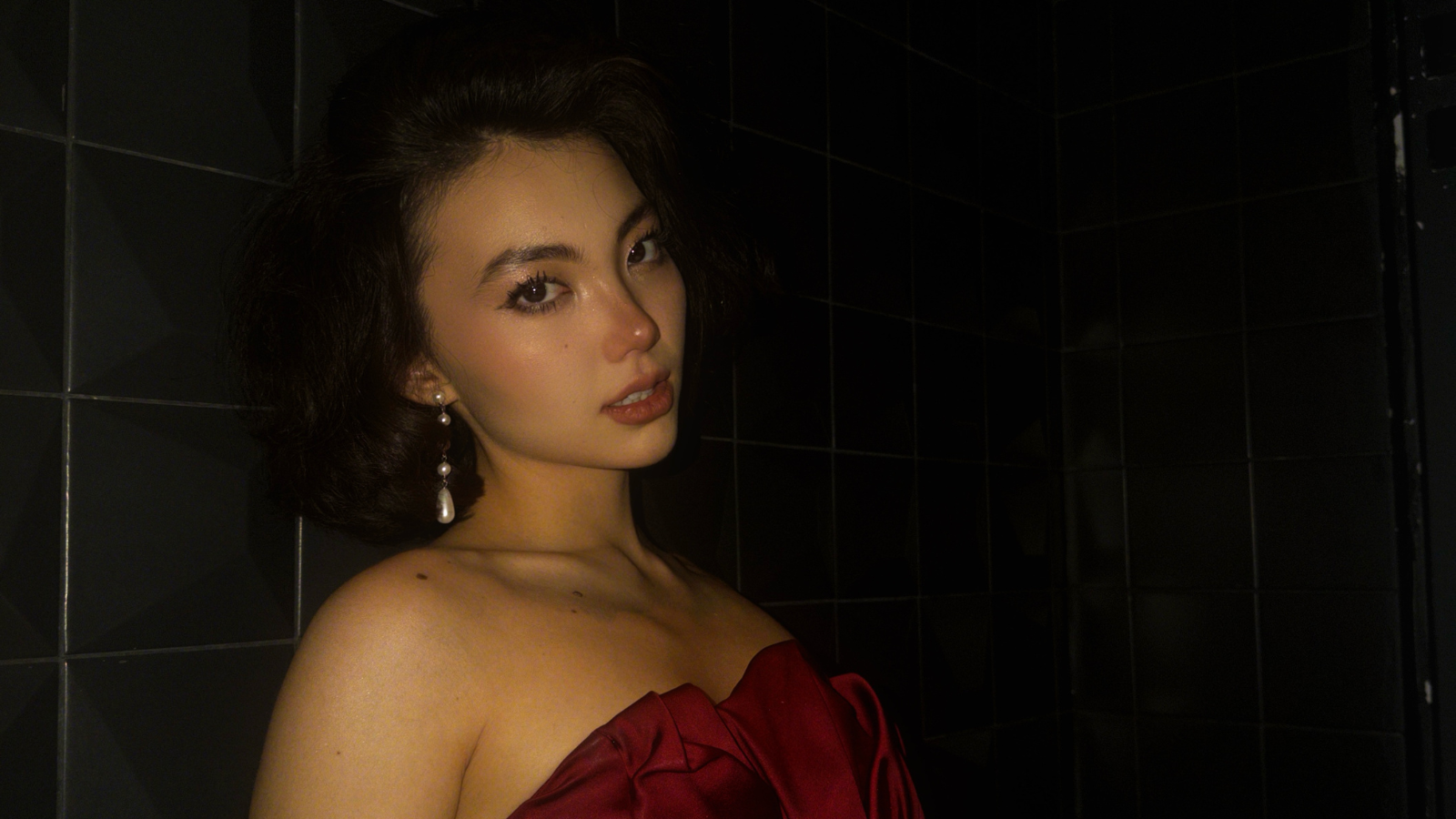
The Kazakh language Becoming was one of my favorite films from the Baltic competition at last year’s 29th Tallinn Black Nights Film Festival. The film, eligible for the category through its Lithuanian co-production (and actor Valentin Novopolskij), is the directorial debut of Zhannat Alshanova. Her credit immediately caught my attention because the little I know about the Kazakhstan film industry is how few women are trusted in prominent cast and crew positions. (More on this later.)
The legendary French cinematographer Caroline Champetier, a collaborator of Jean-Luc Godard, Wang Bing, Leos Carax, Jean-Marie Straub, and Chantal Akerman, shot the film and elevated its visuals to a striking quality. But it was Tamiris Zhangazinova who captured my attention more than anything.
Zhangazinova plays the lead character, Mila, a lonely and ornery 17-year-old who starts competitive swimming, with strong physicality and rare confidence. Mila’s mother leaves the country on a last-minute trip to meet with a foreign romantic partner, abandoning her to grow up on her own and quickly at that. She sees the other girls in a swim practice and is immediately seduced to join the team. Becoming is rife with intense emotional highs and lows, swimming, sociological themes, and sexual tension.
The 24-year-old Zhangazinova has already been in the industry for an astonishing eighteen years and has a treasure of experiences in the entertainment industry. She is also an accomplished singer, model, and, as I learned in our conversation, competitive youth swimmer. Our conversation took place over Zoom and covered her path to acting, Marilyn Monroe, the internal processing of her character Mila in Becoming, the biggest issues in the Kazakh film industry, and more.
Zhangazinova spoke very candidly and without holding punches about sexism in the industry and told me her dream role is to play Catwoman so that she can beat up men. It’s an interview her industry—and all film industries, for that matter—would do well to heed.
The interview has been condensed and edited for clarity.
Joshua Polanski: Do you think of yourself more as an actor or a singer?
Tamiris Zhangazinova: For me, acting and music are similar. They are two different languages—the same emotions—but different languages. Acting allows me to disappear into someone’s life. I can hide behind the character. I feel the emotions, but it’s not actually me. It was a character, it was her decision, it was her choice, it is her emotions.
When I go on a stage, when I sing songs, it hits differently because it’s only me and the public is watching. I feel like it’s more about me. I like both of them, but it’s just a different world for me. When I’m acting, it's a [different kind of] responsibility. But when I'm singing, it's me and my emotions, and I feel much more than when I act.
JP: How did you first get into acting?
TZ: It started when I was three years old. When I was a little girl, I was with my mom, and I pointed at a TV and said, “I want to get into.” After six months, a big competitive festival to perform started. I started walking, and they gave me a little costume. I started modeling at three years old. The first step was modeling, and then I started dancing, and then singing, and then I [finally] started acting. It was a long, long trip, but it was [actually pretty fast too]. I started acting at six years old.
JP: That is early.
TZ: Yeah, it’s early. I don't know why—maybe it’s a little bit esoteric—my mother believes in things like when an old woman said to her, “Your next baby will be famous and she's going to be a girl.” And she said, “What? I am planning to have a boy.” And she said, “No, it's going to be a girl.” Then she gave birth and it was me, a girl.
She believed in that. [She also believed] because I was very active and very talkative. I started walking very early at just seven months old. I wanted to walk and do things. It was a very long way, and of course, I’m continuing.
JP: Who are some actors or actresses that inspire you?
TZ: The one and only Marilyn Monroe. When I am watching her videos, I always feel that she is really pure. It’s a very hard path to be an actress, to be at a very high level, to take a lot of responsibility, to have a lot of fans and stuff happening with her and the rumors, but you just can feel this energy. She’s so pure, just pure. You can touch it. She is number one for me, not only because of her acting but also because of how she behaved and how she interacted. It is about how she brings her energy.
I also have favorite actresses like Penélope Cruz and Cate Blanchett. I [really] like Jodie Comer on the show Killing Eve. Juliette Binoche, too; I met her at the Busan International Film Festival.
I love a lot of them, but the one and only for me is Marilyn Monroe.
JP: I’d like to ask a few questions about Becoming since that’s your big movie. Can you just tell us a little bit about Mila and who she is to you?
TZ: For me, she is a young girl who started her path and lost her way because she does not feel stable. She doesn’t have stability: not in mommy; not in daddy; not in her hobby, swimming. Most [people] say she wants to deserve love through achievement, but it’s not about that. Maybe she just lost herself, and she was in one big bubble with her sister and her mother doing their routine. But when she saw the girls [on the swim team], it was very colorful and swimming is another world because you are alone.
She is alone, we see. But when you are in the water, you choose the loneliness. I think it's because you’re swimming alone and you’re hearing only your thoughts and no one can say anything to you. No one can say “don’t,” “stop,” or “do it this way.” Everyone is just in their worlds. Maybe that is why the director chose swimming. For me, she chooses loneliness by herself—and not because of the circumstances.
JP: She’s a very competitive swimmer. I imagine that you had to be pretty good at swimming in order to do that. What was that process like?
TZ: It’s about isolating. I swam before when I was a teenager and won a competition. It was when I was 13, and then I stopped my swim career and continued acting and singing. When we go to the open water, and I try to swim, it’s about emotions. It was very scary because you have to control everything. You have to control your body. Of course, you cannot control the water and, because of that, you should control and observe everything else that you can. You're thinking about what's in the deep water? Maybe it’s just the ugly fishes or just the snakes. It is hard to control thoughts. The body, of course, if you have trained a lot, it’s going to work.
I didn't train much when they threw me into the cold water. I was like, “What? Why are you doing this to me?” I competed with the professional swimmers, and my body just froze because I was scared. They said, “Action!” It was my idea to compete with professional swimmers because I am the main character, and it’s my role. I didn’t want a stunt double. I wanted to do everything by myself. And in the [cold water] I questioned this. It was very hard. It was very, very cold, and the professional swimmers were very fast. It was so interesting because after that, I felt that I am very strong. You can do everything if you want it very badly. If you have an obsession, you will do that.
I did it because I was obsessed about acting. I was obsessed by the process, and I felt very powerful.
JP: What's something that you've learned about yourself through acting?
TZ: It’s the same thing. If you really want something, you will learn. [I also learned] to hear your intuition. Mila stopped and said, “Okay, I understood what's happening, but I want to continue it in another way.” The same thing sometimes happens to me. Maybe because of [pressure from] social media, your friends or your parents can say to you, “Do that and don't do that.” And the only right way is just to hear your intuition, to hear your heart.
I started practicing [reflection on my work] because I was always doing a lot of stuff without thinking. Is this part for me or not? Should I act here, or should I take this project? I started doing this not only because of money, but to be free. It’s not about if I like it, I do it because I have to.
JP: What’s your dream role?
TZ: Maybe the first thing for me is to have a lot of days to do rehearsals. In Kazakhstan, it’s not very popular to have a lot of rehearsals [for actors] to better understand their characters. It’s just one week or a week and a half and then we start. Of course, it’s not only in Kazakhstan. It’s very fast. You cannot enter your character because time is very short. The first thing I really want is to have a lot more time.
The second, my dream role, is very strange. Catwoman or Harley Quinn.
JP: Why do you want to be Catwoman?
TZ: Maybe it’s about hard work. I’d have to work out a lot for the body. It's also another world, another version of me where I want to be.
Why Harley Quinn? Everyone has destructive thoughts. In our tradition, in our culture, it's rare to be a woman and show your true emotions—that when you hate someone, you want to beat the shit out of him, something like this. You have to control, and you have to be quiet, and I don't like it. Sometimes I can act … not rude, but the way that some men deserve. They're like, “You should be quiet. You should be like this.” Or they say, “You're a woman, you're a girl, you don't have to act like this.” Maybe it's why I want to be her: I want to just do that and be crazy.
I have the responsibility to be a normal girl and act [a certain way]. [Whether it is] how I am dancing or how I am showing myself on social media, a lot of my followers [question] me. “Oh, you're dancing. Why? You're acting. Why? You are doing 18+ scenes in a movie. Why?” They ask why I was undressed or why I am naked. They tell me, “Oh, we saw your movie. Oh, we saw that.” And I know what they're thinking about.
It's about hiding behind character mostly.
JP: I’m curious to hear your opinion on the state of Kazakh cinema broadly as an industry. What do you think are the biggest challenges? Where are you hoping the industry will go?
TZ: My acting career is 18 years old, and I’ve seen a lot [already]. I’ve seen a lot of crews, and I work with a lot of people. The main thing for me is relationships. The project will end, of course, and it is going to be on a big screen or a little screen. It doesn’t matter. It's about respect.
The sad thing for women is that they can say, “Oh, you're just a girl. You're just a woman. You don't need money, right? This is a big guy, a big man, and he has a family, so we will pay him more. You don't have a family.” Or sometimes it is like, “Oh, we've known you since you were six years old. You’re like a sister, and you’re like our daughter. Why are you asking for a lot of money?” Something like this is always happening. I'm so tired of this shit. It's been happening for 15 years. When will there be money? Why are you always broke?
So, relationships and respect are the first things.
[Another thing is] now we have more characters and interesting characters, and we have new genres. Before, it was only comedies and the fucking dramas where you can just always [exasperated sound]. Nothing in the middle: not horror, not thriller. It was always comedy, comedy, drama, comedy, drama.
Now it is more interesting because new directors have come out with new ideas. And the people who want to invest, they are also interested in new characters and new ideas like this. I really want more female characters because we have a lot of good actresses. We had a lot of them, and the saddest thing is that after 30, if you are a woman, you can act only as a mom or you won’t have a role. We don't have roles for women after 30 or 40 that are interesting.
They don’t get to be a boss or something like that. They’re only mom or divorced mom or something like this. It's very sad. When I was talking with an actress older than me, I asked why she stopped acting. She said, “Where?! Where can I act? Show me, please. Show me the genres where we don’t have to only act as moms. We don't want that.”
I'm really sorry for that. They started acting in theaters, and they're performing in their own houses or safe places where they can discover new characters, discover new things.