Valdis Celmiņš on Digital Cinema, Documentary Filmmaking, and the Passing of Time: An Interview with the Latvian Answer to Roger Deakins
"I want to try to find the poetry in the small details."

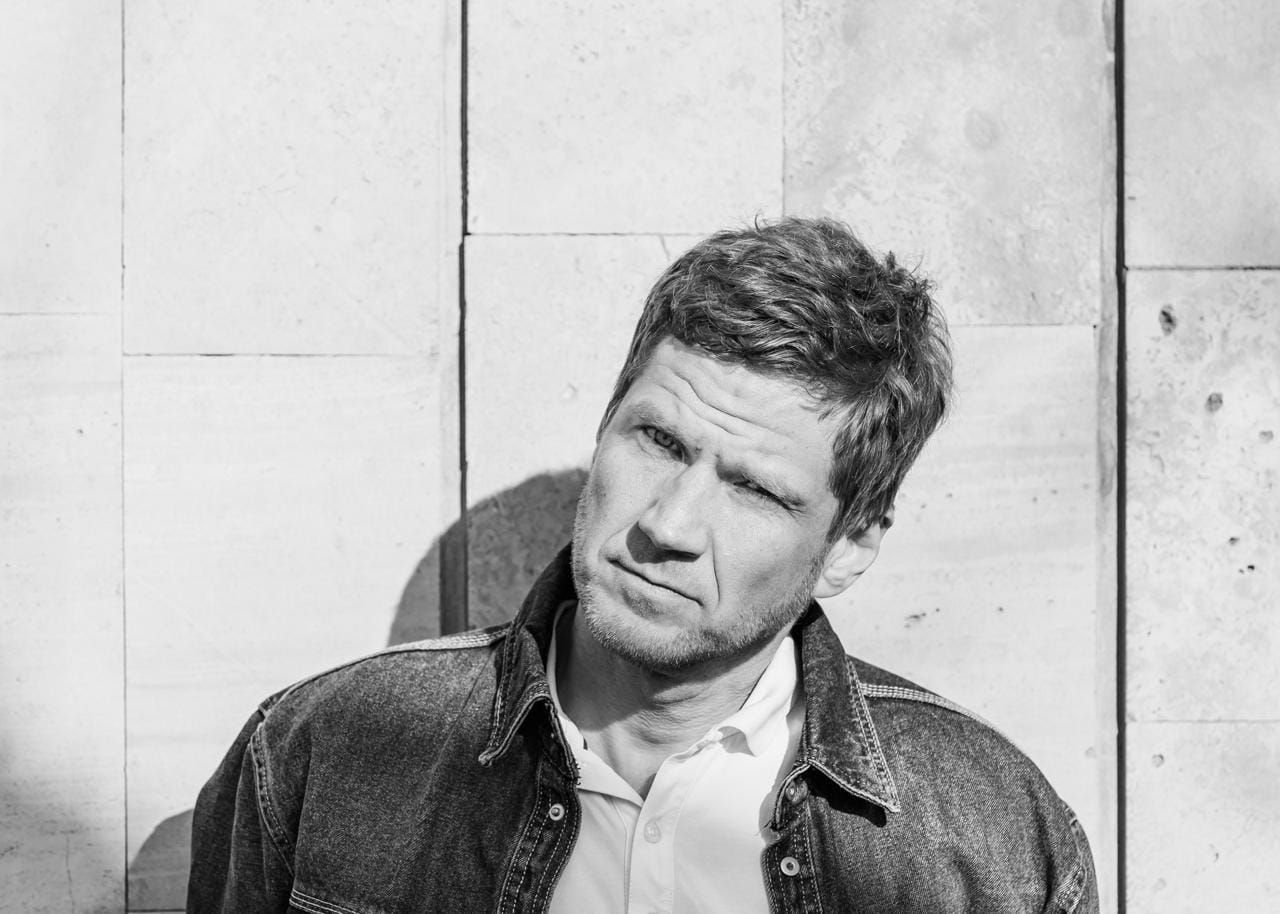
Latvia may be a small country, but that hasn’t stopped it from leaving an ineradicable impact on the art of cinematography. Cinematography as we know it wouldn’t be the same without the Riga-born and raised Sergei Eisenstein, the early Soviet agit-prop filmmaker. His influence on the creation of moving images cannot be overstated. Later, in the Khrushchev thaw of the 1960s, one of the most creative and subversive art film movements in the Soviet Union originated in Riga: the Baltic Poetic Documentary movement. These filmmakers undercut the Socialist Realist house approach to documentary filmmaking with an emphasis on the poetic beauty of everyday life—often foregoing dialogue completely in the process and letting images speak for themselves and in metaphor. The movement’s influence extends beyond its historical origins in the thaw of the 1960s and continues to grip the region’s filmmakers today. And one of the finest working custodians of the poetic documentary is cinematographer Valdis Celmiņš.
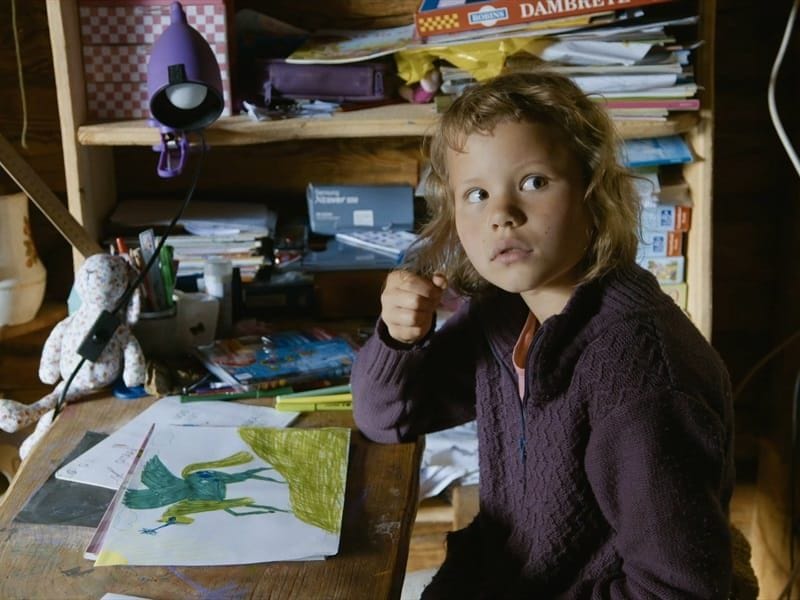
His most significant contribution on this front is Bridges of Time. It's a documentary about the Baltic poetic tradition, co-directed by Audrius Stonys and Kristine Briede, in the style of the tradition itself. The Lithuanian Stonys happens to be one of the poetic style’s most relevant working directors, and his collaboration with Celmiņš charges the cinematographer to carry it forward. Celmiņš has also operated the camera on a few occasions for director Ivars Seleckis, including on the elder filmmaker’s documentaries To Be Continued and To Be Continued. Teenhood (co-directed with Armands Začs) that follow five Latvian children from various parts of the country as they age (separated by seven years). Seleckis himself was a legendary cinematographer and shot several classics like (the fictional) Motorcycle Summer and the poetic The Coast.
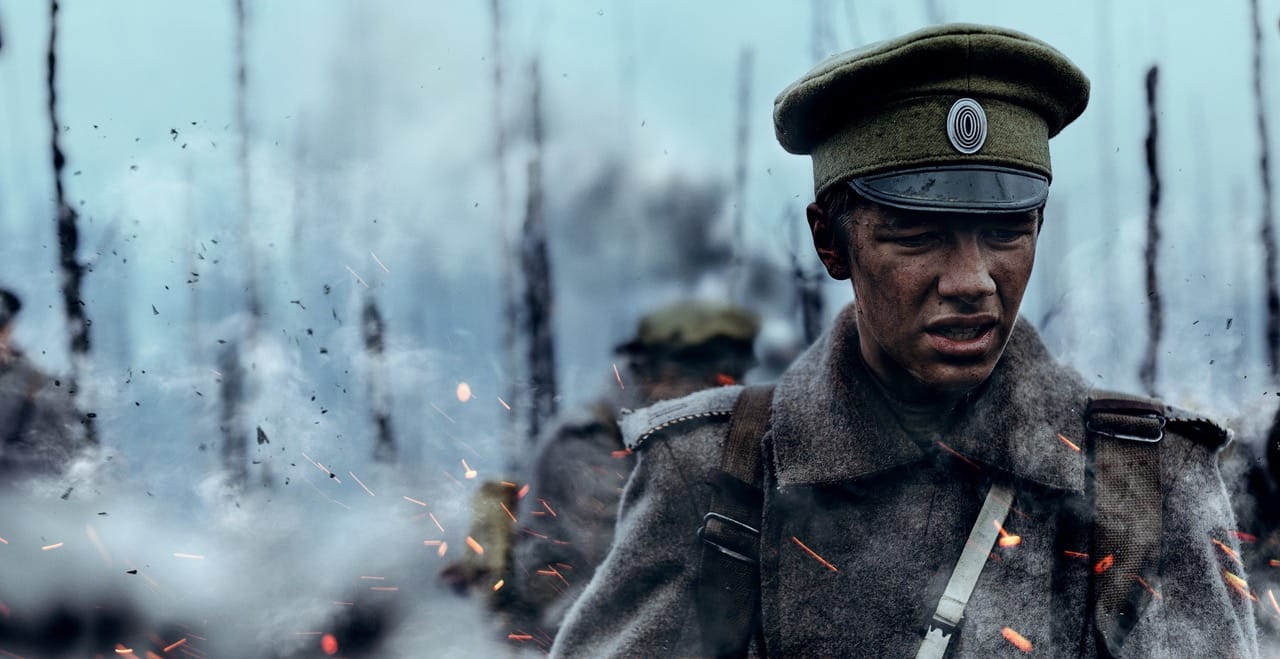
Celmiņš’s work isn’t limited to poetic documentaries. If one watches Latvian films, or even Baltic films more broadly, it is impossible not to have engaged with his work in some capacity. Blizzard of Souls, the 2019 war-filled adaptation of Aleksandrs Grīns’s novel, is, behind Flow, arguably the most widely known Latvian film of the independence era. The period-piece mini-series Soviet Jeans entertainingly captures the rebellious spirit of the 1970s and helped elevate Karlis Arnolds Avots (Amazon’s upcoming Bloodaxe) to an international market, whereas the folk-horror film Upurga (River of Fear) finds something ineffable and socially poignant in the mysterious Livonian woods. In Escaping Riga, Celmiņš explicitly dives into Latvian film history by mapping the childhood and “escape” of Eisenstein, along with philosopher Isaiah Berlin, from the capital city.
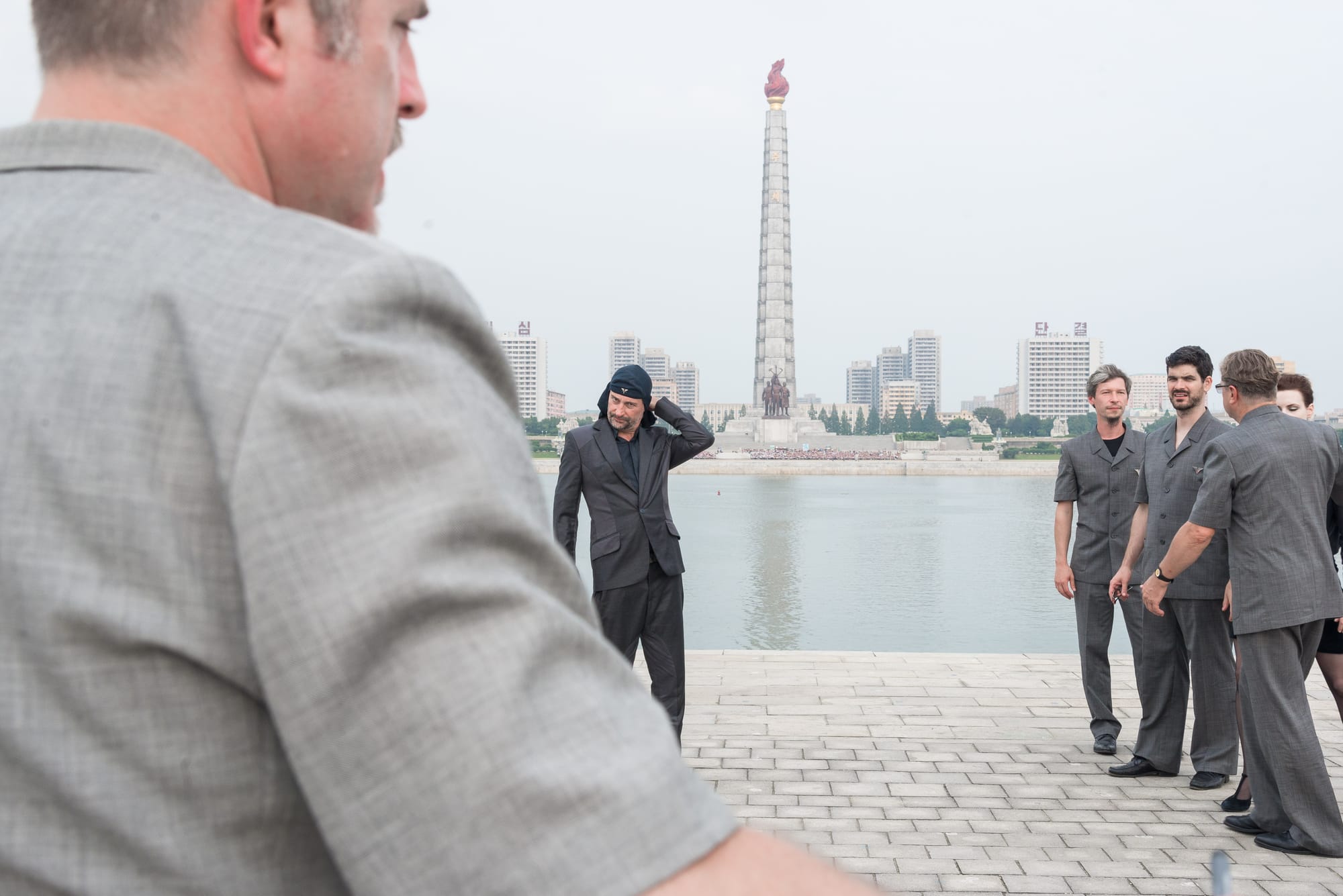
He has nearly 60 features in his credits and they come from all over the world. Internationally, he shot the biographical documentary about Roberto Rossellini’s children, The Rossellinis; captured a real-life North and South Korean love story in North South Man Woman; and, of course, was an instrumental part of Liberation Day, the documentary about the formerly Yugoslavian rock band that plays a concert in North Korea. He even interviewed Henry Kissinger for The Jump.
From this critic’s assessment, he approaches each project with a blank canvas and refuses to impose a uniform “Celmiņš look” or forced aesthetic. It’s this way that his cinematography is quintessentially Baltic: the region’s nonconformist filmmakers, like Celmiņš, consistently reject house styles and mandates from the top ever since gaining independence in 1991 (and arguably before). His photography rarely risks opulence and instead blends into the background of the stories his camera helps tell. The exceptions are the films that call for a more noticeable and in-your-face approach, as was the case with the immersive and intense dive into the world of professional cycling, Wonderful Losers: A Different World.
If there is one consistency over his incredible filmography, it is his proclivity to find the most personable and humanistic ways to portray his subjects. Young and old, goofy and serious, endearing and evil, his characters are always relatable and somehow familiar.
Personally, I would not be writing about Baltic cinema with regularity without the presence of Celmiņš’s cinematography. Upurga was one of the first Baltic films I saw that felt unlike anything I’d seen before. Staņislavs Tokalovs’s documentary of his own three-generation Russian immigrant family in Everything Will Be Alright is one of my favorite documentaries of the decade—from anywhere, in any language. It’s a complicated window into modern Latvia where some still yearn for lost elements of the USSR. It’s been years since I last saw the film, but several images still stick with me: the step-dad’s stunned face after watching the daughter open a present, the striking and always warm Christmas tree, a graceful familial dance in the kitchen.
From the more experimental of TESA MAN to the genre populist fare of Escape Net, there are few filmic stones left for Celmiņš to turn. The quantity and quality of his filmography speaks for itself. In this, he is the Baltics’ closest answer to Roger Deakins.
I had the pleasure of interviewing Celmiņš at the Boston Baltic Film Festival, where he was present for a screening of To Be Continued. Teenhood. Our conversation touched on the task of the documentarian, the relationship between time and cinema, the possibilities of digital cinematography, and much more.
The interview has been condensed and edited for clarity. Read my full reviews of To Be Continued & To Be Continued. Teenhood here and watch my separate Q&A with Celmiņš at the festival here. If you like reading this interview, consider supporting this kind of coverage.
Joshua Polanski: Let’s start with To Be Continued. Ivars Seleckis is one of the most important living Latvian cinematographers. You’ve also worked for other really important cinematographers or directors as their cinematographer. Is there an extra kind of stress when filming for these giants of the Latvian camera?
Valdis Celmiņš: Of course. The good thing for me is that I started early, so I was dumb enough not to understand. I was doing something that was maybe really painful for them. As we talked [off mic] yesterday, shooting for these directors was like pulling out the guns from the sheriff's pockets. It would be way harder to do it now [at this age] because you just have so much more experience. It makes you honor the experience of the elder filmmakers even more.
JP: To build on your analogy of taking the gun, you’re able to keep doing this because they’re trusting you with the gun as well. They like what they see or they wouldn’t let you keep taking their gun.
VC: A lot has changed, actually. The acquisition of documentary footage really has changed because of the possibility of the digital. One reason is the sensitivity to light [ISO], which is really, really incredible. You can go with very natural lighting and don't have to add anything. You are able to shoot almost in darkness, and that means you can be in very private moments for the characters without disturbing them. This has really changed.
Another change is the possibility of acquiring a load of footage without being limited in how much you can film. That helps find treasurable moments. Before the change to digital, when filmmakers were shooting on film as a medium, they were supposed to have a crazy intuition of when to turn the camera on or when to force the moment a little. This has changed.
The reason I think why it’s easier for the previous generation to trust the next generation is because the weapon has changed. Those pistols are not shooting the same anymore, and that’s the reason why it is easier to hand them over.
It’s easier for me to take it over because I know that I have the knowledge of the new possibilities.
JP: In the introduction panel to the 2026 Boston Baltic Film Festival, you weren’t able to talk much, but you used the word “poetic” to describe the look and feel of Teenhood. Of course, you’ve also done work with a lot of the poetic filmmakers and, in some ways, have continued the tradition of the Riga Poetic School.
What does poetic cinematography mean to you? What is poetic cinematography?
VC: I don’t know. Probably … It's some kind of self-thought expression to make yourself feel better.
Historically, it was about finding the metaphors and talking without words in documentary cinema. Now, I think the big change for me is that metaphors are becoming smaller. At least, I try to make them smaller. I don’t want to be big and obvious, but I want to try to find the poetry in the small details. For me, it seems that the smaller and more involved in the story the metaphor is, the more powerful it is.
JP: Would you be willing to give examples in To Be Continued and To Be Continued. Teenhood?
VC: In To Be Continued, there was the boy running with the kites. It’s the flight, the possibilities, the risk of falling and tearing it apart. It’s super loaded as a metaphor. When we have our kids, and they are starting their lives, there is this trust we have to give them: they have to start flying themselves, and we have to understand that crashing is part of flying. It’s impossible the other way around.
In Teenhood, the most beautiful metaphor for me was this diving scene—where the father gently, with one finger, helps to find the right balance to position his son, regulates his air pressure and the kid can swim further by himself.
JP: In the first Teenhood, they were much younger. I was struck, especially in the first half of the film, by how well-behaved these children are. I don’t have kids of my own, but there are plenty of kids in my life. It felt as if these kids were on their absolute best days, which felt fitting with Ivars’s introduction to the film. Over time, that gets complicated and you start to see them talk back to their parents, be disrespectful, or throw fits.
As a cinematographer, how did you earn the trust of both the kids and the families to be able to capture their best days and also their not-so-great days? In the new film, you even have kids tell you about being abused on camera. How do you earn this trust? That has to take time, I’d imagine.
VC: This is the main trade of documentary filmmaking. It’s not about being able to have a good composition or being able to give directions to someone. It’s about establishing a relationship that is mutually respectful and trustworthy. In my experience, there is never really abuse from one or the other side in filmmaking. It’s like some kind of secret pact that the only reason why someone agrees to be filmed in the documentary is that he has something to tell. He has his truths that he’s willing to show. By showing his life, he’s ready to share this truth, and he’s willing to do it. And you are not stealing anything. Establishing trust is just setting up the boundaries on the limits of trust you can achieve, and where you will be allowed to film.
And this is ... you can’t explain it. It differs from character to character.
JP: Are there different boundaries with each family?
VC: Yes, yes, sure. Totally different. Some of the characters didn’t want it to be filmed. So a lot of things are done in just a few days because they said, “No, we don't want to be shot doing this and this and this.” You really try to get the maximum in those few days. Other families call you anytime they have something going on, and they just say, “Maybe you need this shot and we will be doing that.” This really is different.
I can talk only from my experience, but this is different with every director also. One director does it one way, another does it another way. This film has two directors. The first is Ivars Seleckis, our master and the original author of the idea and the director of the first To Be Continued. The second director, who is as important as Ivars, is Armand Začs. He is a really, really nice person to talk with. I’m always happy to talk with him. It’s the same with the characters of the movie. They just love to talk with him because he’s honest, he’s sharing his own experience.
JP: When you’re in the houses with them and with the families, is it just you and a sound person?
VC: It depends. Sometimes I go totally alone. Sometimes it’s for privacy, sometimes it’s for the budget that you don’t use the sound guy. Sometimes it’s the sound guy and me; sometimes it’s me, a director, and the sound guy. This is also really dependent on how long a given time [to shoot] is. If someone calls and says, “Hey, tomorrow we have this thing going on.” You just have to [act]. If others can’t go, I'll go alone. That’s a normal decision you make. It’s just the work: you learn over the years how to try to be invisible, and mostly it’s done by time. The more time you spend, the closer you can get.
JP: And how much time was that?
VC: On the first, we spent 50 days, which was approximately 10 days per character. For this one, it was less. I don’t remember exactly.
JP: You just mentioned the word “time.” Thinking about time a little bit differently in terms of the length of a shot, and also tying it back to the earlier discussion with the Riga Poetic tradition, what do you think is the relationship between time and image in your cinematography more broadly? In Teenhood, it feels really important, for instance, how long you hold the shots in the car with the news about Ukraine playing on the radio. You’re not moving with the rapid shots that you would see in Hollywood. You let it breathe.
VC: Most of us have seen almost everything in film. You can’t really be surprised by the visual effects or the pace of the edit. One way you can still surprise is by emotions. [I’m talking about] when you are present at the moment when this emotion is born, and it’s visible in the eyes of the character. And if I think of time, I’m searching for this event that happens, and there is emotion born out of this event. This is, I think, the best possible filling of the time. What I’m searching for is to acquire this time, just to try to catch it.
JP: Try to capture the event?
VC: To capture this piece of time. The most powerful way to capture it is in one shot. You can see the beginning of the action and the result of the action. This is something that is possible with [digital]. If you understand that there will be something going on, you can roll the camera for a really long time. Sometimes those takes are for 20 or 30 minutes.
You’re waiting for the event to happen, and then you wait, you wait, and it happens on camera, and then you can use this small piece. If you're not patient enough, then maybe you don't happen to be there [when it happens]. Or you don’t have the intuition.
Of course, it can be done with edits too.
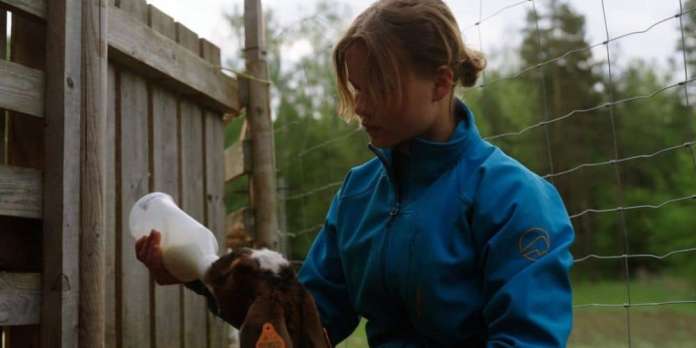
JP: One last question about Teenhood. The visual style is almost contradictorily personal and reserved at the same time. That’s a really hard balance for filmmakers to walk. Could you say a little bit more about what it was like crafting the visual style? How did you achieve this style? Why does it look the way it does?
VC: There is this practical side to it. For some characters, you can’t go close because you are destroying the situation. And for some, you have to be close to get the emotions. [That is where] the long lens comes in, this observing camera from a distance, which is mostly in common spaces like the classrooms. That is where we step aside and follow from a further distance. Then there are those moments when we are with the kids; we can go with them, fly with them, run with them. This is the moment when we just swap the aesthetics because we have to be there and the magic of editing makes the style later on.
As dumb as it is, there is no super deep concept for dividing different [looks] for each of the episodes. We use what is most suitable for the episode to be as emotional as possible.
JP: Thinking of your entire filmography, what’s the one image that you’re most proud of having made?
VC: I’ll tell you a funny story about this one image. We shot the film Liberation Day, which was about the first rock concert in North Korea. Inside this movie, there is a shot where the band is rehearsing, and the guy in the projection room is just closing the windows. I was looking at this situation when I realized he was closing those windows, and it looked like he was someone from censorship following the situation. I understand this is the shot I have to shoot. This will suit the film perfectly. I shot the shot, and I’m super proud of it.
We watched the film at the premiere. I talked to the director, Uģis Olte [co-directed with Morten Traavik], and told him that I’m so proud of this shot. He looks at me, “That's not your shot. It’s from another camera.” I pushed back, “No, it can't be. I shot the shot. I know it for 100%.” And he showed me the footage… and he was right. This footage was from the second DOP. At the time, I was so shocked. I couldn’t understand how it was possible.
I felt like the best shot of the movie was the one I shot, but it wasn’t mine. So if you ask about which shot is the best, it is probably the one that I haven't shot but someone else has and I’m just taking the credit for it.
JP: What about one that you did shoot?
VC: I think that’s the one that I haven't shot yet. For me, I am always so into the next film. I just don’t live in the previous films anymore. You love some things you have done, you hate some things you have done, you learn from it, and you grow
JP: What's one thing that you've learned in the last two or three years of filmmaking that you wish you knew 10 or 15 years ago or 20 years ago?
VC: That I don't know much and no one else really knows much either, so I don’t have to be worried that I’m worse than others. Just go on and continue working because all that matters is the amount of work you put into the story.
JP: We were talking off the mic yesterday about the insecurities about making films and when you’re thinking about quitting. You shared some wisdom. Would you be willing to share this on the record?
VC: We talked with Ivars Seleckis, the master, about [his career.] He had a very intense career during the Soviet Union. Then, when Latvia became independent, the cinema industry collapsed totally. There were years when he couldn’t find work. He revived after some 10 years and started working very intensively again. We were talking about the pace of time—how fast it goes when you are in production—because sometimes you live several lives simultaneously. You live with several characters from your documentaries, you research on some fiction film, and you are extensively spending your energy on other people's lives. At certain moments, you have this illusion that you have lived some part of these lives yourself. It can be a very satisfying illusion, but it comes with a side effect of super speed. It feels like time flies. It feels like life goes by so fast.
I was talking with Ivars about that, and he really confirmed the feelings I had. He said that “at the moment when you stop working, time starts to fly even faster” because you don't have any anchors anymore. This was the conclusion of Ivars, which is a very nice badge for my feelings of wasting my life on a super fast boat of filmmaking and having this illusion of living, but not really living your own life. His life experience tells me this is fine.
JP: Do you think that will affect your camera work at all? Do you feel more relaxed behind the camera?
VC: Of course, there is the craft, [but] for me, with my years of experience, the majority of filmmaking is to have experiences of your own—to understand this life of yours and how to implement it in storytelling. If you don’t know yourself and how you feel, then how can you tell how other people feel? This process of understanding yourself is a big part of our professional habit for both directors and cinematographers, especially in documentary filmmaking. You have to understand your characters. You have to understand life.
JP: Do you think of yourself primarily as a documentary filmmaker, even though you make documentary and fiction films? How do you think of yourself as a cinematographer?
VC: I need both because I really learn life by documentary and I use this knowledge of life in fiction. It is a symbiosis.
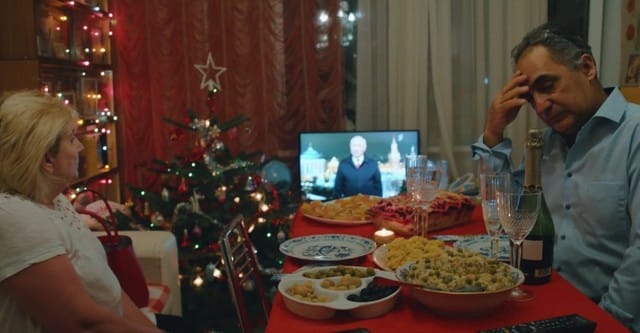
JP: I want to transition to one more film. I’ve also interviewed Stanislavs Tokalovs, the director of Everything Will Be Alright. I know it has a very complicated reception. I wonder if a part of that is because people know it’s truthful, and the truth hurts sometimes. You get so close to these people. You see the ugliest parts of them. And the most beautiful parts. I remember thinking that the cinematography was so simple. It’s not flashy. You’re in this house, you’re following them, you’re with grandma as she's getting her award, and yet you never lose sight of the human during these moments. These human subjects were so important.
With Everything Will Be Alright, what were you thinking both beforehand and during production about the look and how you wanted to capture it? It’s Tokalovs’ own family, which in some ways is even more intimate than just working with the families that you are in To Be Continued. What was that experience like? How did you define the visual approach to that?
VC: I really love that you saw this as not being flashy. For me, the main aim of the cinematography is to blend into the story. If I succeed, if no one has noticed it, then I've done the job. For Everything Will Be Alright, it’s the same. We just need to blend into this family. Mostly for me, it was all about the position of the camera. I was in a position where I could see and feel emotions.
Even if it’s not the best position for light or the best position for being able to hold the camera steadily, sometimes it was hours and hours of handheld. It was really, really difficult, physically, because you never know where you will get stuck. You just walk somewhere, and then people sit down and stay there for one and a half hours. You are on your knees waiting. When it is a little bit calmer, I [might] walk away a little bit more in the corner, not to be so visible, but to find a more comfortable position.
Once you get flashy, you lose the idea. You sacrifice some moments for being visually perfect. That’s a trap I don't want to fall into, especially in a documentary. If you have something to show, you don’t have to hide behind some visual approach.
JP: Would you shoot on a mobile phone?
VC: If it makes the story better, I would shoot on a phone at any moment. I don’t see much of a difference. With my experience, I can get as close to the main character with [traditional] cameras as with a phone. The only difference would be the background characters. For example, if we are filming someone outside the close circle of main characters, who has not gotten used to being filmed yet, then, of course, it's worth changing the medium and going for something super lightweight like a phone. Someone would not pay much attention to it, as everyone is filming everything on their phones now. [It could also apply in] public locations where permission has not been cleared. We even tried this 360-degree camera for a new documentary. [We were curious about] the possibility that it may be a better tool for capturing more natural behaviour of background characters. We did some tests and understood that it’s even weirder for people if there is this 360 stick hanging out.
For the visuality, you asked for the visuality of Everything Will Be Alright, it was mostly about being close.
JP: I’ve only seen it once and it has been years. I mean it in a good way when I say it is a provocative film. You're probing them to be more honest, if that makes sense.
VC: Content-wise, story-wise, for me, it seems this film has a very strict position. It doesn’t stand in the middle ground and ask if the war is good or bad. There’s no question: this film certainly states that Russia is an aggressor. Just because [the film] shows characters that don’t realize this position, it doesn’t mean it takes their position. If you show a person who has his own emotional reasons for living in a corrupted information field, it’s not a position. We are just showing this person and by showing them, both sides of a conflict can look at this film. If this film were very, very strict and had a didactic message, it would destroy the possibility of talking to both sides. By being emotionally truthful, you can talk to the one who needs it most.
It’s also a very weird situation nowadays that there are a lot of artworks that state very precise political or social views, but, by stating them, they are not able to reach the ones that they need to reach. They reach only the party that is already on your side. It’s like you talk to the ones that know already, and they just nod to you and say, “Yes, yes, yes, you are correct. It is true.”
JP: Instead of a sermon, you prefer poetry.
VC: Yeah, that is a way more powerful tool to just be able to talk to more people without being so black and white in the expressions.
JP: Thank you for this interview.
VC: Thank you.