Sounds of the Desert
The most interesting story might even be the one not told.

This review is brought to you from my annual coverage of the Tallinn Black Nights Film Festival (PÖFF) in Estonia. Please consider supporting the only regular and recurring column on Baltic cinema in English.
Emilija Škarnulytė is on my can’t-miss list. Her work in experimental film—from hypnotic scientific ventures like Burial and Aphotic Zone to own-family non-fiction shorts like Aldona—makes her a fitting custodian of Lithuanian experimental cinema first lit by Jonas Mekas. Much of her work has explored the poetics of science from the resource conditions within the circumpolar North in Hollow Earth to the ruins of a foreclosing nuclear power plant and its lasting effects in Burial. The last short of hers I saw was Riparia from 2023, a visual mermaidification of the crossing of the Rhône via Lake Geneva using photogrammetry and underwater sensors. Despite the sonic experimentation and techno-optimism of its subject, two members of the band The Sun Ra Arkestra, Sounds of the Desert is an uncompelling departure from Škarnulytė’s cumulative body of filmic work thus far.
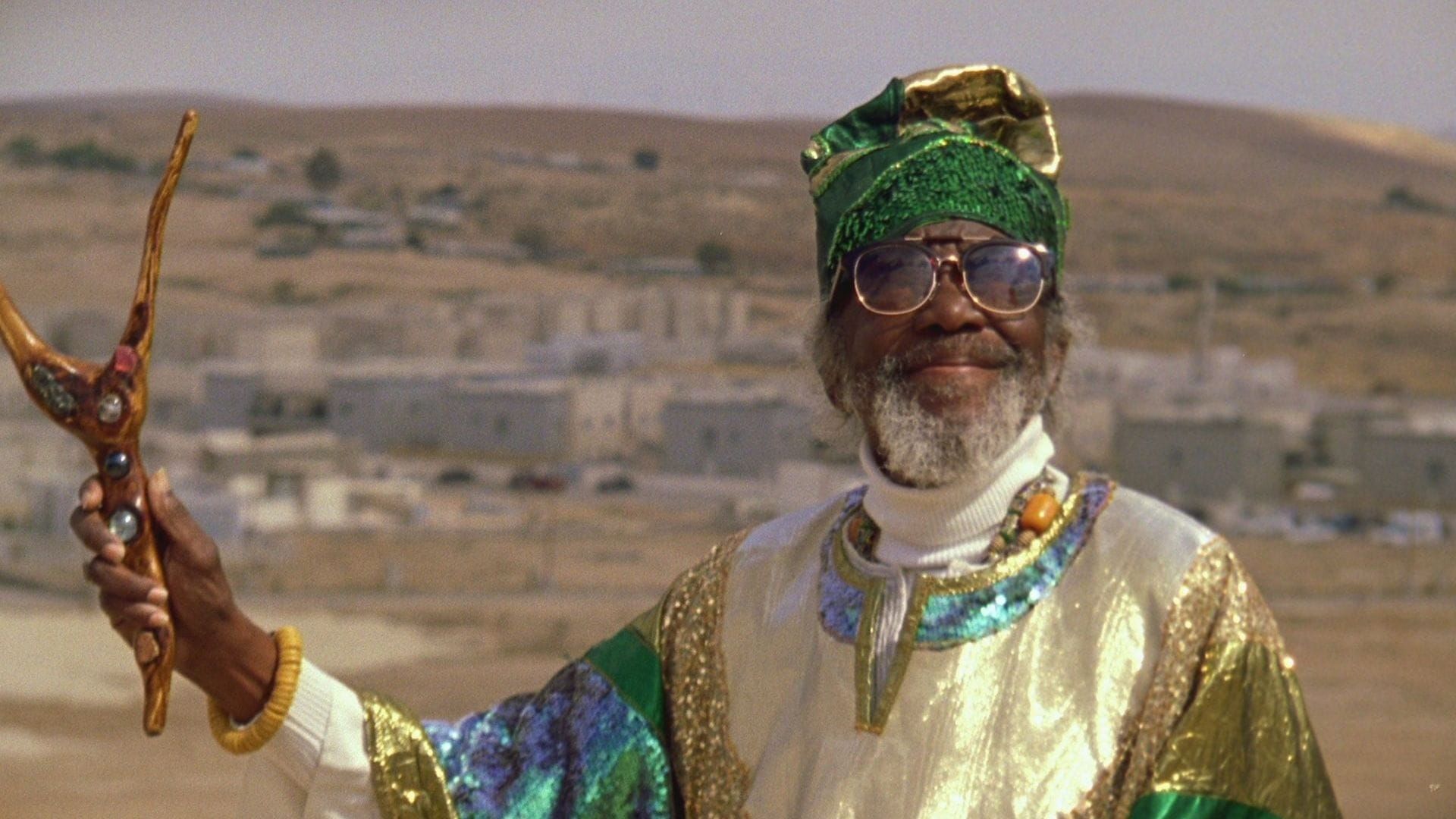
First formed in the 1950s and located in Germantown, Philadelphia, The Sun Ra Arkestra is an experimental musical ensemble itself—and since the leader Sun Ra died in the 1990s, they have also proselytized his avant-garde ideas, cosmic and musical philosophies, and Afrofuturism. The documentary spotlights group members Abshalom Ben Shlomo (1943 - 2024) and Marshall Allen (1924-present) from their experiences meeting the near-mythical Sun Ra and archival performances to contemporary interviews and ventures into the Negev Desert. For all of Arkestra’s artistic experimentation, Sounds of the Desert sticks lifelessly close to the surface. The band members toss phrases around like “astro-galactic, inter-galactic dynamic interval” without the film actually seeming all that serious about exploring them.
The interviews are unpolished in an endearing and artistically authentic way. One member repeats the word “odyssey” at least three times in a row, placing an almost rhythmic emphasis on the “od”-ity of his musical experience. Abshalom Ben Shlomo cuttingly refers to the United States as the “United Snakes,” though his own politics as an Israeli settler connected to the Hebrew-Yisraelite community go fully unexamined. Sounds of the Desert flirts with mid-century American politics, but the depth of its political worldview can’t be described with any more vigor than a non-committal “flirting.”
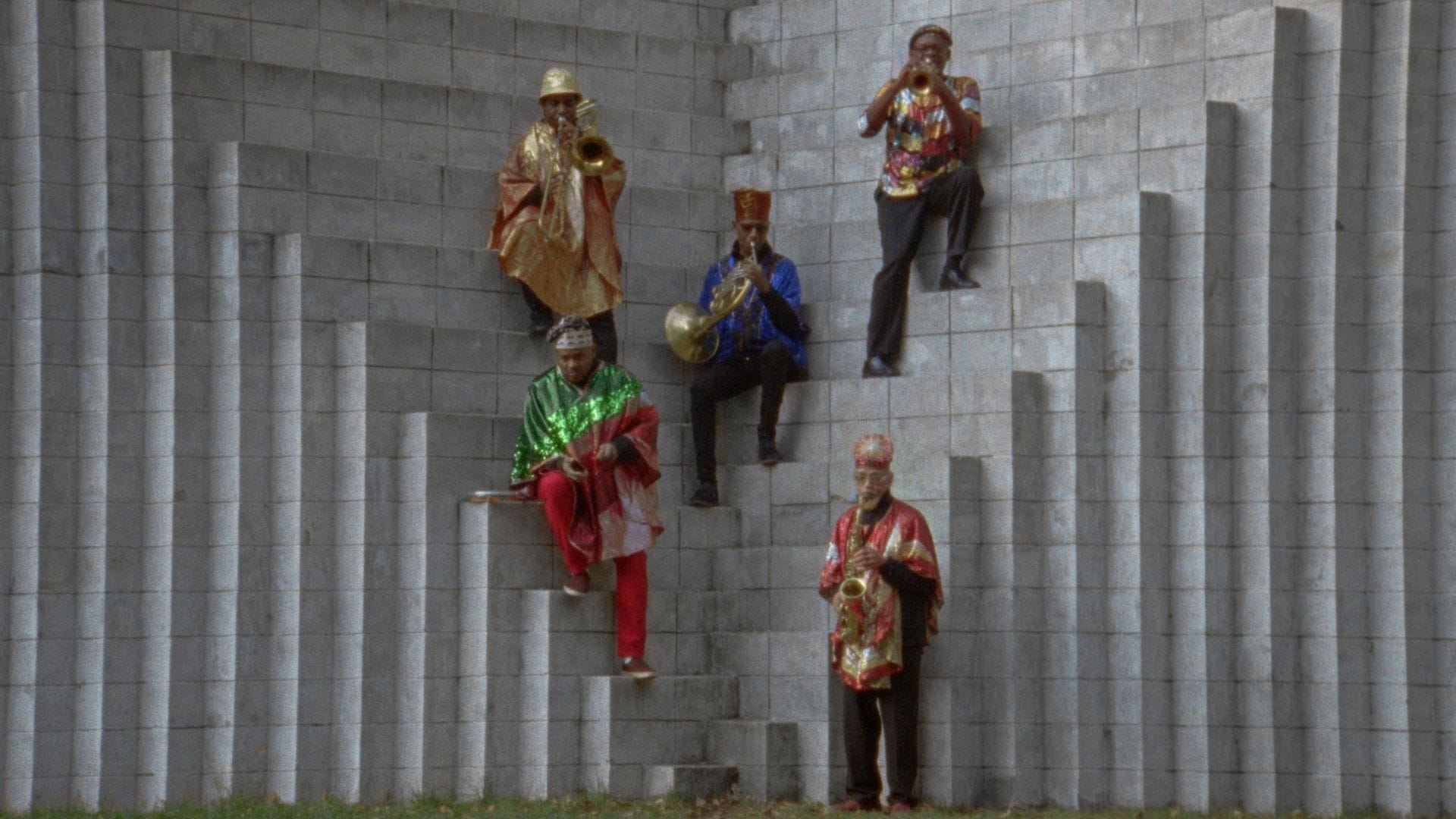
The image-making of Sounds of the Desert is among the weakest I’ve seen from Škarnulytė. Her usual techno ambitions are here kept to the realm of the thematic and the soundtrack. The interviews pass with no real muster and the most unique visuals are of the band members in the desert wielding jazz instruments and dressed in Afrofuturist garb. Their alien-like appearance and almost mystical presence make the desert almost burn in a spiritual différance. Even these visuals begin to drag as the documentary moves toward its end; the unchanging background of the desert and the lyric-less music become static symbols of the strange rather than posing any ideas or feelings of their own.
The most interesting story might even be the one not told: how did Emilija Škarnulytė, a young Lithuanian filmmaker, end up telling the story of Arkestra? In an interview with The Hollywood Reporter, she alludes to a personal relationship: “My decade-long friendship with Abshalom Ben Shlomo opened a path into the Arkestra’s universe, where music holds memory, and imagination makes other ways of living possible.” But as Škarnulytė tries to stick to her avant-garde roots as she ventures into new subject material, she gives up both the depth of a (more) traditional documentary approach and the je ne sais quoi catalyzing her filmography.