Once Upon a Time in the Middle East
A hopeful and incredible war picture

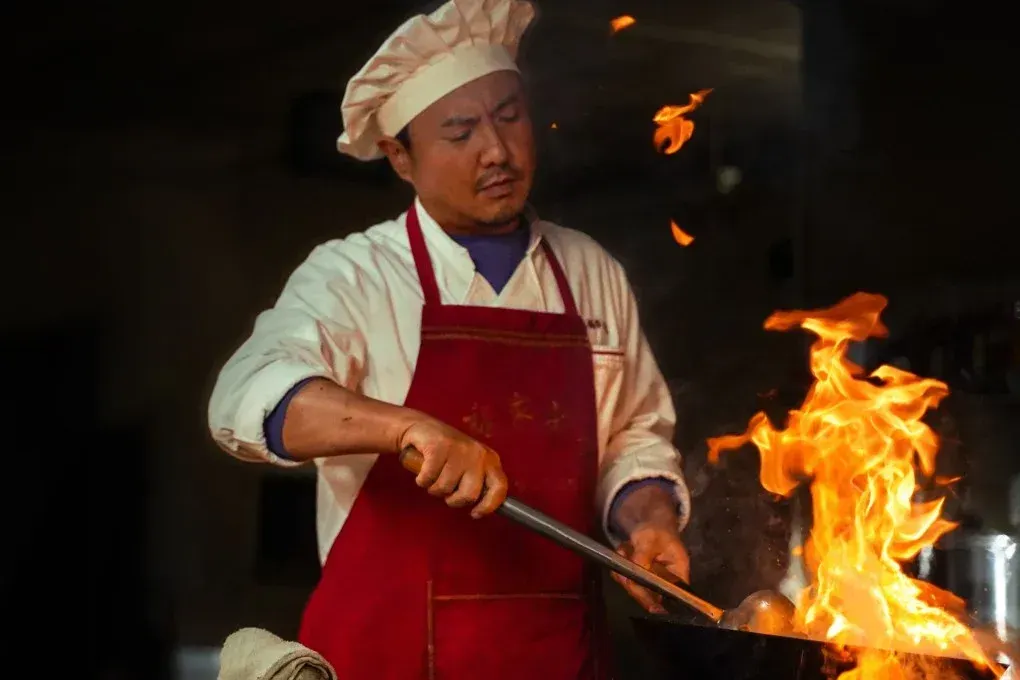
“Both a spoon and a gun can open a mouth.” Once Upon a Time in the Middle East, the Chinese box office sensation, shows both paths as viable responses to hardship. A Chinese chef in a fictional Middle East city is just trying to pay off his debts back home when an American invasion uproots the peace and his life in the process. The spoon, for the chef, symbolizes the peaceful alternative to the sword (or gun): an instrument of nourishment that makes no distinction between the mouths it enters. And while Once Upon a Time obviously favors the culinary path of Xu Fu (Shen Teng), it is equally interested in the catalysts for resistance that the gun represents. The invasion creates both "terrorists" and terrorists, and the difference between the two matters little to the American forces that create the mess.
Director Wen Muye’s war film is set during a fictional American invasion, although it shares more with the 2003 invasion of Iraq than the plethora of other American discursions into an assortment of countries in the region. The Americans oppose the ruling Ba'athists, and a politician bearing more than a resemblance to Saddam Hussein appears on a television broadcast to respond to American accusations of his country’s involvement in 9/11. The real life sources aren’t far away either; Wen found inspiration in the testimonies of multiple Chinese immigrants who ran restaurants in Iraq during the American invasion.
Xu gets a job at Loong Restaurant after defending “authentic” Chinese food over American Chinatown fusions to the restaurant’s owner, a local governmental official named Zaid (Sherif Sabry). Ma Junsheng (Jiang Qiming), a Chinese national engaged to a local woman named Lina (Naira Al-Qasim), is the restaurant’s number two. Lina runs an orphanage and as the war creates more parentless children, Loong Restaurant provides both shelter and food to the kids. Xu takes one of them, the rascally and erratic Seif (Omar Sherif), as an apprentice.
Beyond a few kids that steal food from Xu’s restaurant, everything is normal before the invasion: no suicide bombers, no child soldiers, no bombs falling from the sky. It is not a country in turmoil, from what we can see. Business is even going well at the restaurant. At the film’s onset, the terrorists that the Americans want to kill are businessmen, lovers, and fathers. They are only turned into soldiers of resistance—religious or not—by the trauma of war and the long shadows of grief. As philosopher Cornel West wrote on October 8th, 2023, “this violent resistance to oppression is the desperate language of an occupied people.”
Wang Boxue’s war cinematography balances the randomness and hecticness of war impeccably. Long tracking shots with handheld cameras thrust the viewer into the streets of the fictional city and the Loong Kitchen while seeming to always push to the breaking point. Wang leverages that lurking feeling that something will interrupt these impressive oners to create overwhelming rushes of violence. The photography makes us swim in the world before drowning in it.
Contrary to the majority of Hollywood’s villainous Arabs (see Reel Bad Arabs), the Arabs here are complex people. They are never completely reduced to their victimhood and instead are given the possibility to act. Some act with more dignity than others, but all of their actions are valid reactions to the world they inhabit. Xu, after being imprisoned by the Americans, is kidnapped by the other side and forced into labor again. His part in the kitchen could be far worse. The “Headmaster” (Ahmed Salim) conscripts children into his war efforts. Yet, when Xu escapes with the children, it is in a mosque that they take shelter. The film’s greatest hero might be Ma Junsheng, who is even, in a rarity for Chinese cinema, depicted in a happy interracial marriage to a Muslim woman.
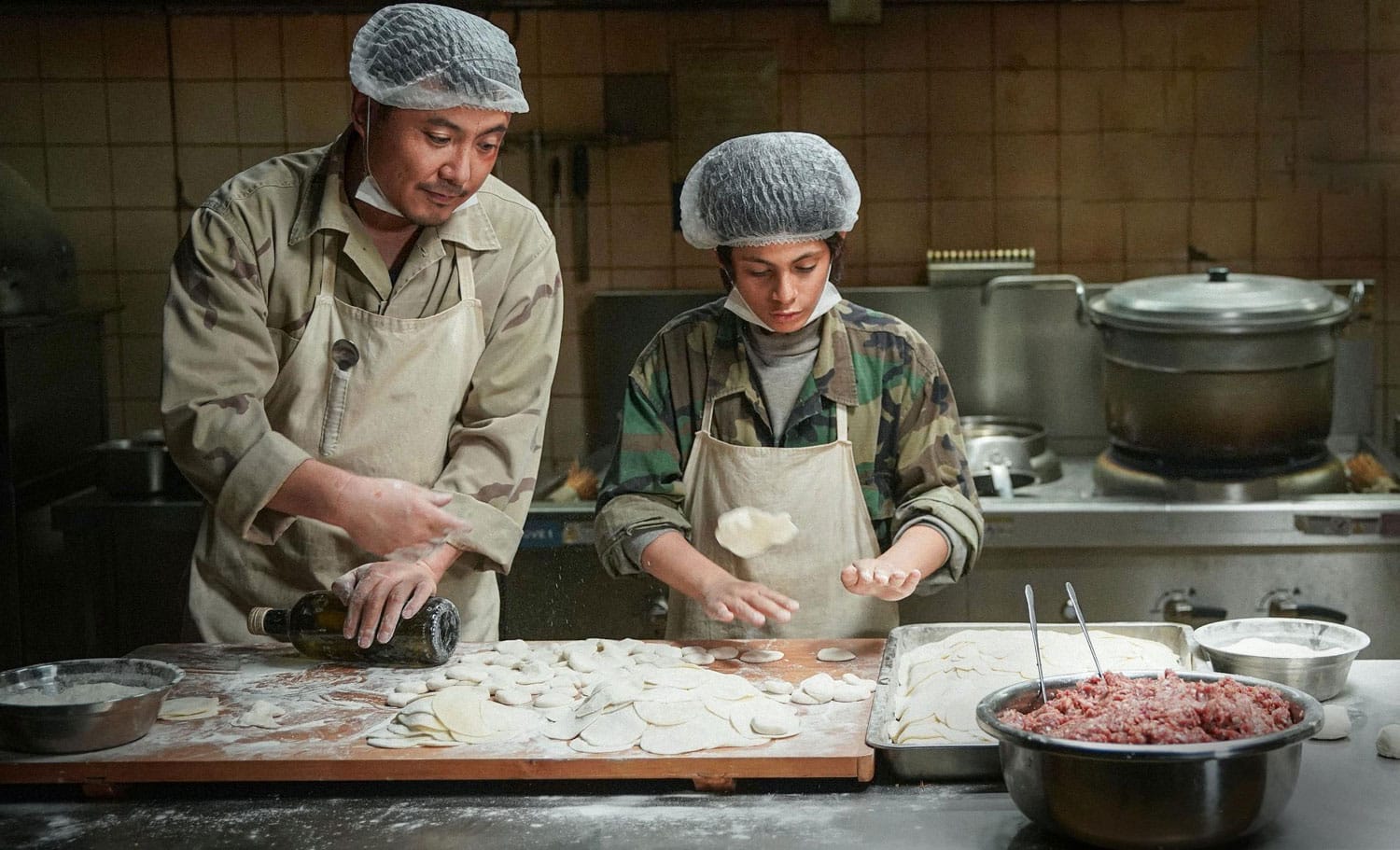
The story risks an “Eastern savior” trope through the relationship between Seif, the orphan sous chef, and his two Chinese mentors, but he teaches Xu as much about life as he receives. The savior narrative is also made more difficult through the presence of the violent third party. It is not the “white savior” coming to tame the savage Middle Eastern from a cycle of Arab on Arab violence—one of the many Islamophobic trends in Hollywood—but rather a neutral third party keeping the flame of humanism alive for a people being hunted by a bloodthirsty nation-state from far away.
And while one should be warned before viewing Once Upon a Time in the Middle East on an empty stomach, it is not interested in any Instagramic pornification of food. Food, especially of the Chinese variety, brings out the humanity in all of its characters. Tastebuds are the most democratic of organs. Xu prepares meals for everyday people, American imperialists, and terrorist warlords. They all enjoy his food too. As primatologist and evolutionary anthropologist Richard Wrangham has argued in his book Catching Fire: How Cooking Made Us Human, cooking is essentially and uniquely human. By refusing to reduce cooking to a mere commodity like many American cooking films or mukbang, the film positions cooking not as an art à la Chef but as a human right. The film’s best scene, which I won’t spoil here, takes this to an extreme that can fix any pair of dry eyes.
Wen’s film is aggressively, passionately, and gorgeously anti-American. Tony (Aarif Rahman, who is of Arab, Malay, and Chinese descent), a soldier who frequents the restaurant, American Born Chinese (ABCs): he, just like the other Yankees, sees the Arab children just like Ted Cruz: as terrorists waiting for a gun to be placed in their hands. Xu’s kindness erodes the hate, but there is only so much he can do for a heart that beats with so much jingoistic hate.
Beyond the teeth the film shows on the geopolitical front, Xu’s anti-Chinatown ideology in culinary matters underscores the screenplay’s more general approach to culture as a fluid yet ultimately worth preserving enterprise. The only time Xu and his kitchen staff of Ma and Seif stoop so low to orange chicken and the like is when they, imprisoned and suspected of terrorism by the American military, must prepare food against their will for the men pointing the guns.
There is still a subtlety to the way Once Upon a Time functions as state propaganda. The narrative is framed around an elderly Xu Fu reentering the country for the first time since the events of the war. He is questioned by the immigration officials before taking a bus tour given in Chinese. He rushes off from the tour when he sees a refurbished and remodeled Loong Restaurant. Consistent with the Belt and Road Initiative, where the Chinese state, using largely Chinese money and workers, builds infrastructure in less developed countries, the brief future of the Middle East we see is stable, peaceful, and slightly more Chinese than the Middle East of the present. And maybe I’m crazy, but doesn’t that sound better for all involved than another West-led invasion?
Once Upon a Time in the Middle East is both a hopeful and incredible war picture. It is rousing and galvanizing as much as it is heartwarming and heart-wrenching. It might even be the best film about the Iraq conflict despite its reluctance to actually be about it. I’d be lying to us both if I said its spot in my 2026 Top 10 wasn’t secure.