How to Make Images Hot & Evil Golf Courses: An Interview with Cinematographer Xenia Patricia on Filipiñana
"Don't take everything at face value: look beyond the box."

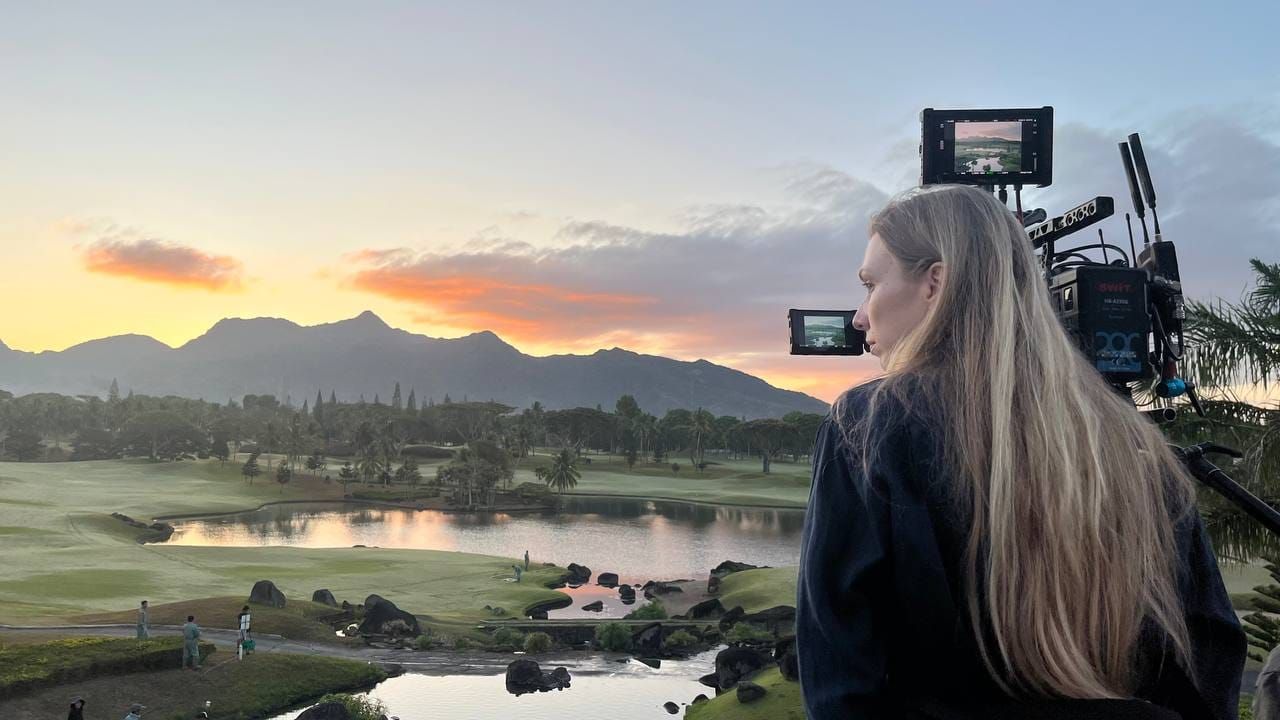
Filipiñana is one of the best films of 2026. A feature length adaptation of the director’s thesis short film, two women are at the crux of this unhurried (or “slow,” more on that later) social commentary. Isabel (Jorrybell Agoto) is a seventeen-year-old transplant to the city from Ilocano and works as a “tee-girl” at a country club in Manila. It is as degrading of a job as it sounds: she props up tees for wealthy patrons and foreign tourists too entitled to set their own balls. The other woman, Clara (Carmen Castellanos), is a Filipina ex-patriate visiting her uncle from New York. He wants her to join the family golf equipment business, but she senses she doesn’t belong in this world. The slow black comedy is director Rafael Manuel’s first feature.
It is a beautiful film. Cinematographer Xenia Patricia’s images entice and inspire meditation at the same time. Balancing incredible long takes that hold for half a minute or more with an idyllic pastel color palette, there will be few, if any, better looking films this year. The 4:3 aspect ratio boxes in the stretching horizontal extremes of the golf course, as if an effort by Patricia to tame the oppressiveness of the fields, which, in Filipiñana, become a microcosm of class conflict and colonial history. Her camera becomes the cage, applying the film’s themes about power and colonization to its own look.
As I wrote in my Boston Hassle review, “Her patient camera won’t be for everyone, but even those who find cinematic slowness difficult to digest will find the sultry appeal of her images virtually undeniable. To call Filipiñana an ugly film wouldn’t be dissimilar from trying to denounce Dua Lipa as hideous: it’s a boy who cried wolf scenario.”
The film is the Philippine entry for Best International Feature Film at the upcoming Academy Awards.
I had the pleasure talking with Xenia Patricia over Zoom to discuss Filipiñana. Our lengthy conversation touched on everything from the oppressive look of manicured golf courses and approaches to capturing the truth with a camera to Chinese director Jia Zhangke’s time on the set and lens choices.
The interview has been condensed and edited for clarity.
Joshua Polanski: I want to start by making sure I'm getting my facts right. Are you from Germany or from Switzerland? I’ve seen both online.
Xenia Patricia: Well, I'm from both countries. I was born in Germany and then, when I was a teenager, my family moved to Switzerland. That's how I got both nationalities.
JP: Now you're based in London?
XP: Now I'm based in London, just to make it more confusing for everyone.
JP: And we're talking about a Filipino film. How did you end up being the director of photography for this film that is very much centered in the Philippines?
XP: Rafael Manuel and I met in film school in London [at the London Film School]. That’s how we started working together. We did our first film—well, the school calls it an “exercise.” We’re not supposed to call it a film. [We did] our first “exercise” together—black and white, 35mm—and we just loved working together. Our second project was his graduation film, the short [also called] Filipiñana. I’m really happy to make the whole journey to the feature as well. It feels extra special to have been there for the long ride of everything.
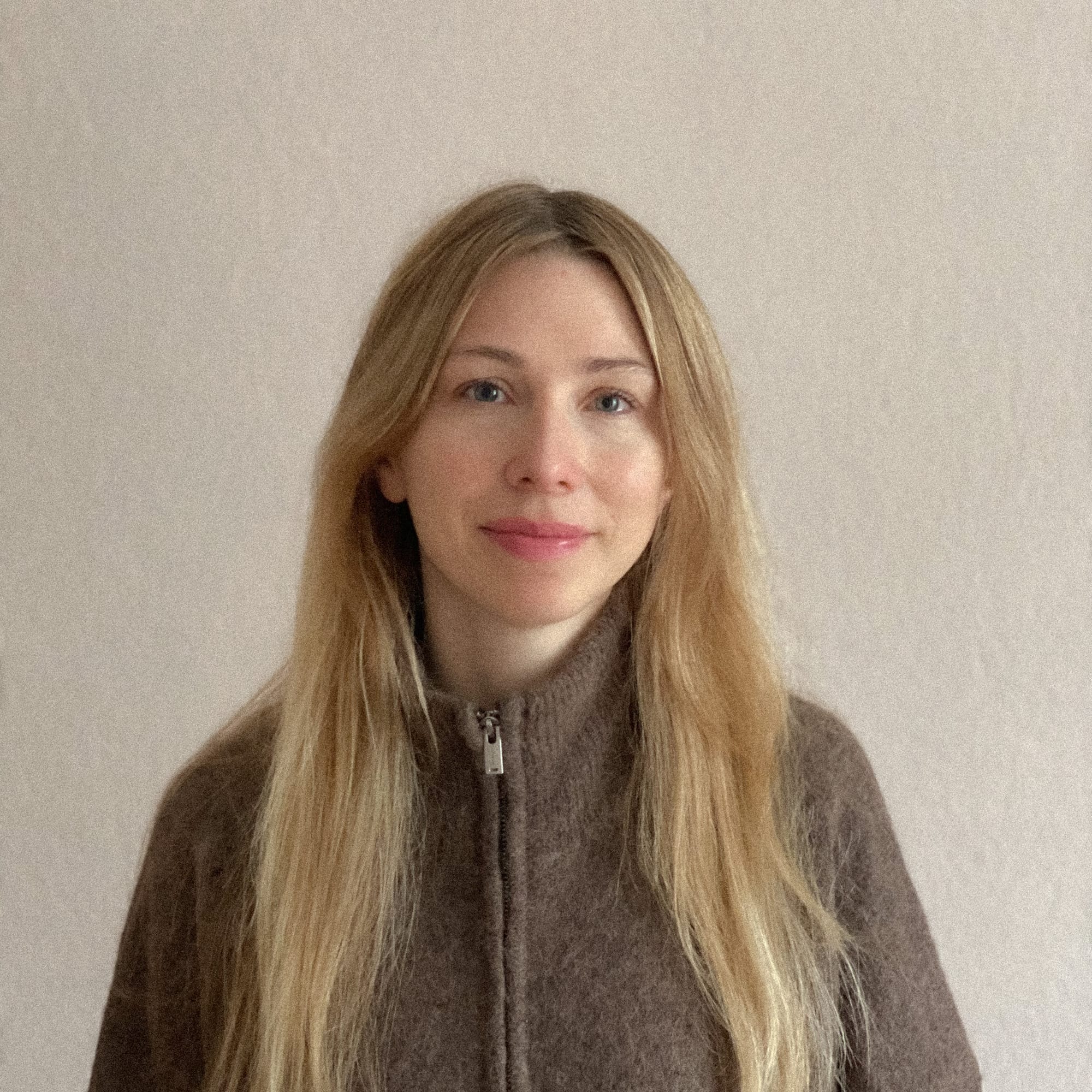
JP: Congratulations on the remarkable film. I really loved it. The themes relate to colonization, neo-colonization, and power. Given these themes, I’m interested to know, during the filming process, how cognizant you were of being a cultural outsider while also having the power of representation metaphorically in your hands as the cinematographer?
XP: A lot happened prior to filming. We were really lucky that between the short and the feature, we had five years of build-up. I think because we have been friends since film school, the conversations never stopped. There was a constant flow of conversation between Rafael [Manuel] and me. We spoke in general about this, but also about events in the Philippines and political [events] happening, which, I think, really helped to understand certain things. Obviously, [we also discussed] the perspective I grew up with and the perspective he grew up with.
The costume designer, Carla Villanueva, who worked on the short and then also on the feature, is from the Philippines. Growing in community with them and having that exchange, as well as watching Filipino films together, was great. We spent quite a bit of time in the Philippines.
JP: Anywhere in particular?
XP: On a lot of golf courses. A lot of golf courses. I don't know how many golf courses I've seen. It was also a lot of spending time with Jorrybell Agoto, who we became really good friends with. With a lot of the cast as well, who had made the jump from the short to the feature. There was this exchange of friendships built before we actually got to shoot the film, which was really nice to have. Sometimes when you’re obviously an outsider to a certain thing, you question things that are maybe normal for people living there. That was sometimes the strength that I could bring in.
JP: Do you have an example of that?
XP: I think about the politics of how normal it is for actors to become politicians. The whole singing karaoke being part of their political campaign and enticing people and making it fun and nice and putting a layer over all the things that are happening in the country. I was like, “Is this real?” It was really interesting learning about that.
JP: Speaking of golf courses … they kind of scare me. There is just something about them that feels wrong. Almost as if they are so pristine that there just has to be something wrong about that. I felt that in the opening shots at the golf course in Filipiñana. Is that just me, or is there something almost inherently evil about the way a golf course looks?
XP: I'm biased because I’m not a golfer, so I’m ready to throw the golf course under the bus. For me, they’ve always been inherently a bit sinister and evil. In terms of [the] environment, [think of] all the water and resources they take up. A lot of times it is a sport for just a few people, but on a huge amount of land, especially in the Philippines or other certain countries, it becomes even more magnified [through] these private member clubs.
JP: Maybe I was primed to think it was evil because the opening shots are actually of the people running out of water in the city. You go from there to the sprinklers on the golf course, so you’re ready to think it’s evil. Is there anything about the way they look to you, the actual visual of a golf course, that almost feels fascist?
XP: Yes. That’s something we definitely tried to go for as well with the visual aesthetic. We talked a lot about perfection, the violence in perfection, and the violence in beauty. We tried to incorporate [these ideas] in our visual language. The idea of things being pruned into this perfect image. It's like nature, but it’s clearly artificial. We played a lot with that as a metaphor [for] social strata and everything.
JP: Your work seems to be cognizant of the historical relationship between landscape photography and colonization. I'm wondering if you can say a little bit more about this relationship? Was the more boxy aspect ratio an intentional effort to enter that conversation with your cinematography?
XP: There is so much to talk about. In terms of aspect ratio, there were a variety of reasons why we chose the aspect ratio [4:3]. One was obviously the verticality that it gave us. So much [of] the film is about social hierarchy and where people are placed and forced into their place. This verticality gave us a lot of room to play with the visual aspects as well in the framing and everything. Showing how our characters are kind of boxed in and can’t see much further; even though it’s such a vast expanse of landscape, there's so much out there. But because of the structures and where they are, they're put into this box, as you said before.
[On] landscape photography… there is so much to talk about. We talked a lot about autonomy and non-autonomy. There is a lot in the film about waiting for change to happen, waiting for things to happen. Inaction was a big theme, and Rafael's idea is that even if you take a tiny action, it’s so important to take that action.
Obviously, in the pacing, it's very evident that this is reflected, but I think we also talked a lot about what we let people see and what we let people hear, and how much autonomy we give people to reflect on what they see. We stayed in a lot of wide shots to give people the autonomy to reflect and project and see what they want to pick out, and that creates a certain form of action, if that makes sense, which obviously I'm digressing from the original question.
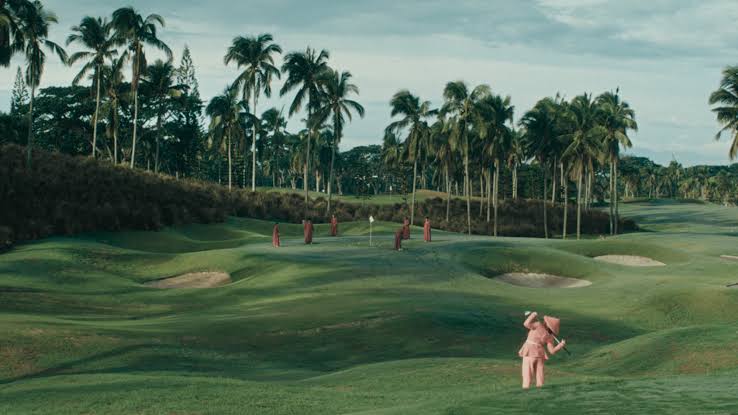
JP: I think it relates. I’m thinking about landscape photography or even painting more broadly. In a static image, your eyes are searching, and you have to land somewhere on your own. In the staticness of a lot of the cinematography here, you're letting us find where our eyes are going and observe naturally rather than feeling like we must look here at this exact place at this exact moment.
XP: At the same time, especially with production design, we wanted to really feel the social structures, which also relate to colonialism and how they were put in place. Also, how they enforce these structures and these ideas of social hierarchy that then get emulated in society by what [the] colonial powers did. We played with that in framing, but also creating the sense of artificialness that I was talking about before through stylized images in color. We created these very perfectly lit images that don't look absolutely natural.
The film asks a lot to look beneath the surface, and I think visually we do that as well. Don't take everything at face value: look beyond the box.
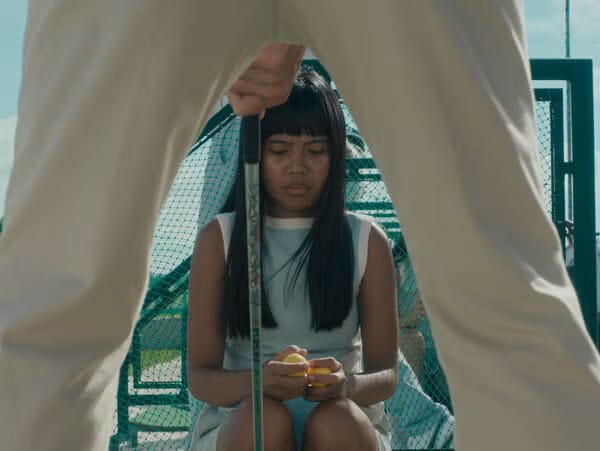
JP: Social class criticism is obviously very central to the film. And as you've already mentioned, the camera makes a point out of this with its depictions of verticality: who is on top and who is on the bottom. I’m thinking especially of that frame early on between the legs of one of the golfers of the tee girl setting up the tee, which obviously has this psychosexual dynamic going on. How central was this verticality to crafting the overall look of the film for you?
XP: It was a big part of it. The short film already played with that, so a lot was born out of that. Going into the feature, we opened everything up again. We asked what these choices do, and how we feel about them. We decided to keep it, so it is quite essential.
Making these quite visual notes about the social structures and everything really helped in bringing across the messages and the things Rafael wanted to talk about in the film.
JP: The incredible temperatures and heat of the location play an important role in regard to the tone and narrative. How do you go about capturing heat, which is something that you can't actually see with your camera? Because this movie felt hot.
XP: It was also really hot filming. We filmed in the hottest season in April-May, just before the rainy season starts. We were trying to avoid the rain. In the end, we kind of went into the rainy season, but we were just trying to avoid the rain at all times. It was super, super hot while filming.
We had conversations from the beginning about how we capture heat. That was also a conversation we had with the sound [designer] as well. We spent a lot of time on the golf courses with Rafael, taking in all the sounds and how they remind us of [or evoke] heat. We used these sounds to support the image because it's so hard to capture heat. It's all the senses that you need to bring it together.
We were trying to push the glowing highlights, bringing that harsh heat that's burning down, but also playing with the sound that comes in and also talking to the makeup artist way before the shoot about how we want people to look sweaty. We want them to have these glowing highlights of sweat. We even did a makeup test prior to the shoot, going for sweat tests that look nice but also accentuate the heat that everyone was feeling.
JP: How did they do it? Do you know?
XP: Well, I came in at the beginning being very ignorant about makeup. I was like, “Maybe we can use coconut oil.” And they [had something better]. I don't remember the name, but it looked really great. We always tried to also get it on the cheekbones, and it would give these nice light reflections, which I loved. I am forever grateful to the makeup team for getting these really glowing highlights on the skin that did so many things for us.
JP: We don't actually see violence, but violence is implied. The golf clubs almost look like swords the way they sparkle. Were you thinking of swords when you were filming those scenes, particularly early on with the golf clubs? How did you accomplish the sparkle?
XP: For Rafael, it was really important that the film is obviously about violence, but he never wanted to show any actual violence. There was a conscious decision that he wanted to make a different film than a lot of films coming from the Philippines that depict violence. This is obviously also a very powerful way to talk about violence, but he wanted to bridge that. And that has to do as well with colonialism and how people from the West feel implicated as well. If you see violence happening somewhere else, sometimes you're like, “Oh yes, I'm far away. It doesn't really affect me.” He wanted to find a way to address violence in a very different way, which makes everyone think, “What is my role in this? Am I perpetuating this kind of thing?”
We talked more about the sound of golf clubs. When you hit a golf club, it nearly sounds like a gunshot. There was a scene which got cut out of the film that really played on that.
About the sparkling, I used a little cheeky star filter to get that little sparkle of the golf clubs and highlight them, as you said, like instruments of violence.
JP: When you spoke to IndieWire, you talked about how the tools gave you the flexibility to hold two truths at once. You were speaking about the combination of dynamic range from your camera, the Arri Alexa 35, and the softer lens (Canon K35) to look both idyllic and imperfect at the same time. I want to zoom out from the technology and get back more into the philosophy, even if that might seem abstract. How do you go about making an image that holds more than one truth? And when you use the word “truth” to describe an image, what is it that you are thinking of? What makes an image truthful to you?
XP: That's such a big question. What is truthful and what is not truthful—that is also something I ventured into. I might digress because it's a topic I think about a lot. Documentary and fiction, can you say one of them is more truthful? I think not really. Because in the end, it is the emotions that hold the truth in a way. I think for me, that's the conclusion that I came to, in short.
JP: So you're thinking of emotional truth?
XP: I'm thinking about emotional truth, yes. That is, in a way, truthfulness. In terms of what I was talking about before, it's playing with different layers in an image, and it's kind of like feeling an image, especially when you look at an image for a longer time, feeling the different layers. Going back to Filipiñana, it's the idea that at first the image looks very perfect, and then we try to very subtly have these slight imperfections. The vintage lenses [brought] in these slight artifacts. But you really need to look. I think it works more on a subconscious level than your first interaction with it because you often stay so long in these shots.
And now going more into the technical again, but originally we really wanted to shoot on film and bring in that sense of nature and imperfection of nature in by shooting on film.
JP: How would film help you do that?
XP: It's the grain that is bringing in that sort of imperfection. Film always surprises you in a way. Obviously, you kind of know what you get, but there is an element of surprise in there as well as the blooming highlights. You're okay with things blowing out. There is a more natural look to film—more organic, maybe, rather than natural. “Organic” is the right word for it.
With us being a low-budget indie film, we tried to uphold that idea for a very long time. Then reality hit, and it was not possible. We [tried] to keep that philosophy and see how else we can embed it into our [digital] image. That then brought in these other ideas about adding grain and distressing our perfect image, so to speak.
JP: Well, thank you for entertaining that little digression into the philosophy of image.
XP: There is Certified Copy by Abbas Kiarostami, which I feel talks a lot about truth and cinema, as well as this Japanese documentary A Man Vanishes by [Shōhei] Imamura, which is great and it talks a lot about [truth] as well. It plays a lot with what is real, what is a construct, and does it matter in terms of film?
JP: Are these filmmakers that have been important to you as a cinematographer?
XP: I think so. Obviously, you get shaped by what you're exposed to or what you’re exposing yourself to. Every film I watch builds on who I am as a cinematographer, and I often like films that I either really like or really hate. For me, great films are films that I leave and still think about them in whatever way. They really shape, consciously or subconsciously, how you go about your work or start working.
JP: Jia Zhangke, the great Chinese director, mentored Manuel through the Rolex Arts Initiative and was an executive producer on Filipiñana. I have to ask this because Jia is my favorite living filmmaker: what can you say of his involvement in the film from your perspective as the DP? Was he on set at all?
XP: He actually came for our first day of shooting, and then he had to leave because he was working on his own film. All of us are huge fans of his work and have followed his work for a long time. It was super exciting to hear. I still remember when Rafael told me that he was doing this mentorship with him. I was like, “Oh my God. Do you need a translator? I'm there. I'm ready.” I was a huge fan from way before that. I can't speak on what Rafael's experience was and everything, but it was really nice that even though he was super busy, he came to our first day of shoot. No pressure on us at all to have this amazing filmmaker on our very first day observing us struggle.
JP: Yeah, why couldn’t it have been the fourth day?
XP: He was really nice. The biggest advice that he gave to all of us was that it is okay to fail. Just experiment and don't be scared to experiment and push things. Especially the first week of making your film, it's trying things, being courageous, and then you find your rhythm and you [figure things] out. Obviously, you always put so much pressure on yourself. Everyone feels the pressure of finally shooting. Everyone wants everything to be perfect. But he was very much like, “It's part of the filmmaking process to fail, and that's how you learn and how you grow.”
JP: Do you think that made a difference in the way you approached your work?
XP: I think so. It's reminding yourself that you have a plan and things you have to go through every day. You never have enough time on a film set, but it just reminded us to have fun with it and enjoy the process. At some point, we also went off on a really small team and started shooting these little inserts. We would see something on the way, get the actors in there, and try to convince the assistant director that we have time to do this little thing.
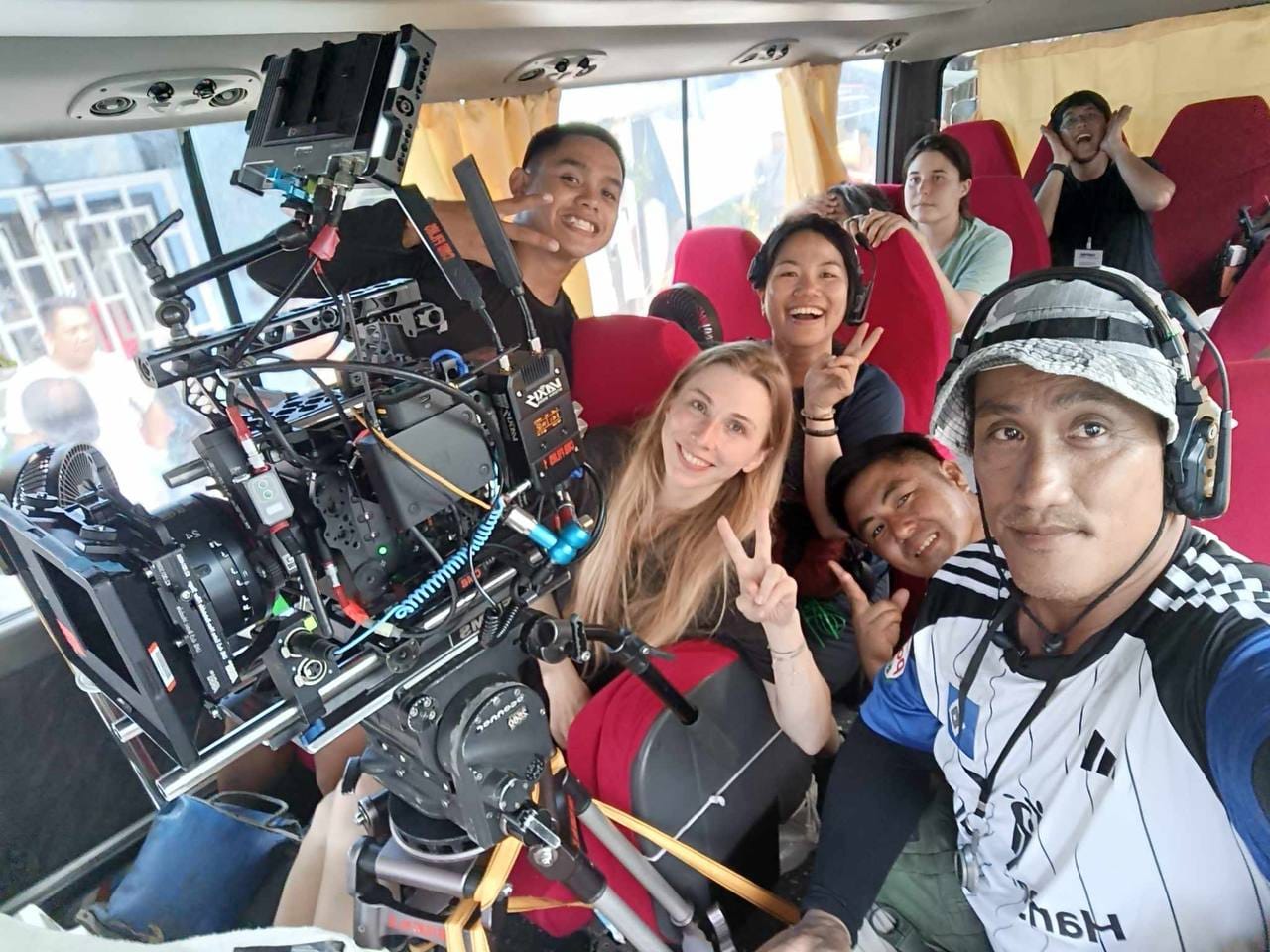
It was super fun and we really enjoyed it. I think that it is so important on the film set to enjoy the process as well. It's so hard getting a feature made that I think having fun and enjoying it as well is such an important part of the filmmaking. We are really lucky with Filipiñana. We had such a great cast and crew on set that we were like a huge family.
JP: How long was the shoot?
XP: We actually were super lucky. We had 38 shoot days. It was amazing.
JP: Oh, wow. No wonder you couldn’t use film.
XP: Yeah, Rafael fought for it from the beginning.
Well, there was a deal we made. If we shot on film, we would have fewer days. But it was great. Especially since the locations we were in were all these golf courses, which were members' clubs, so a lot of times we were only allowed to shoot on maintenance days and then only in certain areas. There were a lot of restrictions on where we could be and at what time.
Also, sometimes we had to wait out the rain. So, it was really great to have that time. That allowed us to do these little shenanigans of impromptu scenes.
JP: Sort of adjacent to bringing up Jia, one label that is already starting to be applied to Filipiñana, Rafael Manuel, and maybe your cinematography as well, is the label “slow cinema.” Do you think of your cinematography in these terms? What do you think more broadly of slow cinema? You already mentioned being a big fan of Jia Zhangke, and I imagine another peripheral filmmaker to this conversation, certainly in the Philippines context, is Lav Diaz.
What do you think of the label “slow cinema,” and particularly as it's starting to be applied to Filipiñana?
XP: I love slow cinema. Especially in today’s time, we are more and more exposed to constant stimulation everywhere. It is such a great genre in itself to move away from that. It's always so important to have a bandwidth of expressions. Not to say one expression is better than the other. For me, it is always just important to have all these different ways of storytelling and expressing yourself.
JP: Would you like to do another film in the slow modality?
XP: Yes, you can sign me up for that. I will definitely. I love exploring. I think what I enjoy a lot about being a cinematographer is that with every director you broaden your horizons because they open the door for you to enter a new world and see things from their perspective. But yes, I would also absolutely do slow cinema again.
JP: I am sure you have done quite a few of these interviews, and I am positive you’ll do a lot more. Are there any questions that you have been wanting to be asked about your cinematography on this feature that you haven't yet been asked? And if so, what are they?
XP: That's such a good question.
It’s not directly related to cinematography, but I think one of the big things I really enjoyed about this film was the collaboration we had. [I wish more people would ask about that.] I think all parts, all departments, felt really special, and I wish there were more projects like that.
I was really involved in the colors, and not just the colors, but the textures of the costume; the costume designer, production designer, and I would go out and look at fabrics together. For the maintenance guys' uniforms, I was the stand-in person because apparently I'm the average height of a maintenance worker. I went food shopping for the food scenes with a production designer. It felt super nice having that community and also that dialogue with everyone on set, as well as my crew.
That was really the strong point of the film, and that enabled us to make the film what it is, and to accomplish the visual language on a small budget. It really came down to us really having these conversations together and figuring out solutions together.
JP: Oh, that's beautiful.
XP: Thank you.
This interview was transcribed and edited with the help of Haleigh Cramer.