Bias Wrecker: MAMAMOO: My Con the Movie & Stray Kids: The dominATE Experience
A better propaganda film about power than Melania.

There is an embarrassing coverage deficit of K-pop concert films as film art on Rotten Tomatoes. This new column is an attempt to (periodically) rectify this.
MAMAMOO: My Con the Movie
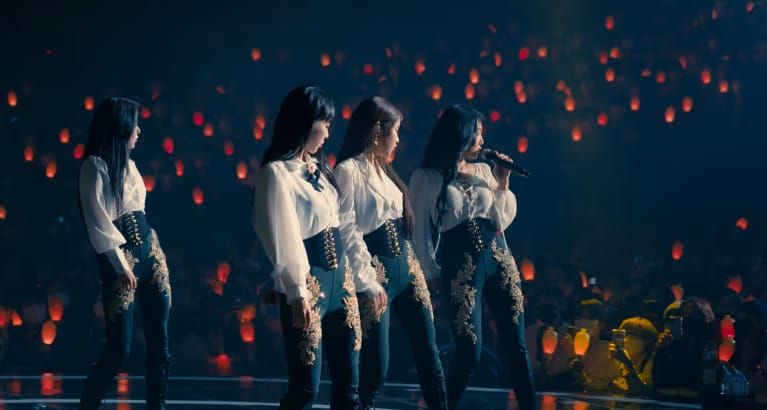
On the eve of Mamamoo’s comeback, I thought it would be fitting to start this new column with the band that was my first real, non-”Gangnam Style,” introduction to K-pop. To grave disappointment, director Lim Jae-kyung’s MAMAMOO: My Con the Movie (2023) strikes me as an afterthought. With myopic shot coverage, minimum crowd shots, and concerning amateurish audio kerfuffles, it wouldn’t be surprising to learn the film came to fruition only after the footage from the concert.
The fan-cam grade audio as a whole pulls the attention away from Solar, Hwasa, Moonbyul, and Wheein as stage presences and artistic personalities. Long stretches of concert quality audio break with inconsistent room acoustics or distractingly raw live recordings. There is a particularly disheartening mid-song quality dip in “Décalcomanie,” one of their most distinctive songs. Mamamoo has some of the strongest vocalists with the greatest dynamic range in K-pop, so it’s disappointing that the documentary falters so dramatically in its easiest job.
The editing is so criminal that only a company, Post Madman, can be found in the credits. The editing team babysits the runtime by chopping away at all of the small moments and even reduces individual song performances into hastily construed TikTok bite-sized selections. Background dancers evaporate from one cut to the next, and, like an author abandoning all periods, the air time between members speaking between songs is wholly and awkwardly forsaken like an audiobook left on 2x speed.
The bigger-scale structure shows greater consideration. After a few numbers in largely mono-stylized outfits, each member performs a cover of another group member’s song without the others present. Solar covers Wheein’s “Watercolors” and Hwasa takes on Moonbyul’s “Eclipse,” for example. They assume each other’s personas while at it too. Hwasa’s outfit takes on a darker and moodier twist than her usual, more appropriate to Moonbyul’s edgy aesthetic. Wheein’s cover of Solar’s “Honey” is one of the film’s sonic highs, but sadly, like the other covers, it cuts short before the end. Moonbyul’s cover of Hwasa’s “Twit” caps the section of cosplaying as each other. After the covers, the group unites, though united by color or certain visual choices, their strong personalities reflect their outfits yet they also look whole. The parts make Mamamoo whole, the editing tells us. From a meta-narrative reading, the band was preparing to part for a four year hiatus where they would all pursue solo careers—and the concert’s structure creates a mini-comeback to assure fans of Mamamoo’s eventual return.
The member interviews enlighten more than most concert film interviews, if only marginally. The production design elements behind the girls in their sit-down interviews does even more heavy lifting though. Prominently behind Hwasa, one of the major iconoclasts of K-pop beauty standards, stands a book with Marilyn Monroe’s name on its spine. A different book stands-out in the Solar interviews: one about The Beatles. They both use parallels between the 3rd Generation K-pop group and the larger (English language) cultural zeitgeist to situate Mamamoo within the entertainment industry. They want to shake the industry up like Monroe and The Beatles.
Stray Kids: The dominATE Experience
Stray Kids as the Conquistadors.
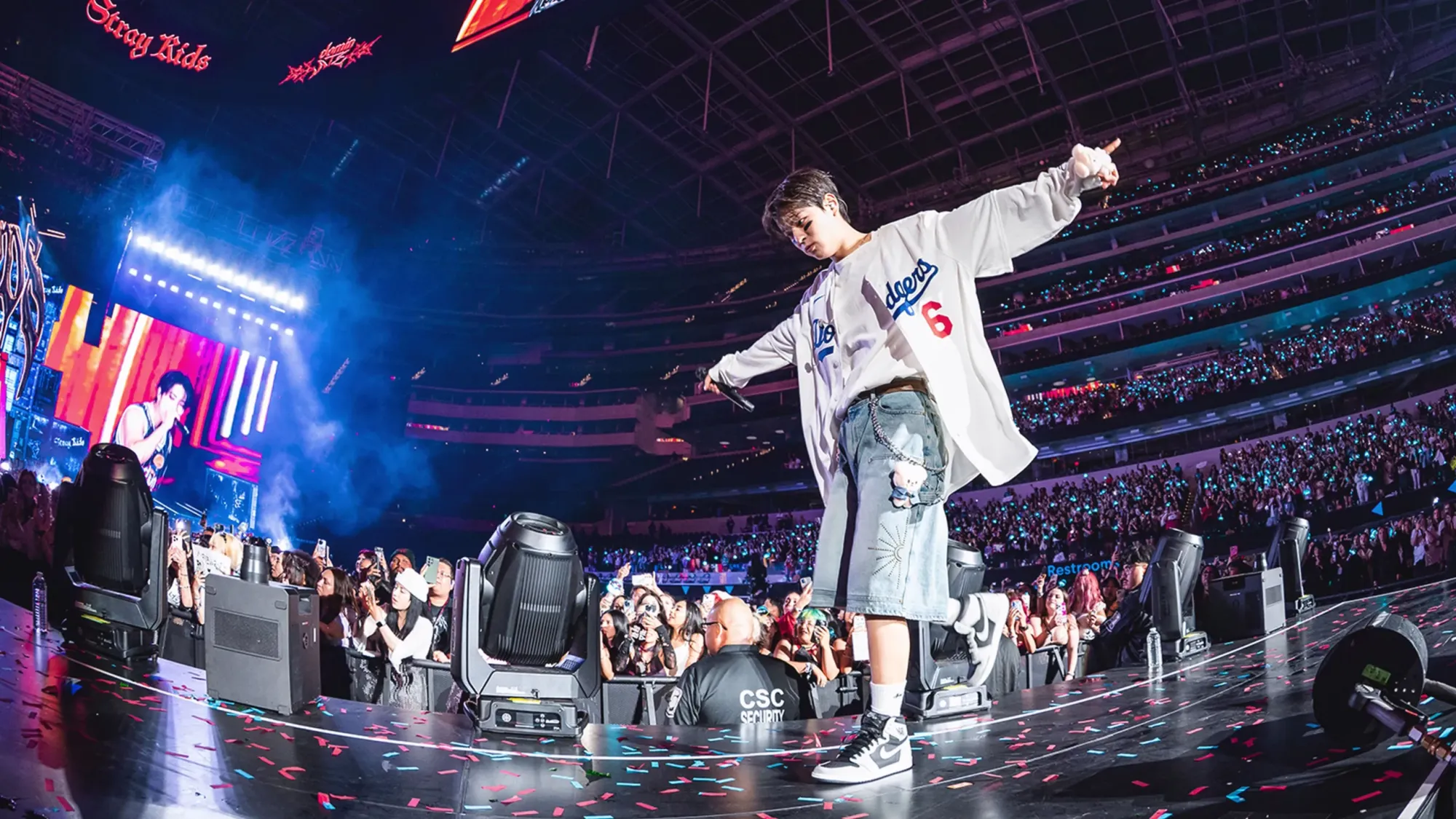
The imagery in Stray Kids: The dominATE Experience is all about power: Napoleonic regal excess; vaguely Confederate color schemes and outfits; Scottish kilts; Roman symbols of conquest projected in the background. More modern symbols of the conquest of capitalism and its bourgeoisie brands like Versace and Balenciaga or the LA Dodgers become impossible to miss. Backstage workers have their faces blurred—presumptively out of privacy, but it’s also a message of power: these faces don't matter to the viewer. These faces do not make us money. Our most common vantage point is one that looks slightly up at the members, imitating the audience and also the basic film grammar for displaying power. The “Victory Song” that plays near the end capitalizes on the same rhetoric.
The sexual innuendos get more blatant toward the end of their “domination.” The squirt guns and confetti—always depicted with a playful eroticism—need no explanation. The dance choreography also gets more sexual as the members’ hands explore each other's bodies more forcefully (kinky), particularly around the neck. They get touchy.
These men are here to conquer: maybe LA, maybe you and me.
For what it is worth, I’m sure Paul Dugdale & Farah Khalid’s concert film about Stray Kids is a better propaganda film about power than Melania.
If you’d like to see more content like this, consider supporting me to let me know.