To Be Continued & To Be Continued. Teenhood
Part of the 2026 Boston Baltic Film Festival

The Boston Baltic Film Festival runs from Friday, 2/27 through Sunday, 3/1 at the Emerson Paramount Center, and through 3/23 virtually. Click here for the schedule and ticket info, and follow along with my multi-outlet coverage at the Boston Hassle and There Were No Gods Left.
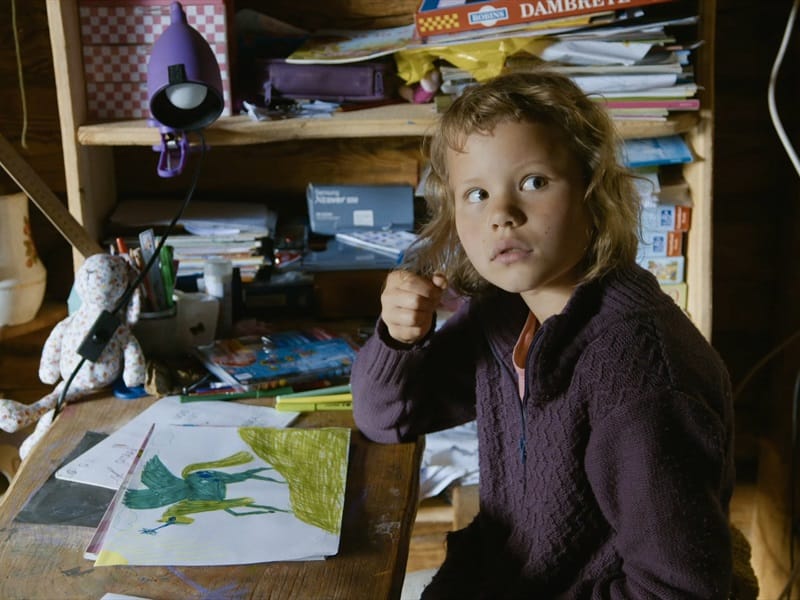
To Be Continued documents the first school years of five Latvian children from various parts of the country. Before introducing us to the five children, director Ivars Seleckis sets the tone in his 2018 documentary with a didactic prologue. He steps before the camera and expresses his wish for these children to have a more peaceful childhood than his own. His words are both innocent and ominous. The cinematographer behind the classic Motorcycle Summer and several of the early Riga poetic documentaries like The Coast, Seleckis was born in 1934 and has lived through the Nazi and both Soviet occupations. His lone narration in the documentary is a political longing—one he does his best to realize with his liberated camera.
The children live very different lives from one to the next. Anete lives with her grandmother while her mom works in the United Kingdom; they video chat regularly, and she has to help grandma set things up. Gleb’s family are transplants to Latvia and speak Russian in the home. Anastasija is new to rural life and the horses of the countryside still make her eyes twinkle with joy. Kārlis’s family has long preferred agrarian life and one only needs five minutes with them to understand this. Zane’s family, by contrast, is still adjusting to city life.
Either Latvian children are much more well behaved than their American peers (totally possible) or Seleckis chooses to (mostly) present these five children on their best days. Tantrums and hissy fits are kept to a minimum. They live incredibly tranquil lives and tend to be agreeable with authorities, to varying degrees. This is not about the most trying sides of parenthood. They are easygoing because, in aggregate, they do have a better childhood than did the occupation-era childhood of Ivars Seleckis. This shell shows some cracks in its armor as we spend the year with them. Gradually, we do see some of these more kiddish and immature moments, talking back to parents, and other misbehaviors, but the general favoritism to them behaving well propagandizes the image of a Latvian childhood Seleckis expressed a longing for at the beginning.
While Seleckis is a historical important cinematographer, the credited camera man here is Valdis Celmiņš (Upurga, Bridges of Time, and Blizzard of Souls). “Camera operator” is how the Latvian term translates into English and it is a good name for it since Celmiņš’s photography gives the impression of a silent observer, as if it the camera is simply being “operated.” There are no interviews and, other than the bit at the beginning, no narration. It’s also with hesitation that I use the word “observational” since these are children and the camera invites performance. They appear comfortable before the camera, as if it weren’t there, but we all know how the presence of a recording device changes the room. Maybe children are more immune to this temptation to put on a performing face than adults though.
No documentary is ever neutral since they are created by humans with complex perspectives, ideologies, and interests—and the perspective that takes root in To Be Continued is pregnant with optimism and Latvian pride. The five children with their mix of city and rural lifestyles and varying parental incomes reflect the country today. As I learned in my Q&A with Celmiņš at the Boston Baltic Film Festival, they worked with an anthropologist to select the children for this purpose. Gleb’s Russophone family adds the country’s largest language minority to the mix. The children, four Latvian speakers and one Russian, line up decently close with the actual demographics of the country. We view as the very young school age children sing the national anthem, watch footage of Juris Podnieks’s documentary crew being killed on camera while filming the Soviet OMON attack on the interior ministry in 1991, and learn how to find Latvia on maps. They even play hockey, Latvia’s official national sport. It’s a patriotic documentary, though it may not immediately scream itself as such the same way Soviet propaganda docs did.
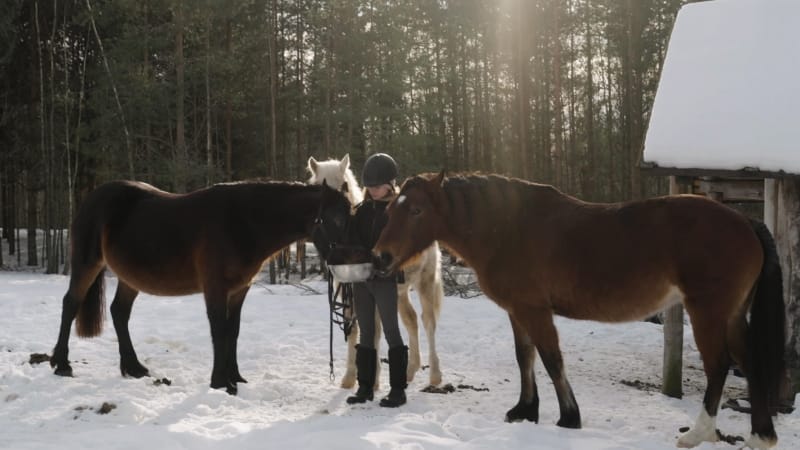
True to its title and an on-screen epithet hopeful for a follow-up, To Be Continued picks up with the five children seven years later. The kids are 14 now and their demeanors have changed dramatically. So has the world.
The world Seleckis feared in the first film’s prologue is on the minds of Latvians with the war in Ukraine. Radio broadcasts and class lessons across the lives of the five teenagers remind about the violence “next door” with somewhat regularity. The tranquility of youth came to an end with the war they aren’t even fighting in. Eastern European political precarity exercises its muscles with the lives of these teenagers, whose lives really are shaped and crafted by people they will never meet and systems much larger than themselves.
Seleckis, getting up there in age, co-directs with Armands Začs. The idyllic side of Latvia in the 2018 film has been replaced with an aching one in the 2024 sequel. One of their schools placed last—of all the schools in the country—in their test scores last year. At least one of the children, Anastasia, claims her mother emotionally and physically abuses her. We are reminded of the Disney princess-like horse girl from the first film only in flashbacks. Gleb, the Russian, struggles to meet the high demands of his parents. Their unreasonable standards and strictness were glimpsed in the first film. Now they weigh him down like a deadlift.
In the first film, the hockey they played was an informal game of shinny. Sports now are more competitive, more serious. Zane is a very serious basketball player. She has ambitions to play on the national team and professionally abroad. Her fierce attitude doesn’t end on the court either: she brings it home. Gleb boxes, mostly because it’s what his dad wants him to do, and the sport matches the type of (hyper-)masculinity his household is shaping him into. Even their leisurely activities are more stern now.
The two biggest formal evolutions between the sequel and its precursor are the elimination of the prelude and the insertion of flashbacks. Without any introduction from the directors, To Be Continued. Teenhood is “voiceless.” It could be that the first introduction fades like a childhood secret. It could also be simply because, as an episodic sequel, the original “intent” still carries forward and the co-directors don’t feel a need to repeat the message. The other new formal element—the flashbacks—challenges this option. They exist on the most basic level to connect the chronologies behind their respective title cards. They create incisions in the stitching of the two times too. When the footage of Anastasia and the horses from To Be Continued is cut alongside her troubled present, the dissonance between the two breaks down the glass house of innocence. Other times it connects the children to their teenage selves as if retroactively prophetic. Like a best friend pointing out one’s partner’s red flags post-breakup, time makes the obfuscated clear.
The two To Be Continued films, in their interest in the passing of time and the poetic possibility of beauty in everyday life, carry forward the legacy of the Riga poetic documentary. I prefer the second film for the way it complicates the picture of Latvia, but both are important contributions to the documentary genre. And they are now streaming through the Boston Baltic Film Festival’s online festival.