I Want to Speak in My Sovereign Tongue: An Interview with Lav Diaz on Magellan
"Yeah, [Donald Trump] needs to see Magellan."

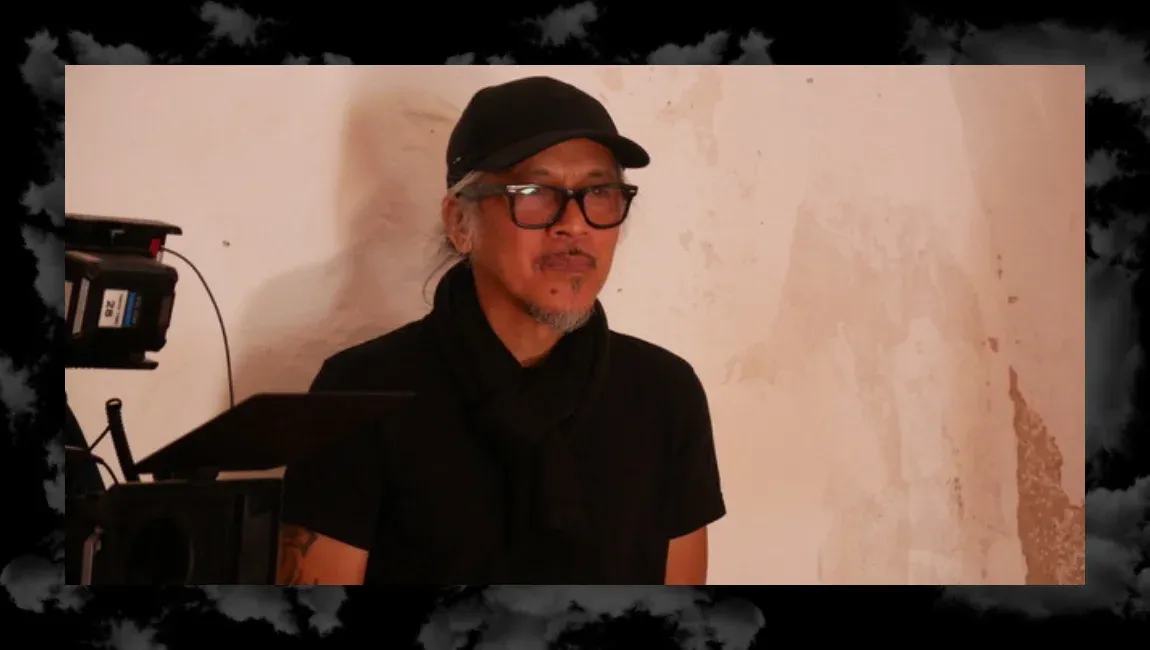
Lithuanian-French Jewish philosopher and Shoah survivor Emmanuel Levinas once opined that “the first word of the face is ‘Thou shalt not kill.’” The human face, or perhaps more creatively put, the act of seeing another and letting the emotions they wear on their faces penetrate us, touches something morally dormant resting within us. That’s the power of cinema. It’s an art that lets us meet, love, empathize, and mourn the faces of many. It’s a medium that can reshape the myths that sustain cultures when leveraged with a humanistic and subversive touch. This is also the story of the great Filipino director Lav Diaz’s career.
Diaz is best known as the Filipino custodian of “slow cinema” and the festival-favorite auteur behind titles like Norte, the End of History and Evolution of a Filipino Family. He usually rejects, or at least pushes back on, the “slow cinema” label simply because it is a label and he is an artist who prefers (and elects to make) boundaryless art. Elsewhere, in reference to the island where he grew up, he has claimed to be filming in “Mindanao time” or “Malay time,” an experience of time that runs counter to the standardized (and exported) fast-paced, capitalistic Western experience of the clock. His new film, Magellan, continues his decades-long experiment in “Malay time.” It is a selective biography of the final few years in the life of Portuguese explorer Ferdinand Magellan as he colonizes what are now Malaysia, Indonesia, and finally the Philippines, where he ends up being killed on the island of Cebu in 1521. While maintaining the long static shots and minimalistic soundtrack that have defined Diaz’s aesthetic over the years, Magellan also strays from the bulk of his filmography with its color photography and 4:3 aspect ratio. At just over two and a half hours, it’s also much shorter than his most famous “emancipated” works, which sometimes stretch past 11 hours.
I spoke with Diaz on the morning of January 3, several hours after the heinous American invasion and bombing of Venezuela. It was an altogether weird time to be thinking about the cinema. And if it were any other filmmaker, or any other interview, I might have considered cancelling; there are more important things in the world than talking about moving pictures. But Lav Diaz isn’t most filmmakers. He makes films with the intent to change the world. His moral clarity — unlike the president — is unimpeachable. And somehow, in some small way, maybe the thoughts he shares here can be part of his dream to build a better world. In other words, he is one of the very few filmmakers who it made sense to talk to in a moment like this.
I interviewed Diaz over Zoom on the occasion of Magellan’s North American release. Our conversation was free-flowing and touched on Donald Trump, anti-colonial filmmaking, his course-correcting depiction of Enrique of Malacca (a man enslaved by Magellan), his political reasoning for using translators while on the press circuit, the Wakwak connection between Norte and Magellan, and much more.
This interview was edited for clarity and concision.
Joshua Polanski: I saw Magellan for the first time at TIFF. In the Q&A after, you wasted no time drawing lines from the colonial past to the present as you repeated phrases like “Fuck Magellan, fuck Putin, fuck Duterte.” Today, we also woke up to the awful news of an American bombing of a sovereign country and the kidnapping of its head of state. Do you see Magellan in Donald Trump?
Lav Diaz: Yeah, [Nicolás] Maduro, man. My God. It’s the same. It’s happening again. The cycle continues. Imposing very arbitrary and premeditative things [excuses] like that. There was a plan. A very barbaric [plan], as well. It’s the same. It never changed.
JP: What does it mean to make anti-colonial cinema? What does anti-colonial cinema look like?
LD: Personally, it’s an obligation. I consider myself a cultural worker in my country. It’s a no-brainer to tackle history, to talk about colonialism and the different periods in our country’s struggle. It’s an obligation to talk about these issues, to disclose them. Magellan specifically is a big, big, big persona and a fixation to our culture. He has been a part of our culture forever. It’s an imposed responsibility to create a dialogue about this epoch in our country and in history.
Read the full interview at In Review Online.