Code of Misconduct
Alternative programming for hockey spectators disturbed by the game’s troubled legacy of rewarding misogynistic and sexually abusive behavior.

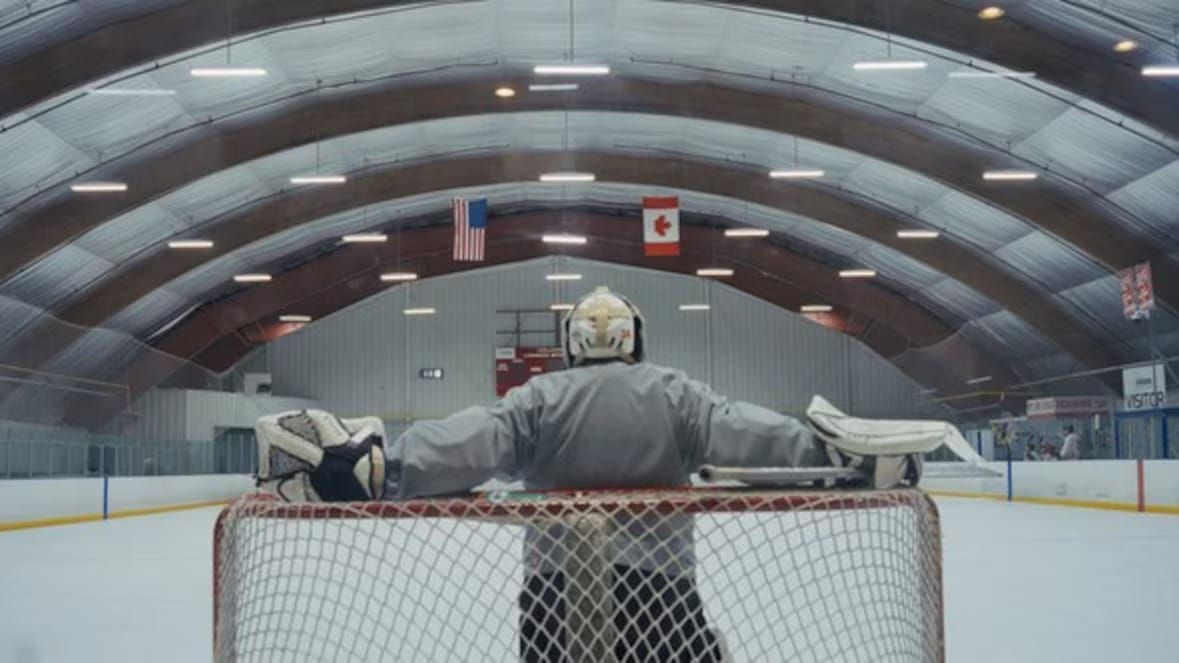
Canadian documentary Code of Misconduct just released on streaming with impeccable timing.
The investigative doc follows the Hockey Canada sexual assault scandal involving five members of the World Juniors team and their (alleged, for legal purposes) assault (and, depending on one’s definitions, gang rape) of a woman known to the public as E.M. in 2018. Code’s US Amazon Prime release comes in the midst of the Stanley Cup Final, where Carter Hart, one of the accused, currently sits three wins away from possibly lifting hockey’s most hallowed prize and winning a whole lot of money in the process.
With the help of auspicious timing, Code of Misconduct works as alternative programming for hockey spectators disturbed by the game’s troubled legacy of rewarding misogynistic and sexually abusive behavior.
Using a mixture of animated text messages, security footage, and interviews, director Sébastien Trahan reconstructs the events that took place in London, Ontario, in 2018 and follows them through the 2025 criminal trial where five hockey players—Carter Hart, Dillon Dubé, Michael McLeod, Alex Formenton, and Cal Foote—were acquitted of sexual assault. The documentary seeks moral elucidation surrounding the events of the night of June 18, 2018. After winning the championship, the national World Juniors team celebrates at a local bar where E.M. encounters the men, goes to the hotel with McLeod, and has a consensual sexual encounter. The victim then recounts that she cleaned up in the hotel bathroom and McLeod’s teammates were waiting for her; McLeod invited his teammates. She testifies that the five hockey players then committed non-consensual and aggressive sexual acts. The (alleged) actions include hitting her aggressively and performing splits over her face.
One of the most “controversial” elements involves a video where the victim is commanded in the imperative by McLeod to give consent post-facto, which, by law, is not how consent works. The filmmakers, whether to protect the victim or by a limit of access, show us a transcript instead of the surely darker and more triggering video. McLeod barks at her to “say it,” and, as expected, her “consent” reeks of coercion. She even makes a point to say she wasn’t intoxicated, as if to intelligently protect herself later by making it transparent how forced her appearance in the video was. Almost sarcastically, she says, “You are so paranoid. Holy! I enjoyed it, it was fine, it was all consensual. I’m so sober.”
We see few faces. The general public, presumably non-consenting to be filmed for an investigative documentary, has their faces blurred. London police and legal counsel, contemporary and former junior hockey players, and others with expertise relevant show their faces in interviews with investigative journalist Rick Westhead, the documentary’s closest thing to a protagonist. The five accused are denied the opportunity to shield their faces from the camera. They are exposed. The contrast between those protected, like E.M., who is entirely unidentifiable in the security video, and those who are in crystal clear 4k tells viewers that Hart, Dubé, McLeod, Formenton, and Foote aren’t worth protecting—and recognizing predators helps to hide from them.
Imposing and phallic shots of the London skyline, with a focus on the thick brutalist Ontario Court of Justice building, give rhythm to Code of Misconduct and connect the various interviews and gradual timeline jumps. The edits make the viewer just slightly uncomfortable while also aligning the broken court with the (alleged) sexual crimes through phallic imagery. This interpretive and symbolically charged detail is one of the only areas where the filmmaking breaks with the journalistic documentary mold. Westhead opens by summarizing hockey’s place in Canadian culture and then musing on the symbolic significance of the trial taking place in London, the Mecca of junior hockey. These architectural connecting shots return the trial to this thesis about hockey culture more broadly.
Trahan is most successful in making the case that this is a junior hockey problem and not just a this team and these men problem through the inaction of the teammates on the 2018 team. For example, the documentary spends significant energy telling the story about Hart’s current Las Vegas Golden Knights teammate Brett Howden, who was not charged with any crimes. Howden heard her “weeping” and texted another teammate about how Dubé was hitting her so hard it looked like it hurt “so bad.” Howden then went to his room because he “didn’t want to be a part of anything.” Westhead breaks his journalistic neutrality to make plain the abject moral failure of the team: there were 19 men in the original group chat, and at least five more men were in the room at different parts of that night. Not one of them did anything to help the weeping woman. He painfully expresses a hope that his children, if witness to an awful situation like this, would do something. Anything.
Less effective are the consent info-sessions and interviews with contemporary and alumni junior players unconnected to the Hockey Canada case (except for the material about former NHL prospect Kyle Beach, who was sexually abused by one of his NHL coaches). The heinous locker room talk and hazing they share with Westhead is nasty, vile, and sometimes criminal but altogether distracting and less compelling. Are we to gather that Hockey Canada’s problems are now fixed because the captain of some junior team in the QMJHL says the right things about consent on camera in his billet family’s home? Even if the goal is to show the work has started and there are good people in hockey moving to make the culture change necessary, it’s ultimately a pedantic and unnecessary venture to establish that nasty hazing and misogynistic locker room talk are features and not bugs of North American men's sports culture. The demonstration of this is like a nature documentary proving that most birds can fly.