Stalker
We don’t always know what is best for ourselves.

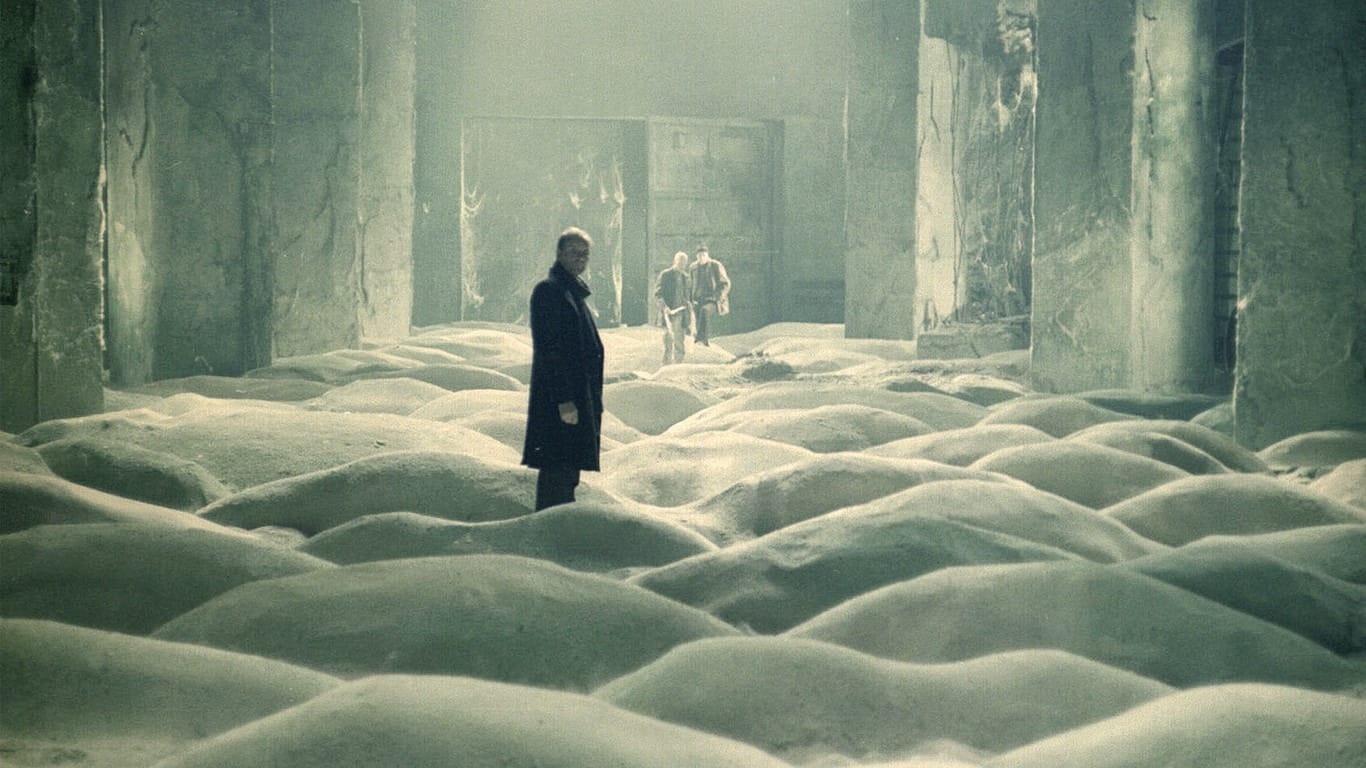
We can learn a lot from Andrei Tarkovsky’s “Stalker,” the great 1979 Soviet science-fiction film about three travellers journeying through a mysterious land called “the Zone” in pursuit of a magical room that will grant the heart’s deepest desires. In his final USSR film before crossing over to the West, Tarkovsky, like a wise cinematic saint, reminds us that some desires are best quelled. This self-restraint is alien to our present culture of instant gratification, and it’s also a lesson we could always hear again: we don’t always know what is best for ourselves.
Like “Cleopatra” before and “Fitzcarraldo” after, the hellish production is, in part, responsible for the legendary reputation of “Stalker.” Tarkovsky originally planned to film his adaptation of Arkady and Boris Strugatsky’s novel “Roadside Picnic” near the deserts of Isfara, Tajikistan, but an earthquake forced the location change to Tallinn, Estonia, in one of the other far corners of the stretching Soviet empire. A storm of circumstances too crazy to recall, complete with a scorched cinematographer and lost footage, led to the majority of the film being shot three separate times. The length of the production on the Jägala river and near a chemical plant (and questionably toxic waters) has led some to speculate about the early cancerous deaths of several members of the cast and crew, including Tarkovsky.
The Estonian location anticipates one of the great themes of “Stalker.” Tallinn sits in the far north of the Baltic country, just over 50 miles from Helsinki.
Continue reading at The Rapidian.