“I Played with the Devil Inside Me”: An Interview with Raitis Stūrmanis on Red Code Blue
Bombs, mustaches, and a journey into acting.

Outside of the biggest of productions in Hollywood and the other major film centers, lengthy active shooting periods are a luxury. Money is the biggest barrier: only industries like the United States, South Korea, and China have the ability to allow single films with large casts to shoot for multiple months. In a small country like Latvia, an 85-day shoot is almost beyond belief.
But that’s the situation the team of Red Code Blue, or Tumšzilais Evaņģēlijs in Latvian, found themselves in. They used 85 shooting days over a two and a half year span from 2022 to 2025. To put it in perspective, the leviathan Iron Man shoot lasted just 11 days longer. The crime epic was directed by Oskars Rupenheits alongside his close-knit colleagues at KEF Studio following their The Foundation of Criminal Excellence (Kriminālās Ekselences Fonds in Latvian) in 2018.
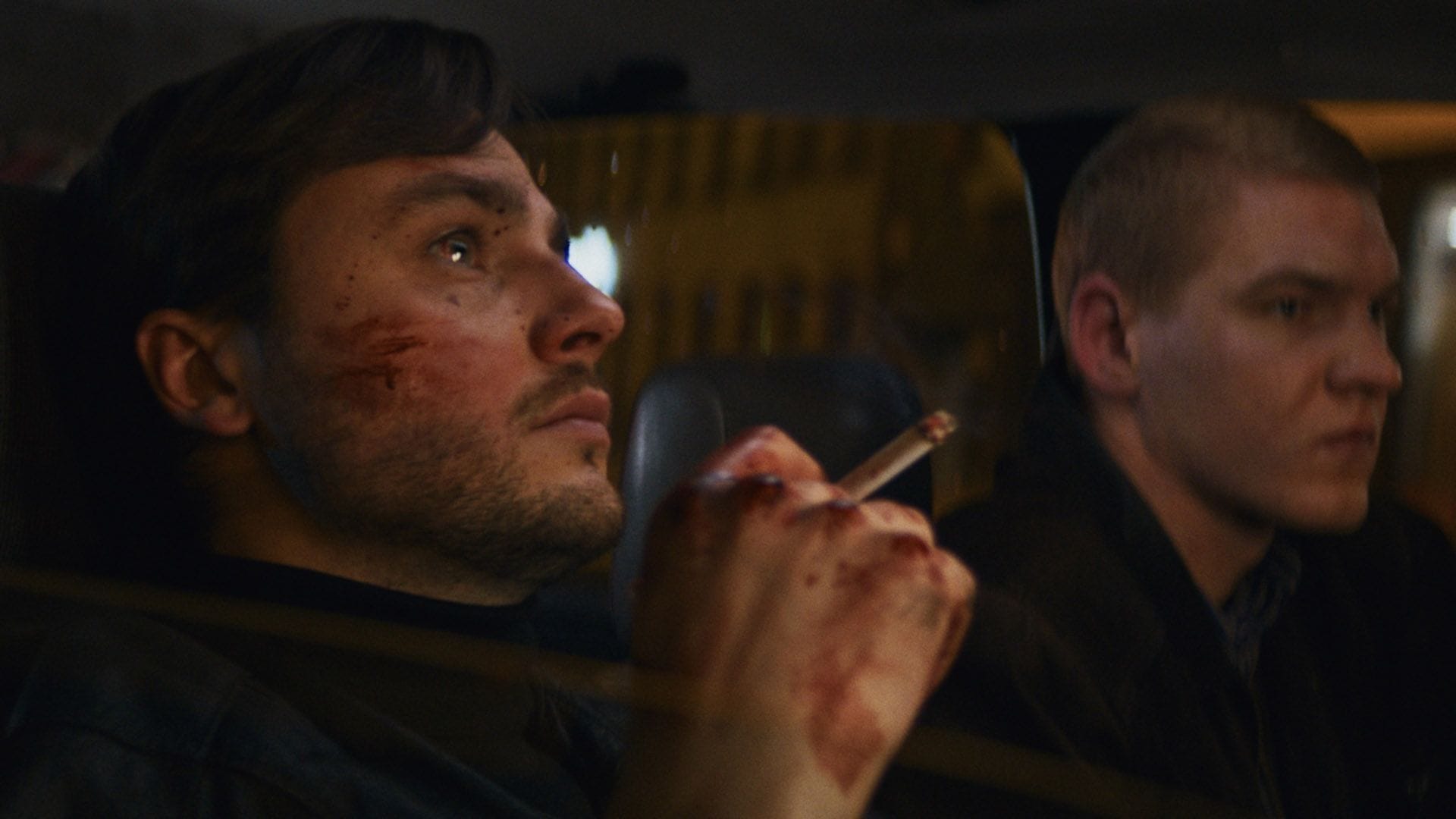
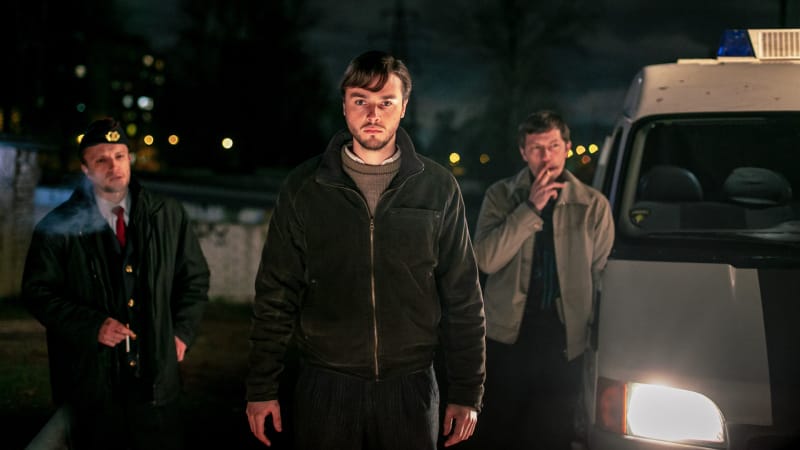
Set in the early post-Soviet years of Latvian independence, when public justice was as flexible as Play-Doh, the idealistic Romāns Skulte (Raitis Stūrmanis) is fresh out of the police academy as he starts work at his precinct in Riga. He comes as a man on a mission to do things the right way, though his idealism is quickly soured by his precinct co-workers. No one else feels that same urge, and he quickly makes a departmental pariah out of himself. His officer colleagues are corrupt, quick to pull the trigger, and even quicker to weasel out of work. At the most optimistic, they are jaded anticipations of his future. We witness Romāns adjust to life as an officer by watching his morality corrode.
Their hard work paid off at the Latvian National Film Awards, where their film was the big winner of the evening taking home Best Production Design, Best Make-up Artist, Best Film, Best Director, and, most relevant to this interview, Best Actor for Raitis Stūrmanis’s work as Romāns Skulte.
Stūrmanis is new to acting. He comes not from film school but from the post office. He has a restrained and unrefined charisma seemingly lifted from the melancholic men in the films of Paul Schrader and translated into Latvian. It may be his first film, but he won’t be going anywhere. Stūrmanis will be a presence for years to come in Latvian cinema—and who knows, maybe he has a future beyond the borders too.
I interviewed Stūrmanis at the Boston Baltic Film Festival shortly before he won the National Film Award. Our conversation touched on a variety of topics, including his journey to acting, a bomb that blasted from his shoulder, and how a mistake in mustache shaving affected the production.
The interview has been condensed and edited for clarity. Read my full review here. If you like reading this interview, consider supporting this kind of coverage.
Joshua Polanski: Before Red Code Blue, you had never really done anything big. Walk me through the process of A), deciding you wanted to act and B), how you got this role.
Raitis Stūrmanis: I think that is the most boring part of my journey in this movie because it was really straightforward. I just signed up on Facebook, where [the producers] were looking for the actors. I didn’t know which role. I actually didn't care because I was such a fan of KEF Studio and their work. I just wanted to meet them because I’d seen some featurettes that they’ve done previously, and I thought that all the crew is amazing. I understood the same crew was doing this new movie.
The previous time when they were looking for actors for The Foundation of Criminal Excellence, they were also looking for non-actors and actors from the street. There was the option to buy a role in the movie as a crowdfunding thing. It was like €400 or 500.
JP: That’s for a background role?
RS: You didn’t know. It wasn’t specified in the ad. But one guy who bought a role was actually a member of the Riga municipality. He was the big guy talking shit at the market. He did a great job there.
At that time, I thought that campaigning was super sketchy. So, I didn't buy the role. But when the movie came out, I went to the cinema like five times in a month or two. I was amazed and really depressed that I didn’t buy the role back then. Looking back at it now, there wouldn’t have been a fit for me. There wasn’t a persona that would fit. Maybe it was meant to be for me in Red Code Blue. When I signed up, it was a no-brainer. I had to sign up for this movie.
The [casting] process was pretty long. We sent photos and tried out some scenes by ourselves and sent the tapes in. It was like five different scenes that we had to do.
JP: Are these scenes still in the final film? Not the takes obviously, but the scenes.
RS: No, no.
Someone from the crew published them recently as a marketing post somewhere on social media, just to show how, in these small scenes, I went all in. Basically, my friends and I got real old school police uniforms, and we did the scenes. We tried to recreate a typical day that you see in a policeman’s life. And so we did it. We went really all in. Oskars [Rupenheits] said it was too much.
There was another take. One of the theater actresses from Latvia helped me prepare and gave me some tips and tricks for that. It turned out to be the take that Oskars liked. That’s how I got the role.
The final test was meeting in person and doing really hardcore scenes with him—like yelling and imagining pointing a gun at him, counting to 10, and shooting him. It was crazy.
JP: Was that for the finale?
RS: Yeah, yeah. Now I understand he wanted to see the highest range that I could go. In the movie, I never went as far as I did there. It just turned out to be a good fit. I think more than 7,000 people submitted and wanted to get roles in the movie, but Oskars said that he really didn’t have any other alternatives than me.
JP: I don't think most people decide one day, “I want to be an actor.” Was that something that was always bubbling around for you? Was it just that you love movies so much?
RS: Well, I did a podcast recently, and the woman hosting the podcast tried to get this out of me because she was a psychologist and wanted to understand how I ended up being an actor. We tried to return to my childhood and talked about what we wanted to be when we were kids. I remember the first job I wanted to do when I was a kid. In the 90s, there were shops where guys rented out VHSs. I thought that the guy who was sitting there and renting out these VHSs was the best job because he could sit all day and watch movies and get paid for that. I thought that was the best job. So, that was in relation to the movies.
The second job I wanted as a kid was to be a detective. I saw a great theater play about detectives and thought to myself, “I want to be a detective.” There is some resemblance to this role. It spoke to me, even though I didn’t know initially what the role would be. I think it was just meant to be.
My previous job before this movie was in the post office. I compare myself to [Charles] Bukowski. Before he became a public figure, he was also a postman. I love his books, and he’s my favorite writer.
JP: Of course, there are lots of famous non-actors who became actors and didn’t have that sort of theatre school approach chiseled into them, which often gives them a rawness that you don't get from the trained actors.
RS: That’s maybe the main strength of Oskars’ movies. They seem very real because of that.
JP: What was the hardest scene for you personally to film? Emotionally, physically, etc. There are a variety of ways you can answer.
RS: Emotionally, it was the one where my character, Romāns Skulte, has to bring the news to the wife of the deceased business owner that he’s dead.
It’s a small scene, but the woman who played the wife of the business owner, Antonina Pilugina, was crying real tears and playing really well with me. It felt super real. I had goosebumps back then, and we were all amazed on the set at her ability to cry. Even before the takes, when we were practicing, she was crying already. Every take she cried real tears and then sucked them in and did it again.
We were all amazed and asked her how she is doing this. And she said, “Some practice on YouTube and that’s it.” In the movie, I think it didn’t feel that heavy, but when we were filming, it was emotionally one of the strongest ones.
Physically, it is the final shootout.
JP: That is a longer take too, isn’t it?
RS: It is. There weren’t really many takes there, and we had to perfect it and do it right because we had a small bomb planted on my shoulder where they hit me, and it goes “bam!” In the first take, I forgot to put in the earplugs. The bomb went off, and I almost lost my hearing in one ear. It buzzed for a day.
JP: There was a bomb on your shoulder? And you felt safe?
RS: Yeah, like a small bomb. I trusted them. Of course, we had professionals on the set with the weapons. I trusted them. We had, I think, only three batches to put on the jacket to mend it. And only three bombs, I think. We had to do it right from the beginning. We were shooting blanks, but the shots were super loud and had a lot of fire from them. It was scary and intense to get it right.
JP: I have to ask you about the mustache. Tell me the story of you shaving too much of your mustache and how that affected the shoot.
RS: We had a small pause while we were shooting, and during that pause, for some mysterious reason, I thought that I needed to use a razor to shave my mustache a bit smaller and smaller. The pause was for two or three months. When I returned to the set, everyone looked at me kind of weirdly.
We did a scene. Afterwards, when Oskars put it together to see how it integrates with other scenes, he saw immediately that “normal me” is going to the car, and when I step in, it’s suddenly like early-Don Corleone with this super thin mustache. We understood we had to re-shoot. [After the pause in production,] the place where we shot was completely rebuilt and the bridge that was there earlier wasn’t there anymore.
We had huge construction work happening in the center of the city, and there really were no other options than to ask for the help of Maris Lagzdins, who did the visual and special effects. He used CGI and AI to put a fake mustache on me. When I first saw it, I almost fell out of my seat in the cinema. It’s crazy. It’s really amazing what you can do these days without anyone noticing it. No one has said anything about it. It looks super real there.
JP: Were there any roles or specific films that Oskars gave you to view as homework to watch?
RS: When we were starting, we had a couple of chats about films that we liked that could go along with the character. We exchanged these films with each other. I sent my favorites, and he sent his. I understood that his were maybe related to this movie: The Departed, Training Day, the 60s crime wave, the Jean-Pierre Melville films with Alain Delon—Circle on Rouge and Un flic—and these really amazing movies from the 60s. I love them.
In the first edit, we had some French music in the background similar to the 60s French music. The vibe there was similar to the old French crime movies, but Oskars took it out, and it’s not there in the final edit.
There’s this one amazing British crime movie, it’s The Long Good Friday. It’s what inspired Guy Ritchie when he did Lock, Stock and Two Smoking Barrels. That’s an amazing movie that inspired me a lot. The dialogue is great. Scorsese and then Training Day are right up there.
The movies that I love are a bit different. Guy Ritchie’s early movies and Layer Cake are pretty big for me. But I would say [the homework] mostly came from the ‘60s French crime wave.
JP: For the research for this role, how many cops did you talk to? What has the general police reception to the film been?
RS: Most of the guys who have major roles in the movie are ex-cops. It happened that way by accident. They signed up and were chosen, but Oskars didn’t know that they were cops.
It turns out that being in these kinds of movies attracts ex-cops, guys who worked for the Ministry of Internal Affairs, army guys, and Customs or Border Control guys. We had on-set people who could tell us when things from the 90s were inaccurate or verify that ”yes, this is how they talked.” We had live consultants.
I actually have a couple of policemen in my family as well. I talked with them a lot. I have friends who were, at the time, cadets in the police academy. We went to the shooting range a lot and had an ex-police academy teacher show us how she taught shooting in the ‘90s with the Makarov pistol, which was the post-Soviet gun that the police force used.
JP: Is that the gun they hide in the office?
RS: Yeah, the same one, which is a super-hated weapon. There’s also a scene where they talk shit about this weapon and say that you can't even shoot through a jacket.
JP: Yeah, the comedy scene.
RS: Yeah, the comedy scene. It’s a real story. This scene is completely true. The guy who was sleeping drunk there actually is Harijs (Andris Daugaviņš) from The Foundation of Criminal Excellence.
The head of Skulte’s precinct (Valters Kalējs) in real life is an ex-cop from one of the towns in Latvia. Many guys are ex-policemen, so it’s a close connection. When the movie came out, two days after the premiere in one of the theaters where we were meeting the audience, one guy asked for a microphone and then said his comments. He turned out to be the chief of the whole Latvian police. He said he also was a young cadet in the ‘90s and things were pretty similar to what is in the movies.
JP: What about the moving of the dead body back and forth across the street so that the other precinct would have to deal with it?
RS: That’s also a true story. It happened even on a larger street. We couldn’t use that street for our movie because it was impossible to block. It’s one of the main arteries of the city, so we used a smaller street. But it's a true story. They even did the same thing on rivers where bodies were floating on the rivers. Someone would call for the police to come, and they would say, “Let’s wait, let’s wait.” Then the wind pushes the body to the other side of the river, and they leave because it’s another district’s police that have to pick the body up. We heard those stories a lot after the movie, about these things, and worse, that happened in real life. Being a policeman in the ‘90s was a circus in Riga.
JP: Language seems to be an important part of the film in terms of who are the good guys, who are the bad guys. Sometimes it’s easy to tell by the language they’re speaking. You were talking at dinner yesterday about the kind of Latvian that was being used at the time. Could you please say a little bit more about that for a non-Latvian speaking audience?
RS: It's a shame that it’s really hard to translate some of the stuff from the movie. It’s a mix of Russian slang and Latvian that they used in the ‘90s, and a lot of Russian swear words and very specific police terms that are jargonized. Our focus puller’s granddad was a policeman and wrote about this prison argot, like this prison language, that they used. This book was like a dictionary for the police to understand what the people in the prison were talking about because they had secret words; they could talk like us sitting here, but their words would mean something completely different. They talk that way so that if they were listened to, no one would understand what they were talking about. We used this book as a dictionary.
JP: Mostly for the criminals?
RS: Both. Because the police force also uses these words internally. They don’t call marijuana “weed.” They call it a very specific word that was used only in the ‘90s. The language is somewhat specific. It’s a shame that it’s pretty hard to translate it. Oskars tried to translate it as well as he could.
Also, there are dialects coming into the movie. The American (Indulis Miglavs)—the officer who is like my elder and brings me into the police force and shows me everything around—he has a very specific dialect that is only from a certain part of our country. This gives an extra taste to his role.
JP: What part of the country?
RS: It’s very interesting. We have a couple of Finnish ancestry natives living on the coastline of Latvia, and also in one city on the other side of Latvia. He’s from this city.
JP: What's the city?
RS: Rūjiena and [also] Limbaži. It's around there. These coastal towns are called Lībieši in Latvian. This native group speaks a language that only about 300 or 400 people still speak. It’s a different language, and he’s from the small city. They talk a bit differently there. He brought an extra layer to his role with his accent and Oskars wasn’t planning this. But this was what [Indulis Miglavs] could add as a person.
JP: Religion is an important theme. A younger version of your character in the prologue talks about fate and morality with the blind man. This comes back at the end and with the priest friend. Can you say a little bit about inhabiting the religious world as an actor and what that was like?
RS: I would say that inhabiting the religious wasn't so important. From my perspective, and I think also from Oskars’ perspective, we used religion more as a tool to show these morals and principles because they align with the Christian principles of doing good. It was maybe the easiest way to show this moral conflict.
I think Oskars had planned an even larger religious context. We were planning to burn a real church at the end of the film, [for example], and we didn't do that. The religion is there, but I wouldn’t say it’s very crucial. It’s more about internal morals, like your internal compass, which I think is in every person. It doesn’t matter what kind of religion.
JP: The Latvian title has “gospel” in it, so the title is a bit different.
RS: It's very different.
It’s very good that you touched on this. A direct translation of the title in Latvian would be Dark Blue Gospel. And actually, the word is not simply “gospel,” it’s “Evangelium.” That comes from the Greek meaning “the song of joy.” It’s like this dark blue song of joy, which is a metaphor for how, when a policeman comes, it should be a song of joy—you’re happy the police finally came and helped.
But in the ‘90s in Latvia, it was completely different. The police came and beat everyone up. It didn’t matter if you’re guilty or not. They didn’t care. They were super brutal. The title actually is the director’s [statement of] irony about what the police were doing in the '90s.
JP: What’s next for you? I know you’re in a career transition, and now you’re pursuing this full-time. How scary is that? Do you know what's next?
RS: When I return from the U.S., I don't know what’s next for me. We have the Latvia National Film Awards happening this Sunday, the 1st of March. We have eight nominations there. Maybe some opportunities will hopefully open for the future if nominations turn out to be successful. We’ll see. Latvia is a small market. It’s pretty tough with that.
JP: What kinds of roles do you see yourself trying out in the future? What would be a dream role?
RS: I don’t know if I can share it publicly, but because this was thought of as a TV series, Oskars had a [longer] character arc planned for Romāns Skulte. It was written as a TV series and he had a continuation for a couple of seasons more. In my feelings, Romāns Skulte is not finished. There’s a lot more to dig there with this character.
The first cut was four and a half hours. We have a lot more material, so there is an option to make a series out of this if someone’s interested in that. What happens next with Romāns Skulte is very interesting, really interesting. That would be amazing for me to continue this character, but anything with crime and this genre appeals to me.
In real life, I think I’m kind of a good guy and pretty positive and kind and completely different from Romāns Skulte, especially at the end of the film.
JP: You did get to play the good guy at the beginning. Your character is an idealist. You want to come and change.
RS: A naive, green idealist. I auditioned for a TV commercial in Latvia, where I had to play a super naive and, I would almost say a bit stupid, guy. I was super lucky that I wasn’t selected for that because I don't enjoy those cheesy roles. It was hard for me. It’s a lot easier to be the bad guy from Eastern Europe.
Also, with this experience, we had 85 shooting days. I was [there] almost every day.
JP: That was going to be my next question. You shot on and off for about three years. 85 shooting days is a lot for a film of this budget or for a Latvian production in general. What is that like? Especially the way time changes you?
RS: It is a long shoot.
Like the story of the mustache, there were similar things with haircuts, small changes in weight, and everything. When the film was put together in the final version, I was amazed that it stuck together. During these three years, I changed a lot. Still, it worked out.
My barber sees a difference in hairstyles, but most of the audience doesn’t see it. It wasn’t easy. It definitely wasn't easy. We had to re-shoot a couple of scenes because when you put them next to each other, you could see small differences.
JP: Do you think it being spaced out helped with the emotional journey of the character? Because you go from playing this idealist to this guy who gives into the system at the end.
RS: Yeah. We weren’t shooting in linear chronology.
JP: You’re going back and forth between being evil and good?
RS: Exactly. We basically were tied with the location where we shot. In the morning, I could be this green and naive new cop. And, in the evening, I played with the devil inside me. It was like throwing myself from one end of the spectrum to the other.
Oskars’ helped me a lot with that. He really could put me in the mood for what Romāns Skulte was internally processing or feeling. Without him, the movie would look like shit. It’s 80% him; this is true.