Q&A with Palestinian-American Director Cherien Dabis on All That’s Left of You
Jordan’s submission for the Best International Feature Film at the 98th Academy Awards

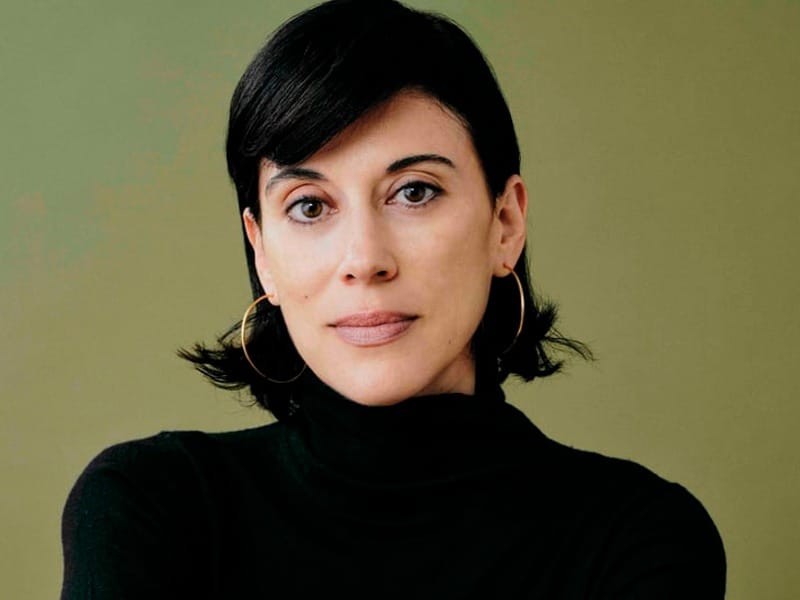
Before she was a writer-director-actor, when she was eight years old, Palestinian-American Cherien Dabis made her first trip to Palestine. Israeli soldiers detained her family at the border for 12 hours; Dabis and her sisters were strip-searched. Her little sisters were three and one years old. She may have grown up in the Midwest, but on her first visit, she learned the occupation's pain up close and personal.
“My life is full of stories of the pain and conflict I’ve seen and lived through in Palestine. And yet my experiences, as a Palestinian-American living mostly in the diaspora, pale in comparison to those who live in Palestine as well as the generations that came before me,” she states in the press notes for her new film “All That’s Left of You.”
“All That’s Left of You” is on screens in Grand Rapids now at Celebration North and South. Dabis hopes it “opens people’s eyes and opens people’s hearts” about the historical situation of the Palestinian people. The film is Jordan’s submission for the Best International Feature Film at the 98th Academy Awards.
“All That’s Left of You” tracks one family through three generations from 1948 Palestine during the Nakba—an Arabic word for “catastrophe” that refers to the violent ethnic cleansing of Palestine—through life under occupation in refugee camps in 1978 and the First Intifada in 1988 and eventually, briefly, to the 2020s.
The family is played, in part, by a real family. The Bakri family is the first family of Palestinian cinema. Mohammad Bakri, the eldest family member, tragically died just a few weeks ago on Dec. 24. He plays the older version of Sharif in “All That’s Left of You.” This is his final film.
Adam Bakri, one of Mohammad’s children, plays the younger version of the same character. Another son, Saleh Bakri, plays arguably the film’s main character, Salim, the son of Sharif and the father of Noor. The teenage Noor is also played by another relative of the elder Bakri, Muhammad Abed Elrahman. Dabis herself plays a key role as Hanan, Salim’s wife and mother to Noor.
Joshua Polanski: I wanted to start by asking you about Mohammad Bakri, who tragically passed away just a few weeks ago. Do you have any words you’d like to say about working with him? What do you think his legacy will be within Palestinian cinema?
Cherien Dabis: Oh my gosh. Mohammad is Palestinian cinema. His career developed alongside it, and he's an actor and a director in film and theater. He is a giant of Palestinian cinema. He leaves behind such a massive legacy: all of the artists he inspired and his kids. Five out of his six kids are actors and have followed in his footsteps. That’s really remarkable.
I had been a long-time admirer of his and had always wanted to work with him. It was really one of the greatest gifts of my life to get to work with him in this film and to get to work with his family, two of his sons and his nephew. So, [our film] was four generations of one family; they all brought so much depth. Hamad is just one of the most rigorous, disciplined, generous actors I've ever met, and he was just such a pleasure to work with. He really pushed himself to get it right, and I appreciated it so much. I also got to know him as a person.
He got to see the movie at our European premiere this past summer. He really loved it. He believed in it so much, and it was great to just have him as such a believer and champion of the film. It was really devastating when he passed. Definitely too early.
JP: Yes, it was too early. When your shoot was relocated from Palestine to Jordan because of recent events, you ended up shooting in a Gaza refugee camp just over the border, correct?
CD: Yeah, we ended up shooting in two refugee camps in the north of Jordan. Maybe 30 minutes from the border with the West Bank. One of the refugee camps was the Gaza refugee camp, which had Palestinian refugees from Gaza since 1967. The other refugee camp was the Souf refugee camp. And that one was full of Palestinian refugees from historic Palestine in 1948. Imagine generations of people born into these camps who weren’t supposed to be there this long.
JP: We see a refugee camp in the film from the 1970s. Was that one of these camps?
CD: Exactly. All of the refugee camp material in the film was from one of these two camps.
Continue reading at The Rapidian.