Q&A with Director Annemarie Jacir on Palestine 36
"I hope that connection is the light in all this darkness."

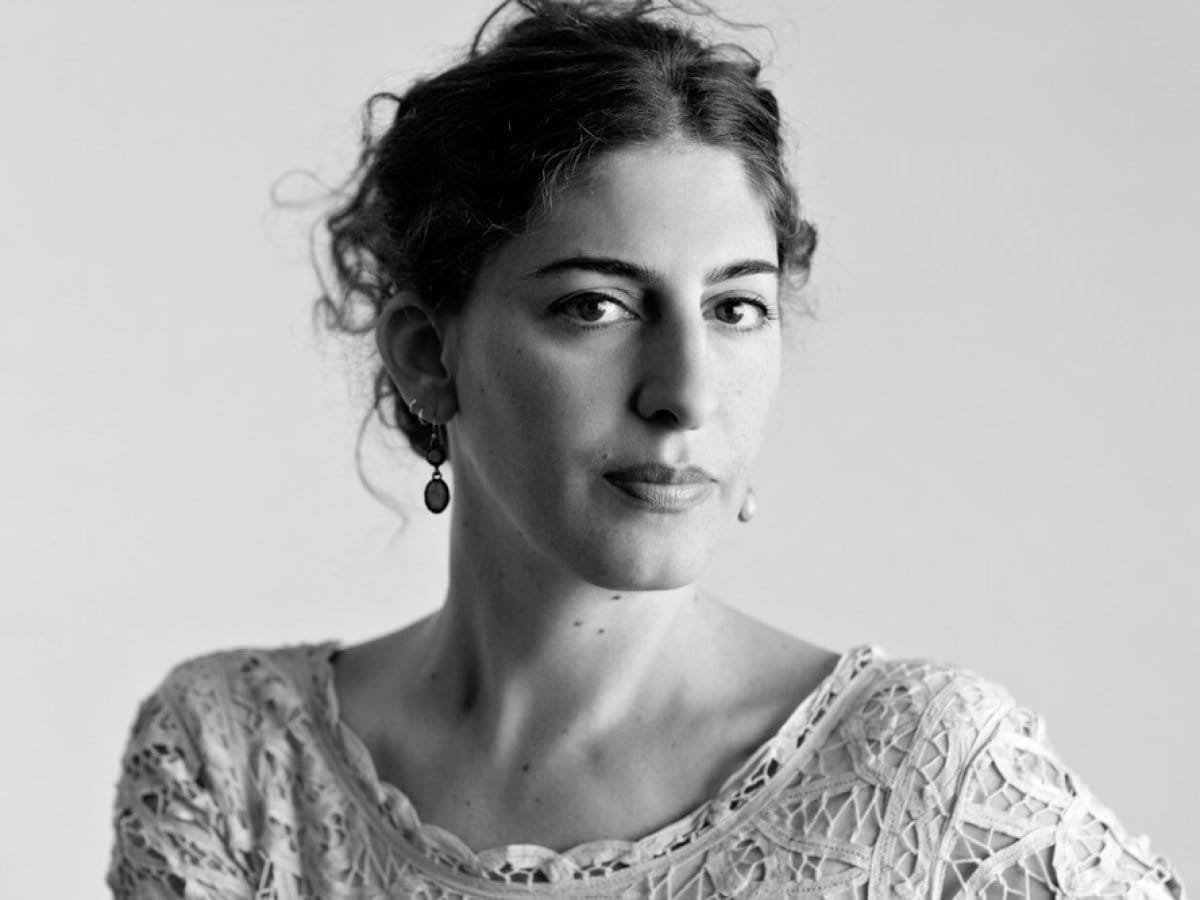
Annemarie Jacir’s “Palestine 36” breathes fresh air into Palestinian cinema. While still sharing the subject of the historic occupation and ethnic cleansing of modern Palestine with the rest of Palestinian cinema, her latest film does so with minimal presence of Jewish settlers. It’s set in the 30s, in a pre-Israeli state Palestine. The villains are the British. It is a breathtaking change of pace in the country’s resilient cinema, which, understandably, is so often focused on the more immediate and contemporary occupier.
Set in Mandatory Palestine, Jacir’s film follows a series of characters on the eve of the Great Revolt and beginning in the titular year 1936, the first significant attempt at historical action by the land’s indigenous Arab population to end British colonization and the growing Zionist movement. In the words of the film’s press notes, “The farmer-led revolt against British colonialism in 1936 marked the beginning of the largest and longest uprising against Britain’s 30-year rule.”
The heart of the film is Yusuf (Karim Daoud Anaya), a young man from the small village of al-Bassa who finds work in the big city. He works for businessman turned politician Amir (Dhafer L’Abidine) as a driver. Khuloud (Yasmine Al Massri) is Amir’s wife and a journalist. Though her husband is a pro-British collaborator, her politics are led by her pen and show one face of the resistance.
Dockworker Khalid (Saleh Bakri) shows a more revolutionary face to anti-colonial action. Meanwhile, an Eastern Rite Catholic priest, Fr. Boulos (Jalal Altawil), and his boy, Kareem (Ward Helou), don’t want any trouble but find themselves dragged into it anyhow. Rabab (Yafa Bakri) is a widow in the same village. She and her daughter, Afra (Wardi Eilabouni), bring a lot of life to the film. Jeremy Irons and Liam Cunningham, recognizable to any Western audience, play supporting roles as the British villains.
“Palestine 36” starts screening in Grand Rapids at Celebration North on April 3. Jacir thinks audiences of all sorts will connect with the film, especially “any marginalized community, any community that has had decisions made about them without any of them being at the table, about their future and about their lives.”
The film is the only major feature film to be filmed in Palestine since the war and was the country’s submission for the Best International Feature Film at the 98th Academy Awards.
Interview with director Annemarie Jacir
Joshua Polanski: You were born in Bethlehem in 1975. This is your grandparents' and parents’ generation. How did the stories and memories they passed on to you shape “Palestine 36”?
Annemarie Jacir: It’s nothing very specific, except that they talked about the British. They cursed the British in a way that, for us kids, was very funny.
And my grandfather had a very good friend. They obviously spoke Arabic together, and we grew up with him. My siblings and I went to international schools. [So] we spoke English. It was like our secret language. I remember we were saying something, and the friend, in perfect British English, turned to us and spoke to us. We were like, “He speaks English!” And not just English, but like perfect British English.
He was born around 1910. He was a driver. We learned he was a driver for the British. He is not a main character in the film, but the secretary has a driver. He shares the same name as this man, actually.
I started to imagine life [at that age] and heard about, of course, the revolt and the strike, and the importance and the pride for this revolt. People talk about the First Intifada—they talk about 1987—as being the first uprising. My family was like, “That’s not the first uprising. The first uprising was in 1936. That’s the First Intifada.” It sparked me to learn more and read about it.
That’s probably where it came from, as well as the fact that my father’s house in Bethlehem was built in 1880. It still exists today. The family still has the house. We’re one of the very few Palestinians who still have their house physically. It’s full of objects from the 20s and 30s. My grandfather never threw anything away. I grew up with those objects, and I’ve always found importance in them. For some people, they’re trash. They’re useless objects; for me, they’re the most valuable things.
JP: Did any of those influence or even make it into the production design?
AJ: They made it into the production design, definitely. They were part of the preparation. When we were shooting the film in Palestine, and we were based in Bethlehem, that was definitely a big part of it. When we weren’t able to shoot him in Palestine and had to move, a lot of that stuff didn't make it in. We only came back to Palestine later.
Continue reading at The Rapidian.