Glorious Summer
A modern twist on Plato’s cave.

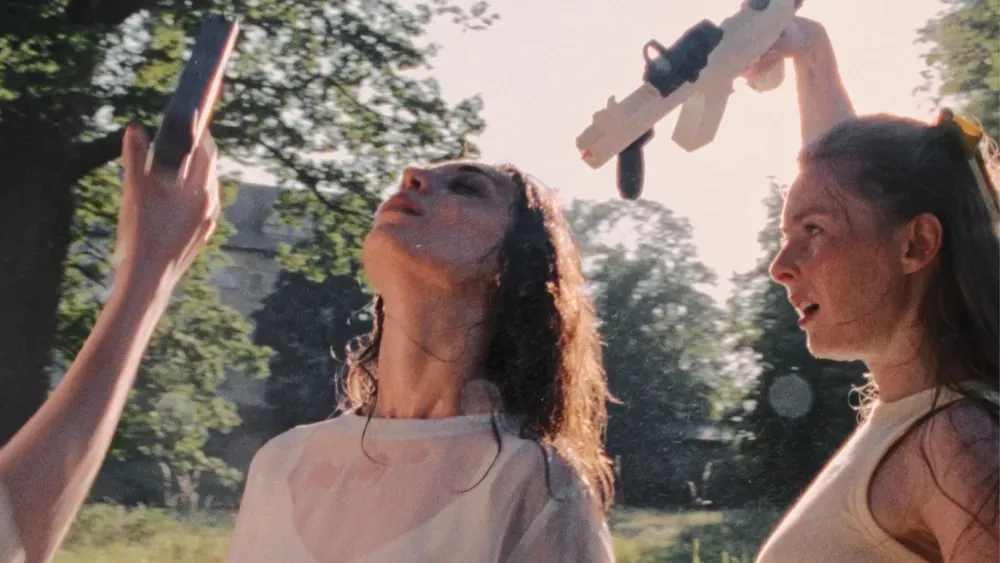
Living in a Renaissance palace trapped in perpetual summer sounds sublime. It’s also a private hell for three nameless Polish-speaking women (played by Helena Ganjalyan, Magdalena Fejdasz, and Daniela Komędera). An unseen technological entity – perhaps AI? – provides for the needs of the women. Even entertainment. But, in exchange, they have a few rules to follow. The ineffectual robotic voice instructs them in therapy-speak to “take in the light” and other absurdities to ensure they will have another “glorious day.” One of the stranger rules is that they can’t say “die,” as death seems to be a concept the keepers of the palace want to keep foreign. The more important rule is that they can never leave the property. They forfeit their freedom for luxury stability.
Summer never ends in this world. And when you only know warmth, even the cold becomes enticing. A modern twist on Plato’s cave, they know very little of their stay and even less of the outside world and their curiosities eventually get the best of them as they try to escape the palace and run free on the other side of the wall. And as something of an adaptation of the allegory of the cave, it’s impossible not to hunt for metaphors. The women, despite obvious dystopian turbulence in the far distance, want to grasp at the bigger world. They have been relegated to domestic life in the palace for far too long. There are no men to be seen and the complete absence of any patriarchy makes any metaphor for female oppression slightly more difficult to justify beyond the mere fact that all the characters are women and their freedom is stunted.