Fritz on Fridays: Moonfleet
Fritz Lang’s lone film for kids.

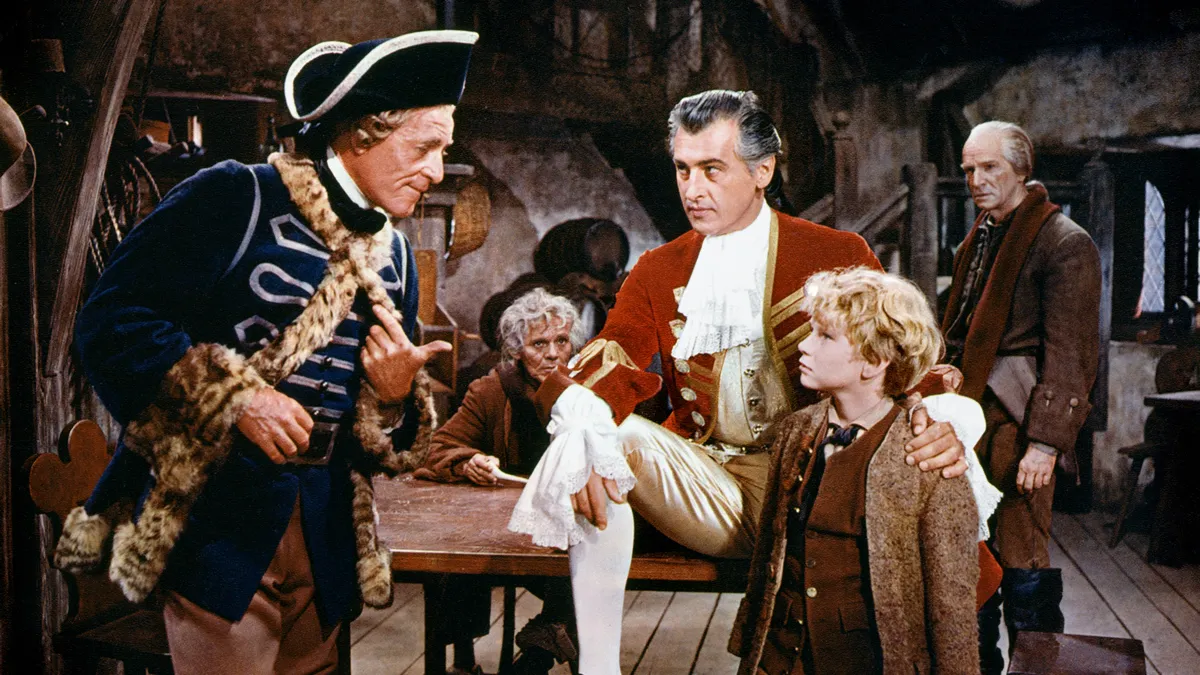
On the first Friday of every month, this column by critic Joshua Polanski will feature a short review or essay on a film directed by Fritz Lang (1890-1976), the great Austrian “Master of Darkness.” Occasionally (but not too occasionally), Fritz on Fridays will also feature interviews and conversations with relevant critics, scholars and filmmakers about Lang’s influence and filmography.
It is unfathomable that producers in 1950s Hollywood wanted to make a children’s film and, of all the great filmmakers from which to choose, proceeded to hire a director with the nickname of the “Master of Darkness” to helm the project.
That’s what Moonfleet is: Fritz Lang’s lone film for kids.
Of course, this is not your standard kids’ movie. Bodies hang from trees, caregivers all die or deserve the worst kinds of deaths, and children learn the world is a dark place without redemption. Moonfleet is almost dark enough that it’s difficult to conceive of it as a kids’ film, even though in structure, and arguably genre (piracy has ironically always been aimed at youngsters), it’s equally difficult to make the argument that it isn’t made for kids. For what it is worth, it is also Lang’s only film that makes a child the main character.
A Technicolor adaptation of an 1898 novel of the same name by J. Meade Falkner, Moonfleet follows a young orphan boy named John Mohune (Jon Whiteley) as he gets embedded in a life of swashbuckling and racketeering. He is sent to the Dorset village of Moonfleet to live with his mother’s former flame, Jeremy Fox (Stewart Granger). Fox is a dangerous man and the leader of the city’s criminal-piracy enterprise. He makes his introduction, to the boy and to us, by thrashing another man with a whip.
Lang may be one of the greatest directors of production design in the history of cinema — which makes the poor production design of Moonfleet all the more puzzling. That’s even more frustrating because it’s a gothic pirate movie, a combination ripe with creative possibilities. The spaces, all shot on set at MGM, lack comparable artistic care compared even to Lang’s other American studio films let alone his European films. The set designs add very little emotion and could almost be exchanged for any other set with the same basic room functions. The costume designs vary in their apparent chronological inspiration and accuracy to sheerly annoying degrees. The only exception is the cavernous underground crypt.
Continue reading at the Midwest Film Journal.