All That’s Left of You
History doesn’t wait to be made.

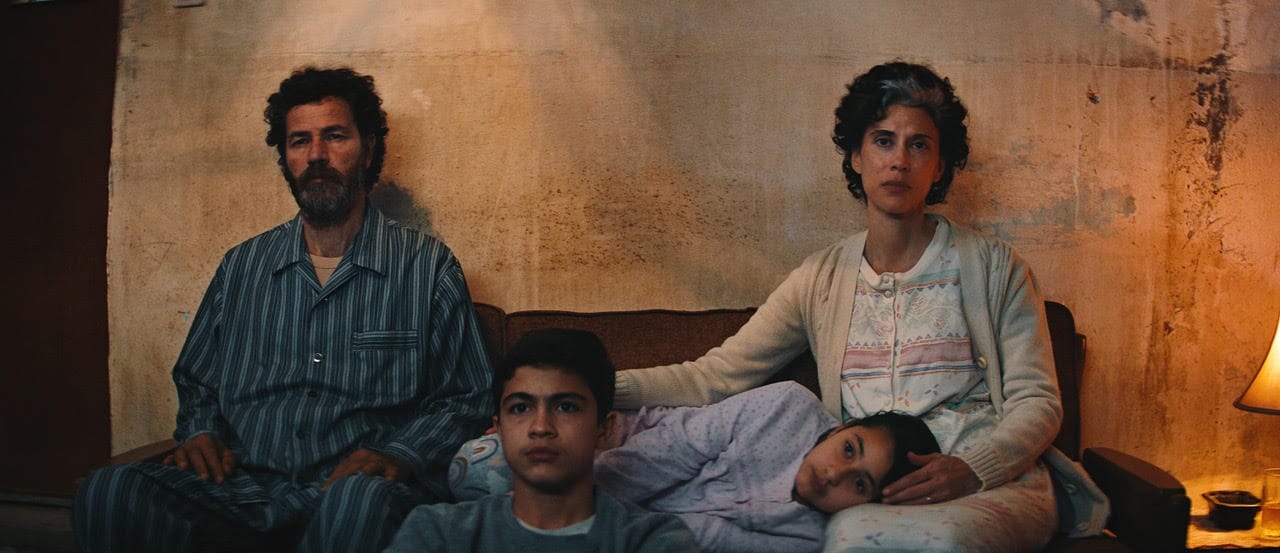
History doesn’t wait to be made. It interrupts and puts lives on pause in the blink of an eye. We interpret the rest of life through these brief windows of history being made, as if these brief episodes shape who we are and the way the world works.
Palestinian-American writer-director-actor Cherien Dabis understands this with a careful humanist clarity. She punctuates the lives of three generations of Palestinians through the perspective of one family with this sort of history in her latest feature, “All That’s Left of You.”
“All That’s Left of You,” the Jordanian entry for the Best International Feature Film at the upcoming Academy Awards, will play at Celebration North and Celebration South on Friday, Jan. 30.
The film starts in 1988, before a street protest erupts during the First Intifada, also known as the first uprising in the Israeli-occupied areas of Palestine. Guns pop, and a teenage Noor (Muhammad Abed Elrahman) dives for cover in an idle car. In the present, an older woman, Hanan (Dabis), tells us that to understand what happens to him, we must first learn how we got here. To do that, we must turn to his grandfather.
The clock turns back to 1948 on the eve of the Nakba, an Arabic word for “catastrophe,” which refers to the displacement of 700,000 Palestinians during the Arab-Israeli war.
His grandfather, Sharif, played by Adam Bakri in the 1940s timeline, is a decently well-off orange grove owner from Jaffa. When settlers show up, shoot their guns and usurp the land, his family, including his son Salim (Salah El Din), winds up in a refugee camp while he is conscripted for forced labor.
The physical violence is at its worst in this chapter, with bombs near their house and bullets flying outside. However, it never fully overshadows the family’s domestic life. A reminiscing couple has their conversation cut short by a shattered window, for example. The violence of history never becomes a dramatic spectacle; it stays a tragedy.
Swift editing moves the viewer to 1978, showing life under occupation at a refugee camp in the West Bank. Salim has grown up, now played by Saleh Bakri, Adam’s brother. Their late father, Mohammad Bakri, plays the elder Sharif. Hanan and Salim are married, and the teenager, their son from the opening scene, is just a young boy (Sanad Alkabareti).
Continue reading at The Rapidian.