63rd Ann Arbor Film Festival: Traveling Tour
Experimental and avant-garde cinema is intentionally maverick and boundary-pushing—and the best and most engaging films on the traveling tour do just that.

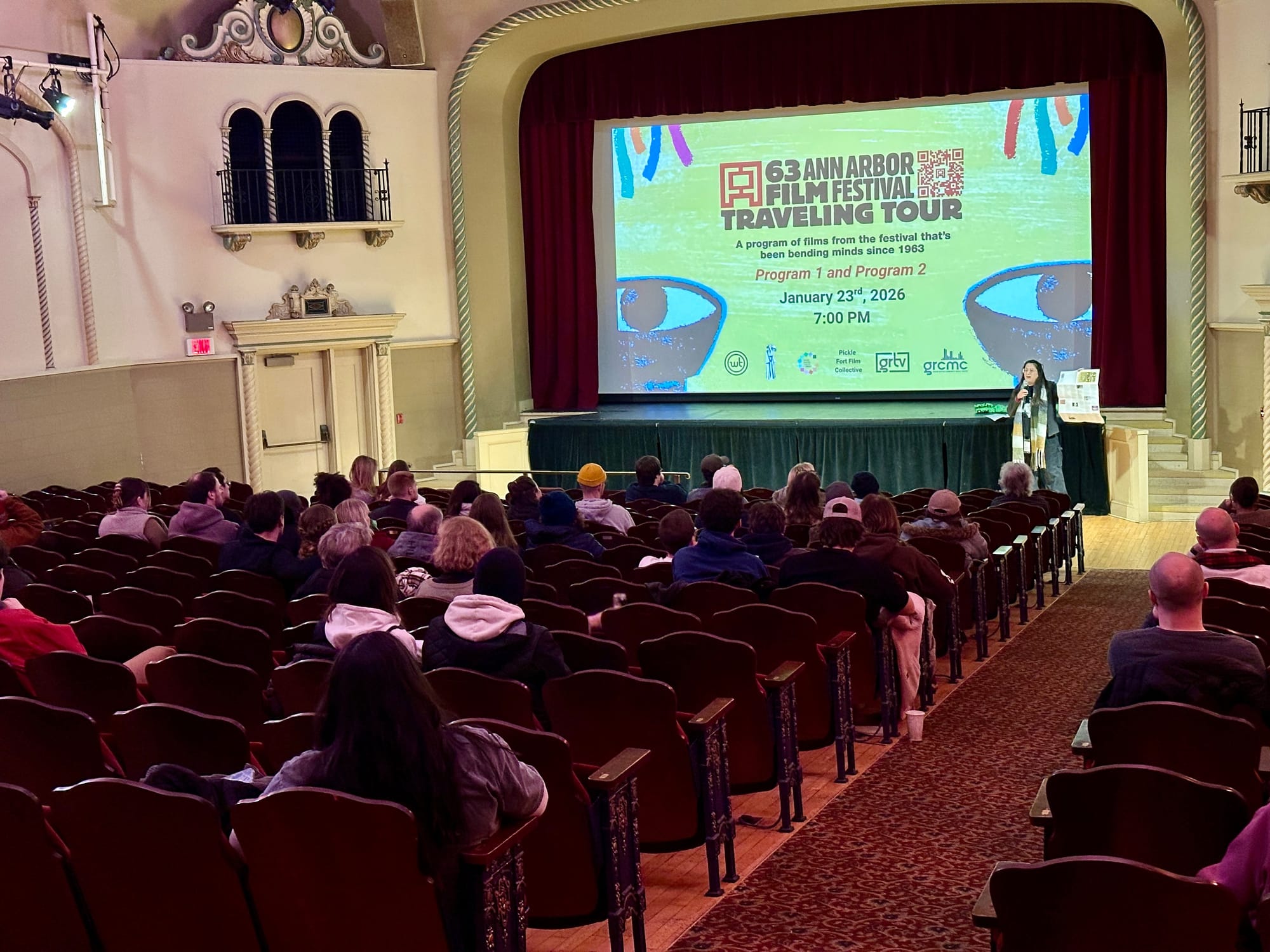
The 63rd Ann Arbor Film Festival (AAFF) made a stop at the Wealthy Theatre on Friday, Jan. 23. The Grand Rapids Public Library sponsored the event.
A respectable, though by no means full, crowd weathered intense winter weather and bitter cold for the free event. Before the screenings, participants could make their own 16mm film loops with the help of the Pickle Fort Film Collective or try out stop-motion animation with GRTV.
The AAFF is the oldest avant-garde and experimental traveling film festival in North America, and it’s the state’s most unique and important film event. The AAFF tour represents a selection of its award winners from the previous festival.
Broken up into two programs, the event featured eight films from around the world, each varying in length and creative expression. The shortest films were just three minutes. The longest, a documentary about migrant domestic laborer women called “Las Territorias,” was 21 minutes. Filmmakers received a variety of awards, like “Best Animated Film” and the “Coma and Forklift Jury Award.”
The audience noticeably shed a few members over the course of the night—an almost canonical occurrence for experimental film screenings. This is not Hollywood; most of these films lack a traditional narrative, many don’t have characters and the best of them play fast and loose with their images. Experimental and avant-garde cinema is intentionally maverick and boundary-pushing—and the best and most engaging films on the traveling tour do just that.
Several of the films used video-game or video-game-inspired visuals. “Riding Day” incorporates footage from a Zelda game into its visuals. “Simulacrumbs,” from Detroit filmmaker Joanie Wind, shows a woman trapped in campy digital nostalgia with popping colors while estranged from real-world connections. The digital world isn’t enough.
“The Sunset Special 2,” an animated parody of a couple on a luxury cruise, was one of the stranger highlights. The animation is like an old PC game. It featured a pixelated selection menu, replicated on the film’s website, to show the couple's choices.
The dialogue between characters is intentionally stiff, repetitive and overcommunicative. The obnoxious couple uses “darling” like a filler word and repeats each other before actually responding. The vocal performances all seem to be digitally delivered through AI text-to-speech, much like the flabbergasting and addictive Marcus the Worm videos. The robotic and (probably) AI-generated voices are vapid enough to work as a satire of the worst people you know. Their lives are too miserable for a human to voice. Artifice is the point of director Nicolas Gebbe’s intolerable cruise liner. And he, naturally, uses artificial means to accomplish this.
Continue reading at The Rapidian.